










HomeStories & InsightsThank you the Green Clone Test

Selling your home? Here’s where to start

Discover the process, costs involved, and tips to maximise the sale price.

If you’ve lived in your house for years or even decades, it can be hard to move on. Your home can be linked to cherished memories of family, milestones and celebrations, and evoke feelings of security and comfort. To prepare for selling your house and taking the next step in retirement, it can help to have an idea of what to expect from the sales process.


Do your homework

Before you choose an agent, start by researching local real estate agencies. If you have friends or family close by, it’s great to ask for personal recommendations. After all, this will be the biggest sale you’re likely to make, and having trust and respect for the agent is crucial.

You might like to check out listings and sales prices in your area, to get a gauge for what similar properties are worth. You could even visit properties for sale and see how the agent treats prospective buyers and answers questions – consider asking about whether the vendors are willing to negotiate the sale price, how long the property has been on the market and why they’re selling.

Then, create a shortlist of at least three agents you would like to meet face-to-face and don’t be afraid to ask questions when you meet them. Here are some for consideration:

  • Would they recommend a private sale or auction? Why?
  • How much are their agents’ fees, and how do they calculate this figure? Is it a fixed fee or a percentage of the sale price? This is also known as commission and is generally between 1.5% and 3.5% of the agreed price. Most agents’ fees don’t include advertising, so be clear on how much the recommended campaign would cost.
  • How would they go about marketing your home? This could involve web listings, sign boards outside your house, photography, floor plans and copywriting, as well as social media and email campaigns.
  • What work (if any) would they recommend you do to make your home more attractive to buyers?
  • How would they value your home? Can they provide you with a property profile that includes information about sales of comparable properties in your area? Would they recommend specifying an asking price (if not going to auction), or a broader price guide?


Choose an agent

If you take time to do your research and meet with several agents, you’ll have a good idea of what your property is worth. You’ll also have a good sense of which agent is best suited to you. Keep in mind that some agents could be tempted to overvalue your property to increase the likelihood of getting your business, so base your decision on many factors – not just who has the lowest commission or says they could obtain the highest sale price.


Prepare your home for sale

To maximise its potential value, look at your home with a critical eye and decide whether a small upfront investment could have a big impact. There are several ways you could make your home more attractive to prospective buyers:

  • Assess the frontage of your home, as some buyers will drive past before they commit to attending an open house. Would the garden benefit from some tidying or weeding, or can you add a splash of colour with new plants or pots?
  • Keep things as open, airy and uncluttered as possible. This might mean putting some furniture in storage during the sale process.
  • Neutral colours are best. Consider painting over any obvious marks, or even re-painting if the paint job is tired or the colours are dated.
  • Fix anything in need of obvious repair, and attend to small maintenance jobs, like missing light globes or loose door handles.
  • Have your carpets professionally cleaned.
  • Tidy up your cupboards. It’s easy to think ‘out of sight, out of mind’, but buyers are sure to open cupboards and drawers to get a good idea of storage space.
  • Clear the clutter. This will help your home look bigger and more spacious. Think big – taking away unnecessary furniture – as well as small – clearing any flat surface, having tidy kitchen bench tops and removing fridge magnets.
  • Help prospective buyers see themselves living in your house, by removing any bold furniture or artwork, as well as personal touches like photographs.


Inspection day.

Make sure your house is spotless on inspection day, with no laundry or washing up in sight. Turn on all the lights, open the windows and doors, and show your house at its best. Keep your home as comfortable as possible, with fans or air conditioning on in summer, and a fire or heater in the cooler months. It helps to have a bright bunch of flowers in the kitchen to add a splash of colour. Finally, make sure you leave the house during inspections to help put prospective buyers at ease. This includes any pets who live with you!


Other costs to keep in mind

As well as covering your agents’ fees and marketing campaign, keep in mind that you’ll need some money set aside for conveyancing. This simply means the legal transfer of ownership from you to the buyer. If you have a mortgage on the house you’re selling, you may also need to pay your bank or lender an early exit fee. The cost of selling your home varies by state, but you can find a comprehensive breakdown of likely real estate agent commission, marketing and conveyancing fees here.


Need advice?

For more advice about buying and selling a property in your state, go to:

NSW:

Queensland:

South Australia:

Kamil’s caring concerns

“If I have put a smile on someone’s face or helped someone, that’s a goal achieved for me,” says Kamil Sater, Care Manager at the Care Hub at The Verge at Burleigh. Luckily for Kamil, he’s kicking goals every day in his role, as he’s often described as kind and caring by the residents and team members at the village on the Gold Coast.

The Care Hub is an alternative to aged care, set in an intimate and homelike care environment catering for a maximum of 10 people at a time. Staffed 24/7 with nurses and qualified carers, the Care Hub offers a high level of care for short-term respite stays through to end-of-life care.

It takes a special person to devote their time to caring for people, but Kamil says it brings him great joy to ensure the residents are well looked after. From complex situations where he is supporting a resident to receive the right kind of assistance or being there at end of life, to the more frivolous days when he shares a laugh or dresses up, Kamil always puts residents first.

Journey of care

As a child, Kamil was the one running to the aid of the person who had fallen over to make sure they were alright. He’s always been a caring, compassionate person who has loved helping people, so a career in aged care felt like a natural progression.

“I’ve been in aged care since I was 16. I left school and went straight to become a personal care assistant. I then did my uni degree, and I worked as a registered nurse in the hospital system,” says Kamil. “My background is in cardiology, emergency and critical care work. I also worked at Glengara Care as a Clinical Case Manager and Care Manager before I took on the role at the Care Hub.”

Previously working at the RetireAustralia owned and operated Glengara Care in the Glengara Retirement Village has provided Kamil the perfect stepping-stone for his current role. The care apartments on the Central Coast NSW are supported 24 hours a day by a nurse-led team, but still have all the comforts of home. The residents have the freedom to live life on their terms and not to a timetable. Unlike aged care facilities, couples can live together even if only one of them needs care and support.

Kamil believes that his roles at both the Care Hub and Glengara Care have been the perfect fit for him, from the fulfilling interactions he has with residents to the committed teams he works with.

“I love that I come in every day and the residents have smiles on their faces. They’re living an independent life and they’ve got support and care if they need it. It’s very fulfilling as they all seem so happy. The team are very happy here too and have such a good work ethic. They all just get along really well.”

Something different

Having worked for many years in aged care, Glengara Care’s point of difference by providing residents their independence and active participation in their care choices is something that Kamil loves.

“I love the fact that Glengara Care is their home. You know, it’s not a nursing home where you have to do this, at this time. It’s a place where we do our outmost to maintain the residents’ independence and encourage them to do what they can do for themselves.

“The residents are very much in control of their care, and I love the fact that it’s very consumer-directed care here. We sit with the residents, and ask them when they want things, what they like to do, all the things that are important to them and we implement services and strategies so we can ensure we can provide what they want, when they want it.”

For Kamil, the combination of clinical and managerial aspects of his role at Glengara Care has provided him with the perfect balance in his work life.

“I like it because I’m still involved in providing clinical component, but i am also managing a team as well, which I really enjoy,” says Kamil. “I didn’t think management was something that I wanted to do, and it never crossed my mind during uni or anything like that. I’ve always wanted to be that big shot ICU nurse and then I came here and I’m like, no, this is where I need to be. I’m now studying for a Masters in Health Leadership.”

Residents enjoy the care they receive.

Meaningful moments

For Kamil, being involved with the residents and helping them live the lives they want is an incredible privilege. Even in the times of sadness the most meaningful parts of his role occur.

“One of our residents at started at Tarragal Manor [serviced apartments at Tarragal Glen Retirement Village and moved across to Glengara Care. She deteriorated during her time here to the point where she needed palliation. So, we were with her during her final chapter. We were able to support her with her end-of-life wishes, let her be in her own home and provide her comfort and care right here. The staff were amazing and to be able to support a resident to have an end-of- life experience in line with their preferences is special,” says Kamil.

“The kindness and compassion that the team had for both her and her family was incredible. While people may view it as morbid, it can also be a beautiful thing, because it’s their wishes at the end of the day and if we can meet those wishes then we’ve done an amazing job.”

Kamil and his dogs Nova and Jupiter

Away from work

On the weekends, Kamil still has enough energy to get out and explore nature, which is one of his most favourite things to do.

“I love going on road trips and I like to go hiking. My family are campers, so we try and go on camping trips regularly, which is amazing. We go anywhere and everywhere,” Kamil says with a grin.

To help wind down and recharge, Kamil loves spending time with his family, who also work in aged care, thanks to his influence. His mum started training in aged care about a year after Kamil and his sister followed on soon after.

“It’s good to be able to have that understanding and we can share our experiences. We can debrief and help each other when we need it.” says Kamil. “Mum and I sit and crochet together, it’s a new hobby that we have. It’s great to share with it my mum, we sit and crochet and watch movies together!”

Discover if the Care Hub, Glencara Care or another community is right for you.

Sign up for our monthly newsletter, Vitality!

Find a home that's right for you

RetireAustralia owns and operates retirement villages in 30 unique urban, seaside, tree-side and regional locations.

Queensland
Retirement Villages in QLD
View communities
New South Wales
Retirement Villages in NSW
View communities
South Australia
Retirement Villages in SA
View communities
Queensland
Retirement Villages in QLD
View communities
New South Wales
Retirement Villages in NSW
View communities
South Australia
Retirement Villages in SA
View communities

Home is where John and Vivian’s heart is

Life is action-packed for John and Vivian Elliott at Wellington Manor Retirement Village. The residents love the life they’ve created in a community where they are surrounded by neighbours who’ve become dear friends. They keep themselves busy every day with a long list of activities in the village. John and Vivian say they’re able to keep active through the assistance they receive from their Home Care Packages.

Life is action-packed for John and Vivian Elliott at Wellington Manor Retirement Village. The residents love the life they’ve created in a community where they are surrounded by neighbours who’ve become dear friends. They keep themselves busy every day with a long list of activities in the village. John and Vivian say they’re able to keep active through the assistance they receive from their Home Care Packages.

Keeping active

During an average week at Wellington Manor, John and Vivian like to take part in indoor bowls, snooker and croquet. This helps them keep physically active and engaged in the community.

“It’s a lot of fun and we enjoy spending time with our friends here,” says Vivian.

During their time at Wellington Manor, John and Vivian have been heavily involved with the resident and social committee, including holding leadership roles. While they have pulled back a little, the couple continues to support the committees and stay involved as much as possible.

Needing extra help

John is a leg amputee and Vivian has been his primary carer, assisting him with daily tasks. As the pair have got older, things have naturally become more difficult for Vivian to provide the care John requires.

“I need a lot of help. With the wheelchair I had, Vivian would have to push me around, which was getting difficult,” says John. “We were really struggling.”

It was suggested to John and Vivian that getting a Home Care Package could help make their life much easier and more enjoyable. A Home Care Package is a government-funded program to assist older Australians remain safely at home. The funding can be used to provide a range of services, such as personal care, domestic assistance, and transport services, as well as funding for home modifications and assistive technology.

Speaking to the RetireAustralia Home Care team, John went through the assessment process and was allocated a Home Care Package.

“I think we were one of the first people in the village to get a Home Care Package, but we certainly weren’t the last,” says John.

How it helped

Life is now very different for the couple. The Home Care Package has meant they are able to have a carer come in and assist them with daily domestic tasks. They’ve also been able to purchase equipment to make their day-to-day life feel less impossible.

“Before we were surviving on second-hand items, but since we’ve had the Home Care we’ve been able to purchase things like a lift for the car and a new motorised scooter,” says John.

“Now instead of staying at home, I can go and help my wife. I’m not relying on her to push me around, I can push myself,” says John. “I can now help with the shopping.”

“We can walk to the shops and John can bring the shopping home in the scooter!” says Vivian.

For John and Vivian, it’s not just the new lease on life the equipment has given them, they also appreciate the care and support the Home Care team has offered them.

“It’s just excellent. We feel really looked after by Tracy, who’s part of the team,” says John. “It’s just a really personal service.”

Life now

After witnessing how things have changed for John and Vivian, many of the residents at Wellington Manor are now accessing a Home Care Package.

“We have recommended a government-funded Home Care Package and RetireAustralia Home Care to quite a few people,” says John. “And why wouldn’t we? Life is pretty good!”

Sign up for our monthly newsletter, Vitality!

Find a home that's right for you

RetireAustralia owns and operates retirement villages in 30 unique urban, seaside, tree-side and regional locations.

Queensland
Retirement Villages in QLD
View communities
New South Wales
Retirement Villages in NSW
View communities
South Australia
Retirement Villages in SA
View communities
Queensland
Retirement Villages in QLD
View communities
New South Wales
Retirement Villages in NSW
View communities
South Australia
Retirement Villages in SA
View communities

Couple seizes rare opportunity as retirement accommodation shortage hits hard across Australia

Home is where the heart is but with retirement dwellings in short supply, many Aussie seniors have no choice but to leave the suburbs where they raised their families.

Statistics show retirement villages are effectively at capacity nationwide, while the supply pipeline of new stock is slowing down.

This means opportunities to age well locally can be hard to come by. It’s something that’s not lost on Jeff and Judy Jones. After spending more than half their lives in Tarragindi, Jeff and Judy, both aged 75, were excited to realise their retirement dream of remaining in their beloved community as they became the first residents to move into The Green, a new $80 million vertical village in the Brisbane suburb.

“Moving into a retirement village is a big enough change without having to move to a new area,” Judy said.

Having called Tarragindi home since 1983, the Jonses didn’t want to entertain leaving the leafy Brisbane suburb. They raised their sons, Craig and Matt, in the area and have enjoyed having their six grandchildren nearby in Tarragindi and Salisbury.

Jeff Jones Real Estate, the business the couple founded which is now run by their sons, is also a short drive away at Stones Corner.

On top of that, they love being close to known and trusted amenities and services.

Nationally, the number of Australians aged 65 and older will double in the next 40 years, while the number of people aged 85 and older is set to triple to more than 3.5 million people by 2062–63, according to the Federal Government’s Intergenerational Report 2023.

Despite the surging senior population, the 2022 PwC/Property Council Retirement Census found retirement villages were effectively at capacity. The census also found the development supply pipeline planned for the subsequent three years fell to 5,100 dwellings compared to the 2021 Retirement Census of more than 10,500 dwellings. Higher construction and debt costs, and an uncertain economic outlook may have contributed to this decreased supply.

With a short supply of retirement accommodation options in their immediate area, the Joneses were quick to jump on the chance to continue to call Tarragindi home, in accommodation that will continue to meet their needs even as their care and support requirements increase with age.

The Joneses – who were the first residents to move into The Green – say they are fortunate to have relocated to a retirement village so close to where they have been living for nearly four decades.

“We knew eventually we would need to make the move into some sort of retirement village, so when we heard about The Green, we were keen right from the get-go,” Judy said.

“While we don’t have any health issues or need help at this stage, we thought it would be better to make the move as we couldn’t see another village like it coming to Tarragindi any time soon.”

Jeff added: “We love the accessibility Tarragindi provides – we’ve got four hospitals right on our doorstep and easy access to the motorways and we’re close to the city.

“We had looked at other sites and places. We couldn’t get away from the fact this was at Tarragindi – that was obviously a big attraction, and we also thought The Green offered us more amenities than any of the other places we looked at. The design of the complex, the landscaping, the facilities – it just all fitted together so well.”

In the Brisbane Local Government Area (LGA), there was a shortfall of at least 3,600 retirement dwellings in 2023 and the disparity is only likely to increase, largely due to a lack of suitable land for all types of village development in Brisbane, according to an O’Hara Wells analysis for RetireAustralia.

At the same time, a Queensland Government Statistician’s Office (QGSO) analysis predicts that by 2031 there will be 107,253 people aged 75 and over in the Brisbane LGA, an increase of 33,178 people in comparison to 2021 figures. If this forecast proves to be accurate, not everyone will be as fortunate as the Joneses and able to continue to live and thrive in their local area for the final chapters of their lives.


Glengara Care Cookbook

A menu inspired by our residents

Life is better with great food. That’s why our head chef spends so much time with our residents developing seasonal menus for them to enjoy. Here, we celebrate food with our resident’s top 10 favourite recipes.

Our residents collaborate with the head chef to develop seasonal menus, ensuring that they have their say. Feedback is taken with suggestions for new additions put to a vote, and even adjusted to cater for those with special dietary considerations.


Download our residents' favourite recipes

Each recipe reflects our chef's mission to offer residents dishes that could hold their own at any of the Central Coast's fine dining establishments.

Enquire now

Call us on 1300 687 738 or enter your details and a friendly member of our team will get in touch to help you find what you’re looking for.

This field is hidden when viewing the form

Personal Details

Privacy Collection Notice*
Sign up for our monthly newsletter, Vitality!

Find a home that's right for you

RetireAustralia owns and operates retirement villages in 30 unique urban, seaside, tree-side and regional locations.

Queensland
Retirement Villages in QLD
View communities
New South Wales
Retirement Villages in NSW
View communities
South Australia
Retirement Villages in SA
View communities
Queensland
Retirement Villages in QLD
View communities
New South Wales
Retirement Villages in NSW
View communities
South Australia
Retirement Villages in SA
View communities

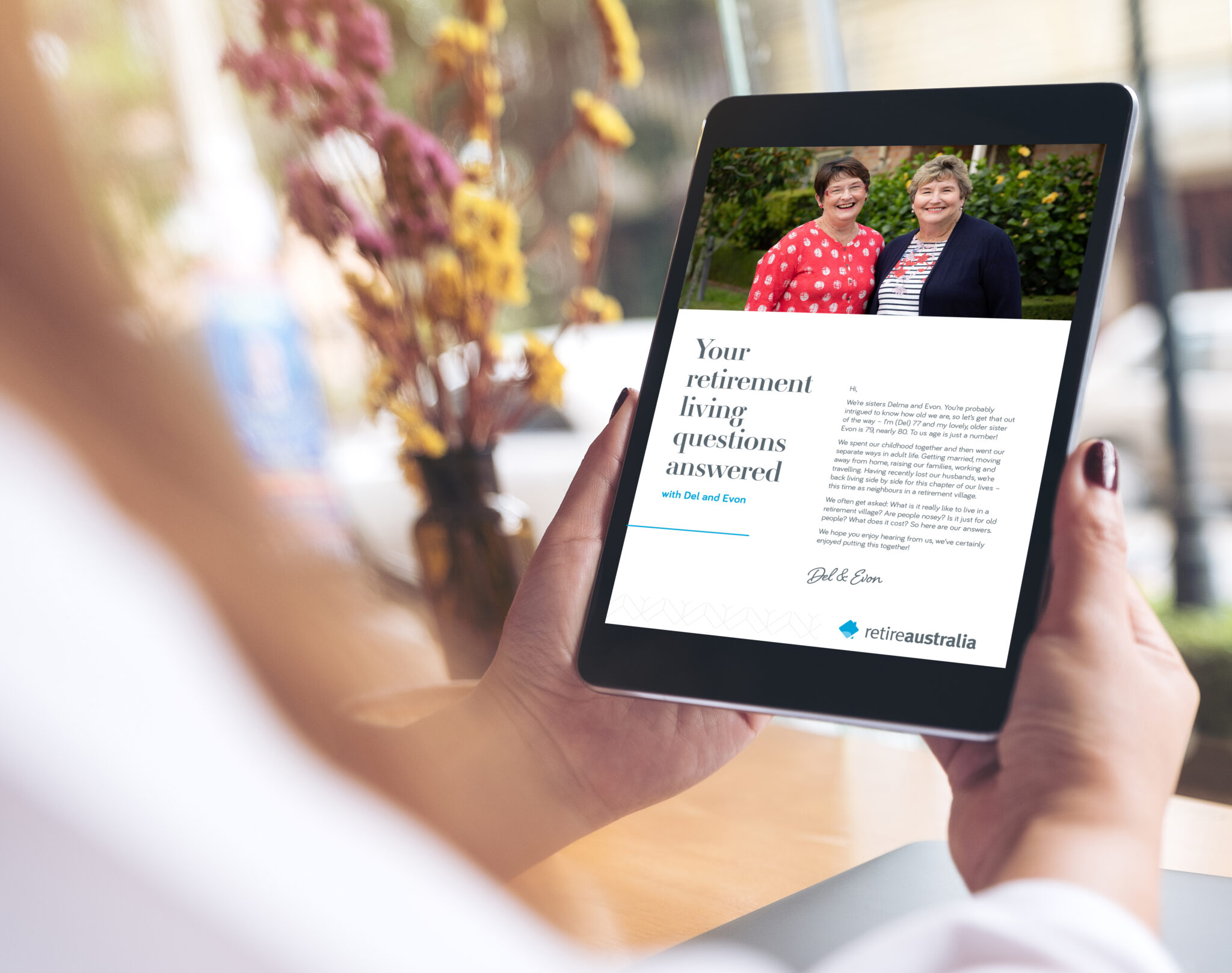
Your retirement living questions answered

Researching retirement living can raise many questions. To help you, we've put together a guide with all the most frequently asked questions that we receive.

Do you have questions about living in a retirement village?

If you’re researching your retirement living options, you might be interested in knowing the answers to the questions we get asked all the time. How do retirement villages differ from aged care? Are they the same as landlease communities? Can visitors stay with you? What happens if your care needs change?

We’ve answered these questions – and more – to give you a clear idea of what to expect.

Discover the answers to all your retirement living questions.

Enquire now

Do you have a burning question we haven’t answered?

Call us on 1300 687 738 or enter your details and a friendly member of our team will get in touch to help you find what you’re looking for.

This field is hidden when viewing the form

Personal Details

Privacy Collection Notice*
Sign up for our monthly newsletter, Vitality!

Find a home that's right for you

RetireAustralia owns and operates retirement villages in 30 unique urban, seaside, tree-side and regional locations.

Queensland
Retirement Villages in QLD
View communities
New South Wales
Retirement Villages in NSW
View communities
South Australia
Retirement Villages in SA
View communities
Queensland
Retirement Villages in QLD
View communities
New South Wales
Retirement Villages in NSW
View communities
South Australia
Retirement Villages in SA
View communities

A real-life journey to obtain a Home Care Package

In Australia, we are fortunate that many seniors can access a government-funded Home Care Package, allowing them to stay safely in their own homes for longer. However, navigating the path to obtaining a Home Care Package can be a winding and, at times, confusing journey. I discovered this as I assisted my mother through the many steps to receive Home Care and I hope by sharing my story, it will help you to find a reasonably clear path.

What is a Home Care Package?

Home Care Packages are a government-funded program designed to provide a range of support services for older Australians to help them continue living at home safely and comfortably. These packages are divided into four levels, each offering different levels of care and funding.

The funding is used to provide a range of services, such as personal care, domestic assistance, and transport services, as well as funding for home modifications and assistive technology.

When care needs change

My mother has lived independently, on her own, in a retirement village for almost 12 years. She loves her life in the village, including the many friendships she has with her neighbours and the sense of community she feels. She often tells me she never wants to live anywhere else, and I truly hope she can live there forever. Realistically though, as she ages, there are things that make living on her own more difficult.

Suffering from arthritis and bursitis, she has had a few falls; she also has a diagnosis of Alzheimer’s disease. Forced to give up driving, she’s no longer able to pop to the shops for milk and bread or visit friends outside of the village like she once could. Cleaning her bathroom and scrubbing the shower, has become an almost impossible task. I would love to be able to drop in and help her with these tasks, but unfortunately, I live interstate.

Functionally (and cognitively), she had declined to a point that I decided it was time to look for options. At first, I didn’t even realise Home Care Packages were available, until I heard about them from someone else and then my mother’s geriatrician referred her for one. I thought this would be a perfect way for my mum to continuing living in her beloved home with some assistance.

Asking for help

The hardest part of the Home Care journey is admitting that help is needed. Like many of her generation, my mother is a proud and stoic woman. She felt that she was coping perfectly fine (and in many ways she was), and she believed that Home Care was for people more frail than herself. After many conversations, discussing how it could assist her and realising that many of her friends in the village already had a Home Package, my mum finally relented.

By the time we realised and recognised that my mum needed the assistance of a Home Care Package, we discovered that we should have started the process about 12 or more months earlier. Unfortunately, this is a common situation. Needing the help right away, we decided to hire a private cleaner to help her until we could obtain a Home Care Package.

Assessment

The first step towards receiving a Home Care Package is to register with My Aged Care. This process is simple and takes just a phone call or visit online. I also registered with My Aged Care to become mum’s registered representative, as she felt overwhelmed by the process. This was also simple to do over the phone, with my mum’s permission. Everyone registering with My Aged Care should consider setting up a representative, who is generally a trusted family member. Once this is in place, the representative can set up online access to the person’s My Aged Care record and assessment information, which is particularly useful in helping to manage their services, whether now or in the future.

Once you have registered, My Aged Care will ask and few questions and decide if an assessment is required. In my mum’s case, she had a referral from her geriatrician, so she was told she would require an assessment.

A week or so later, my mum received a phone call from the assessor who did a brief assessment over the phone. Unfortunately, my mum didn’t really understand what the call was, believing it was the private cleaner we had organised, so just told them that all was fine and she just liked having the bathroom cleaned.

Unbeknown to myself, the ACAT assessor put her on the Commonwealth Home Support Program, which is the entry-level home care support program that many people access prior to being approved for a home care package. Through this she was eligible to receive some light cleaning once a fortnight. I was also unaware that that the assessor decided that she didn’t require an in-person assessment. I hadn’t received any of this information and still thought that a further assessment would occur to determine her eligibility.

Re-assessment

Due to a huge demand in her area, it took around two months to find someone who could clean for my mum under the Commonwealth Home Support Program. After waiting many weeks, I called back the ACAT assessor to see when the in-person assessment would occur. I was told that a decision was made not to have one, that my mum was fine with the Commonwealth Home Support Program.

Flabbergasted, I mentioned the referrals from her specialist that said she required assistance to safely remain at home, that my mum hadn’t understood what the phone call was about and that I believed she needed an assessment. Finally, they agreed that an in-person assessment was required and an assessor was sent out a few weeks later. I ensured that my brother was there during the assessment, to make sure that my mum conveyed her situation accurately and also so he could gather the information provided by the provider.

During the assessment, I was also able to join by phone and add in further bits of information, to paint a full picture of my mum’s situation. The assessor who came out was lovely and immediately recognised that a home care package would be beneficial.

Approval

Within a week we had received word that mum was approved for a level 2 Home Care Package, which would give approximately six hours of care per fortnight. After waiting many months to have an assessment, we were very grateful to have been approved so quickly, as I had heard it could take up to eight weeks.

While she had been approved, this did not mean she could start receiving care straight away; we needed to wait until her Home Care Package had been allocated, the timeline for which varies from person to person (depending on the priority level assigned by the ACAT assessor).

We used this time to speak to Home Care providers in her area, discuss with them the type of services they could provide and how their fee structures worked. We also spoke to Services Australia to confirm if she had to pay any contributions.

Home Care Package allocated

About two months after receiving her approval letter, we were informed that her Home Care Package had been allocated. This meant we could sign a contract with our chosen Home Care Provider and finally start receiving services.

We had 56 days to sign a contract, but as we knew exactly who we wanted to go with and they had availability, my mum was able to start receiving services just a week later. This is why it’s important to plan and discuss exactly what you require with your chosen provider.

Receiving care and being re-assessed

My mum has really enjoyed getting to know her carer. They go shopping to get all her groceries, the carer takes her to appointments, she sets up a whiteboard schedule so mum can keep track of her days and always makes sure her bathroom is kept clean. Having these services means mum can feel independent and not like she needs to rely on family and friends to help with daily chores.

Since she started receiving services, mum’s care needs have increased, so we are now in the process on have her re-assessed, with a view to upgrading her package to a higher level (which provides more funding and the ability to increase services). Her Home Care provider has been able to help with this, but we have still had to help ‘push’ along the ACAT assessor and had to wait. Fingers crossed!

What I've learnt

  • Don’t be afraid to acknowledge that you need assistance
  • Start the process early
  • Don’t be afraid to call, enquire and follow up – things can get lost in the system
  • Arm yourself with as much knowledge as possible – read, speak to friends, ask for guidance
  • Not all Home Care providers are the same; speak to a range to find the ones that can provide you with the most suitable services
  • If my mum had lived in RetireAustralia village, she would have had access to the RetireAustralia Home Care team, who could have helped with the process from the beginning.

RetireAustralia Home Care is offered in many of our villages, providing services to make life easier, so as your needs change, you can remain safely in your home. RetireAustralia Home Care offers residents the same trust, familiarity, and feeling of ‘home’ that they already have about their village.

Want to discover whether life in a retirement village is right for you? Get your free guide to retirement village living.

Sign up for our monthly newsletter, Vitality!

Not receiving our Vitality monthly newsletter yet? Share your details below and we’ll send you monthly updates, helpful tips, and inspiring stories to support you on your retirement journey.

Find a home that's right for you

RetireAustralia owns and operates retirement villages in 30 unique urban, seaside, tree-side and regional locations.

Queensland
Retirement Villages in QLD
View communities
New South Wales
Retirement Villages in NSW
View communities
South Australia
Retirement Villages in SA
View communities
Queensland
Retirement Villages in QLD
View communities
New South Wales
Retirement Villages in NSW
View communities
South Australia
Retirement Villages in SA
View communities

The most googled questions about retirement villages

We take a look at the retirement village questions people are typing into Google – so you’ve got all the answers in one place.

Moving into a retirement village is a big decision so we've put together answers to the most googled questions about retirement villages – so you have all the answers in one place.

Retirement Villages Australia

At RetireAustralia, we understand that moving into a retirement village is a big financial and lifestyle decision.

Like any big decision, it is best made when you have all the information at your fingertips. To help you with your research we’ve put together answers to the most googled questions about retirement villages in Australia so that you can make an informed decision about the community you choose to call home for life’s next chapter.

What is a retirement village?

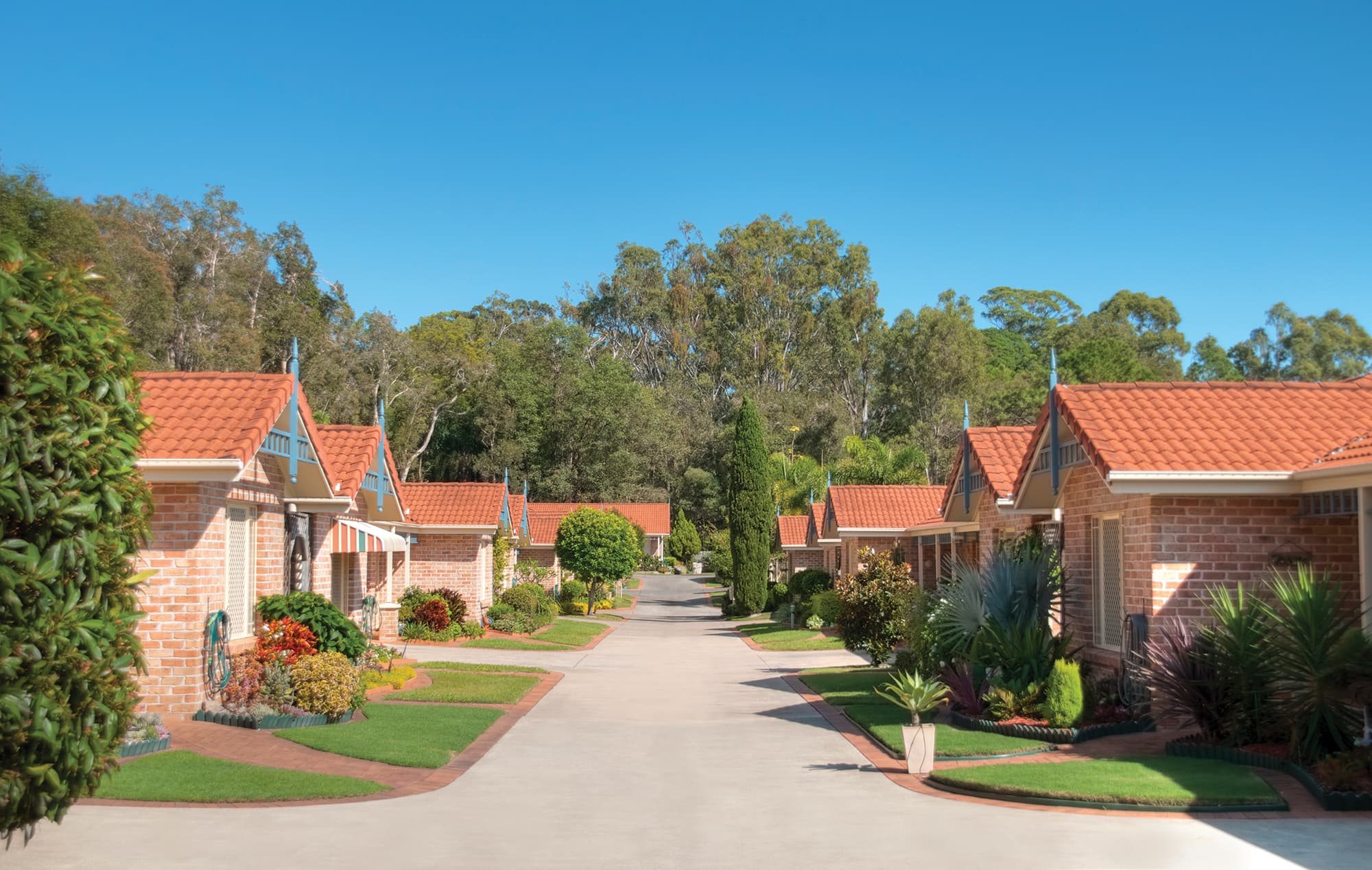
A retirement village is a residential community that is specifically designed and built for older people. Retirement villages are especially popular with both singles and couples who want more security and support while still living independently as they age.

In a retirement village, you will enjoy the privacy and space of living in your own home without the worry of day-to-day property maintenance or gardening. Residents in a retirement village also have access to a range of facilities, activities and social events.

Another major feature of retirement village living in Australia is the sense of community, with residents creating an informal support network and social groups. Increasingly, you will also find that a retirement village will offer flexible care and support which means you can continue living in your own home as you age and your care and support needs increase.

Retirement villages are different to aged care facilities. Nursing homes cater for people who need full-time care and can no longer live independently. Moving into aged care often occurs following a significant health incident, or when it’s considered necessary for one’s health and safety, it is rarely by choice.

In contrast to a nursing home, moving into a retirement village should be a choice at a time in an individual’s life where they can benefit from all that retirement village living has to offer.

What age to move into a retirement community?

Generally, the minimum age to move into a retirement village or retirement community is 55 years old. At RetireAustralia, the entry age of residents across our retirement villages varies, but on average, residents tend to be in their seventies when they move into a retirement village. The age of residents in a retirement village can be broad depending on their motivations for moving.

What do retirement communities cost?

If you’re thinking of moving into a retirement village, there are lots of things to weigh up and costs are one of the biggest considerations. Apart from day-to-day living costs, there are three main costs to consider when moving into a retirement village, the entry fee, the monthly service fee and the exit fee.

Entry fee

The entry fee is the upfront price you pay to live in your home in a retirement village. The amount will depend on the size, style and location of your chosen home. Unlike most property transactions, you will not pay stamp duty on your new home. This equates to a significant cost saving on entry.

Monthly service fee

The monthly service fee covers village operating costs, such as council and water rates, building insurance, home and garden maintenance, upkeep of shared facilities, and support staff such as the Village Manager.

By law, retirement village operators cannot profit from this fee which is charged on a cost-recovery basis only. You can also rest assured that it can’t be increased by greater than the Consumer Price Index without the approval of village residents. For further peace of mind, service fees are audited by an independent party each year.

It’s also good to know what is not included in the service. Things like your electricity, gas, household contents insurance or personal expenses such as telephone, internet and health care are not included in service fees.

Exit Fee

The exit fee (also called the departure fee or deferred management fee) is payable when you leave the village.

By charging this on exit – rather than incorporating it into the purchase price – you’ll not only free up your cashflow but find that your move into the village is much more affordable.

It’s important to note that the exit fee is the only charge that allows the retirement village operator to reinvest back into your village through capital replacement works, maintenance of communal facilities, and village upgrades. This helps maintain value in your home and community, which is important when it comes time to sell.

What’s more, in a RetireAustralia village, you’ll know the exact exit fee you’ll pay before you move in, making your future budgeting clear and predictable.

How do you get into a retirement village?

Unlike aged care facilities, which often have a long waitlist, getting into a retirement village is a bit like purchasing a home. The only time you would need to put your name on a waitlist is if there are no properties available at your chosen retirement village.

To get into a retirement village, start by making an appointment. You can use this time to tour the retirement village and view available homes. Talk to the Sales Consultant and the Village Manager to gather information, review pricing, inclusions, costs and to get a feel for the community.

Once you have found your chosen retirement village and property, you will need to place a deposit to secure your new home. Under RetireAustralia’s independent living unit residence contract, your deposit is fully refundable if you change your mind within the statutory cooling-off period.

Once you receive your contract, we recommended that you seek independent legal and financial advice. Also, consider discussing the contract with your family members so that everyone understands your rights and responsibilities.

Your contract will detail all the fees and what to expect when buying, while living with us and when you leave. At RetireAustralia, we’re upfront about our offering. You’ll always know what you’re signing up for before you get to the dotted line.

Once your contract is signed and agreed upon, you can officially move into your new home.

Can you rent a unit in a retirement village?

Generally, retirement villages do not offer the option to rent. However, there is a range of retirement villages with accommodation options to suit most lifestyles and budgets.

How to choose a retirement home

There are several factors to consider when choosing a retirement home, here are just a few:

  • Location: Decide on a location that will be the best fit for your lifestyle and the things that are important to you. Is it close to family and friends? Is it close to public transport and local amenities? Is it in a familiar suburb?
  • Availability of care and support: Consider your future care and support needs. Should your needs change, will you have access to in-home home care services? How about the ability to transition into a serviced apartment within the same retirement village?
  • Amenities: If you have specific passions or hobbies, look for a retirement village that will enable you to pursue them.
  • Property features: Look out for age-friendly design features which will enable you to live comfortably and independently in your home both now and in the future. Consider features like ovens and kitchen cupboards set at waist height or higher for ease of use; no, or very few steps or stairs; wider hallways and door openings; and reinforced walls to allow for later installation of grab rails.

The best way to get a feel for a retirement village is to make an appointment and go and visit. This will allow you to experience the village first hand. You can gather information and speak to existing residents to find out what retirement village life is really like.

Who can live in a retirement village?

Anyone who is 55 and over can live in a retirement village, however we find that residents in our villages are usually around in their lates 70s to early 80s when they move in. In the majority of villages, pets are welcome too!

In a retirement village friends and family are welcome to visit you and to stay over, however they cannot live with you.

If you have dependents in your care that need to live with you, exceptions can be made in some circumstances, this would need to be discussed with the retirement village operator and agreed upon before you move in.

How retirement villages work

Retirement villages offer the safety and security of village life along with ample opportunity to connect with a like-minded community.

In a retirement village, you have the benefits and privacy of having your own spacious home without worrying about maintenance or gardening which are taken care of by village staff. This gives you more time and the freedom to do the things that you enjoy.

Retirement villages are hubs of activity with plenty of opportunities for social connection. The amenities in each retirement village vary and can include a library, café gym, barbecue area, bar, workshop, billiards room, bowls green, tennis court, craft room, hairdressing salon, medical consulting room and a community centre. Village amenities can satisfy whatever it is that sparks your interest, and you can participate in as much or as little as you like.

Should you ever face health challenges, you can rest easy knowing that you can access flexible care and support to you in your own home as and when you need it. This will help you to stay safely in your own home for longer.

Do you pay rates in a retirement village?

Rates are paid by all property owners. Rates help pay for services provided by councils, for example, maintaining local roads, council facilities, parks and gardens. The amount you need to pay is usually calculated based on the value of your property.

In a RetireAustralia community, your rates are included in your monthly service fee. However, it is always best to double-check as in some retirement villages rates may be charged rates separately.

Can visitors stay with me?

Visitors are more than welcome to stay with you in a retirement village. After all it is your home!

Are pets allowed?

Many retirement villages are pet friendly. In fact, at RetireAustralia we consider pets to be part of the family and they are welcome to move in with their owners at the majority of our retirement villages.

What care and support is available?

Living in a RetireAustralia retirement village, you’ll have access to tailored care and support as you transition through life’s stages. You will always have the dignity of choice, allowing you to maintain control of the way your life unfolds.

Independent Living

Available in all retirement villages, independent living units are ideal if you want the freedom and independence of life one your terms with the safety net of a secure, like-minded community.

With no home or garden maintenance to worry about, you’ll have all the time and opportunity to enjoy the things you love. Whether you prefer keeping busy, relaxing, or both, there’s something for everyone.

Homes are also fitted with a 24-hour emergency call system, providing you piece of mind someone is available in case of an emergency.

Serviced Apartments

Serviced apartments support you to keep doing what you love, no matter your age or ability. They are perfect if your care needs become higher and you need extra support but want to continue living freely alongside your friends and family in a familiar community.

In a serviced apartment your meals are provided and your linen laundry, and apartment clean are taken care of. There are also staff on-site 24 hours a day.

Home Care

Home Care services can make life a little easier and give you peace of mind that, should your needs change, you can continue to stay safely in your own home for longer.

At most RetireAustralia villages our experienced Home Care team can help you with household chores, meal preparation, showering, dressing, and medication support, to name a few. Home Care is tailored to your individual needs and funded privately or through an approved government-funded Home Care Package (HCP). We can even help you navigate HCP approval through My Aged Care, the government assistance platform.

Respite Care

If you are recovering from illness, injury, or you live in your own home but need a little extra care and support in the short term, respite care could be the answer. For a small daily fee, you can access respite care in communities across the New South Wales Central Coast and Adelaide.

Are there lots of rules?

Our residents tell us that they don’t think there are a lot of rules and the ones that there are, are based on common sense and respect.

To discover in retirement living is right for you, download the FREE RetireReady guide.


Sign up for our monthly newsletter, Vitality!

Find a home that's right for you

RetireAustralia owns and operates retirement villages in 30 unique urban, seaside, tree-side and regional locations.

Queensland
Retirement Villages in QLD
View communities
New South Wales
Retirement Villages in NSW
View communities
South Australia
Retirement Villages in SA
View communities
Queensland
Retirement Villages in QLD
View communities
New South Wales
Retirement Villages in NSW
View communities
South Australia
Retirement Villages in SA
View communities

RetireAustralia primed to deliver 1100 new dwellings amid new housing crisis

As Australia stares down the barrel of a new housing crisis due to a rapidly ageing population, retirement village operator, RetireAustralia, is ramping up its offering and leading the way in providing innovative solutions to cater for older Australians.

RetireAustralia CEO and Retirement Living Council vice president, Dr Brett Robinson, said while the demographic and housing outlook looked grim with villages effectively full and the development pipeline slowing, RetireAustralia was staying ahead of the curve with a strong pipeline of new developments and a growing portfolio of newly completed villages, including The Green at Tarragindi, which officially opened last week.

“In the past year RetireAustralia has delivered 214 new dwellings, and is set to deliver just under 1100 in the space of five years,” he said.

“The Green, located eight kilometres from Brisbane’s CBD, is an exemplar in the field of evidence-based home and community design principles, which takes all aspects of sustainability and ageing into account.”

A new national Retirement Living Council report, released days after the opening of The Green, has outlined the value of retirement villages to Australians.

According to the Better Housing for Better Health report, those living in retirement villages across the country are helping taxpayers save nearly $1 billion in health care costs by delaying their entry into aged care.

The report also showed residents living in retirement villages are 41 per cent happier, five times more socially active and 15 per cent more physically active.

The Green, an $80 million vertical retirement village which includes 92 independent living apartments, also features an array of amenities, including access to Australia’s newest, championship-quality bowling green.

“Like all our villages, The Green is designed to offer choice, support, social connection and peace of mind,” Dr Robinson said.

Evolving from a property-focused sector in years gone by to one that now focuses on health, wellbeing and care, Dr Robinson said the retirement living sector was at a pivotal juncture.

“More older Australians are choosing to live in a retirement community rather than an aged care facility,” he said.

“It is critical that governments understand this as they plan for the significant increase of older Australians and aim to keep the aged care sector operational.

“At RetireAustralia, we are taking an innovative approach by providing a continuum of care model that allows seniors to age in place.

“At The Green, for example, we have a care concierge and for select future communities we will be introducing care hubs – specifically designed for higher acuity care.”

The Federal Government’s Intergenerational Report 2023 states the number of Australians aged 65 and older will double in the next 40 years, while the number of people aged 85 and older is set to triple to more than 3.5 million people by 2062–63.

While the 2022 PwC/Property Council Retirement Census found retirement villages were effectively at capacity nationwide with a supply pipeline of new stock slowing down.

According to the census, the development supply pipeline planned for the subsequent three years fell to 5,100 dwellings compared to the 2021 Retirement Census of more than 10,500 dwellings. Higher construction and debt costs, and an uncertain economic outlook may have contributed.

Increasing the development supply pipeline will not only help meet growing demand for accommodation options for older Australians but will also help address the nation’s housing crisis.

The Better Housing for Better Health report showed while the current pipeline of retirement communities will reduce Australia’s housing shortage by 18 per cent, growing the pipeline to meet current demand levels could ease this deficit by 67 per cent.

“Retirement living plays an important role in housing Australia’s growing ageing population, particularly as the nation battles an ongoing housing crisis,” Dr Robinson stressed.

Retirement communities are designed to provide an affordable option for older Australians, with the Intergenerational Report 2023 stating entry prices on average are 48 per cent lower than median house prices in similar areas.

“The focus for the sector needs to be on injecting supply into the market to meet growing demand but legislative reforms and other factors like high construction costs are making it harder for operators to build and operate age-friendly communities,” Dr Robinson said.

“Governments across the country need to realise if more seniors are living in age-friendly communities there is significant economic upside for them through reduced interaction with the health system and delayed entry to aged care, while more houses become available in the traditional real estate market.

“We are asking for a leg-up and if they create investment and development environments that facilitate more supply, the sector is ready and waiting to do it.”

Why a retirement village can help you feel secure

Retirement villages offer a unique and attractive accommodation and lifestyle option for older adults. These communities are designed to provide residents with a safe and secure environment that promotes independent living, social connection, and peace of mind.

Feeling safe and secure in a retirement village is a top priority for both residents and their families. These communities are specifically designed to provide a sense of safety. We take a look at some of the key factors that contribute to that feeling of security.

Personal Emergency Response Systems

All of RetireAustralia’s retirement villages are equipped with personal emergency response systems (PERS) in individual units. This allows residents to call for immediate help in case of accidents or medical emergencies. This gives great peace of mind, knowing that assistance is just a button press away.

Strong community

The sense of community in a retirement village means that residents often look out for one another. Neighbours become friends, and this social network can provide comfort and assistance during challenging times. Our residents often tell us that they feel secure knowing that there is a friendly face nearby.

“I’m scared of being on my own, so it’s peace of mind being here. I’m so relaxed and feel safe and secure,” says Tina, a resident at Magill Retirement Village in Adelaide. “Whatever happens I’m never going to be alone here. The same goes for other people who live here, if anyone needs anything, they can knock on the door at any time, but we don’t live in each other’s pockets.”

On-site team

Having an on-site Village Manager and village team, provides a sense of safety knowing that there is someone there to look out for the community.

“I like the help, the handyman is very helpful,” says Ann from Magill Retirement Village. “The staff listen to you and try to do as much as they can. We’re very fortunate to have our Village Manager Kelly here, she’s wonderful.”

Having an on-site village team helps residents to feel secure.

Maintenance and repairs

Retirement villages typically take care of maintenance and repairs in around the village and in common areas. This ensures that the environment is well-maintained, reducing the risk of accidents or issues related to neglected maintenance.

Home Care

We all want to stay safely in our own homes for as long as possible, having access to quality Home Care allows for this.

RetireAustralia Home Care and our Home Care partners offer a range of tailored services including domestic assistance, transport, grocery shopping, meal preparation, medication management and lots more. Getting assistance from a trusted and familiar face can make day-to-day life easier and give you peace of mind. The cost of Home Care can be funded privately or, subject to eligibility, by a government-funded Home Care Package.

“At one stage, we needed some care and we got in touch with the care team and they came up here,” explains Norm, a resident at Tarragal Glen Retirement Village in Central Coast. “We now get what we need. One of the best things about the RetireAustralia care team is you know you’ve got security with them, you know that everything is going to be OK.”

Home Care services in a range of forms, depending on what's needed to support residents.

Financial security

Financial certainty is one of the attributes that many people find attractive about retirement villages. The majority of RetireAustralia’s villages are leasehold or licence villages where we offer an independent living residence contract. With this contract, from the day you move in, you will know the outgoing payment you will receive. In uncertain times, you may find it comforting to know where you stand financially.

As mentioned, many residents love that there is a dedicated team who looks after things like home and garden maintenance and upkeep of common facilities. Your regular service charge will cover these costs and while these costs will increase from time to time, by law our charges are based on cost recovery only, meaning village operators cannot profit from them.

Convenient amenities

Many retirement villages offer on-site amenities which can include a gym, library, bowling green, bar, lounge and sometimes even dining options. These facilities make it more convenient for residents to enjoy a variety of activities right on their doorstep.

“Some of the residents are very busy,” says Jenny, a resident at Boambee Gardens Retirement Village in Coffs Harbour. “There’s a lot of activity going on here, they’ve got painting groups, yoga groups, there’s bingo and table tennis, there’s quite a bit going on.”

Overall, retirement villages are designed to offer a safe and secure environment, which is why they are a popular choice for those seeking a worry-free retirement. The combination of a supportive community, and accessible services contributes to a strong sense of safety and wellbeing in these communities.

Living safe and secure in a retirement village is a top priority for these communities. With controlled access, surveillance, emergency response systems, and a supportive social network, residents can enjoy their retirement years with peace of mind. The amenities, maintenance services, and access to healthcare facilities further enhance the sense of security. So, for those looking to embrace a worry-free retirement, a retirement village might be the perfect choice.

Discover if retirement living could be right for you by downloading our Retire Ready guide.

Sign up for our monthly newsletter, Vitality!

Find a home that's right for you

RetireAustralia owns and operates retirement villages in 30 unique urban, seaside, tree-side and regional locations.

Queensland
Retirement Villages in QLD
View communities
New South Wales
Retirement Villages in NSW
View communities
South Australia
Retirement Villages in SA
View communities
Queensland
Retirement Villages in QLD
View communities
New South Wales
Retirement Villages in NSW
View communities
South Australia
Retirement Villages in SA
View communities