Married couple of 63 years reunited after aged care heartbreak
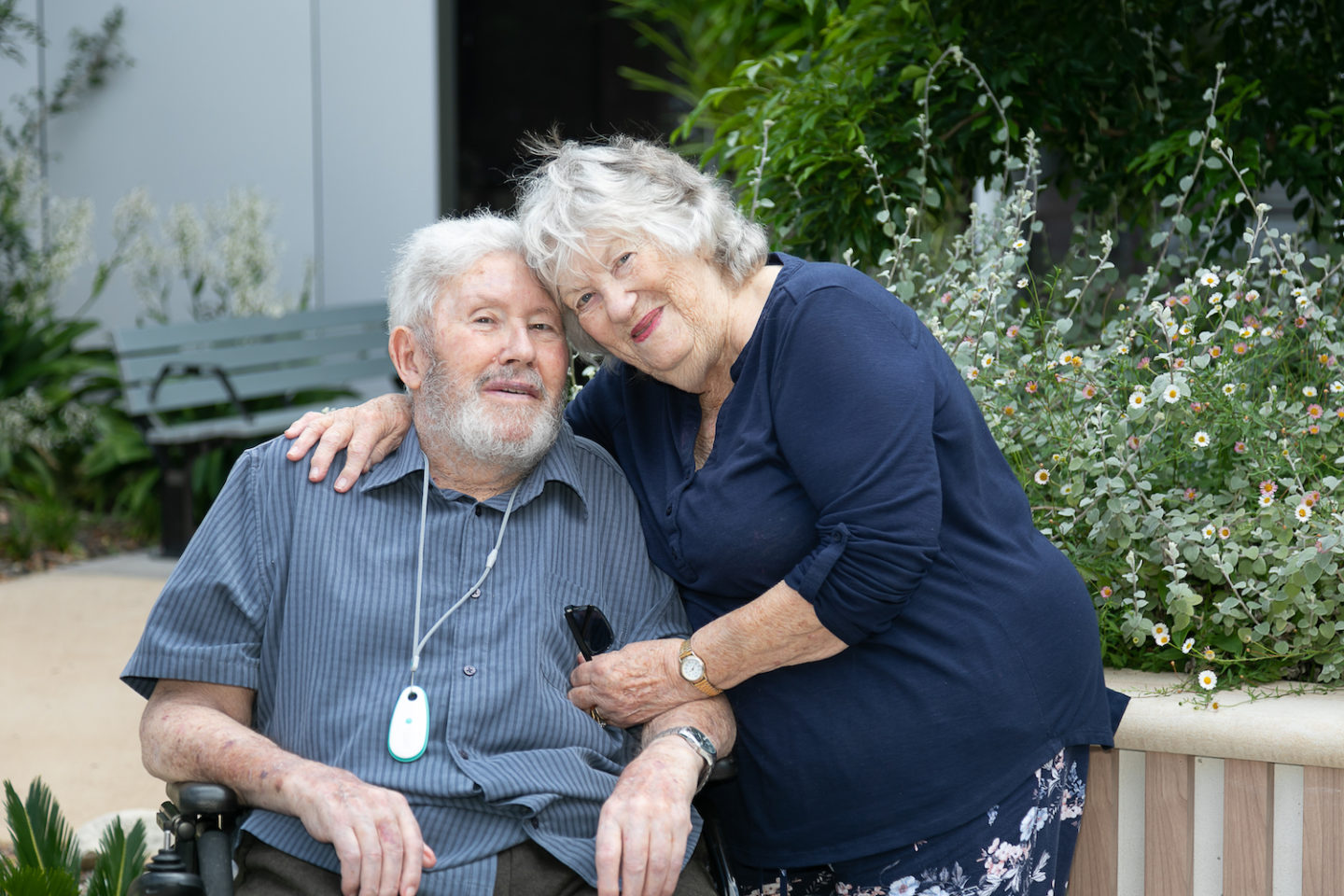
A Central Coast couple married for 63 years but forced to live apart for 12 months have finally been reunited, thanks to Glengara Care’s new approach to aged care.
A Central Coast couple married for 63 years but forced to live apart for 12 months have finally been reunited, thanks to Glengara Care’s new approach to aged care.
With a progressive disorder affecting his balance and movement, John Schulz and his wife Thelma made the painful decision for him to go into an aged care facility, a move that turned their lives upside down.
The couple held little hope of finding their way out of the heartbreak but are now back together and living at RetireAustralia’s Glengara Care apartments at Tumbi Umbi.
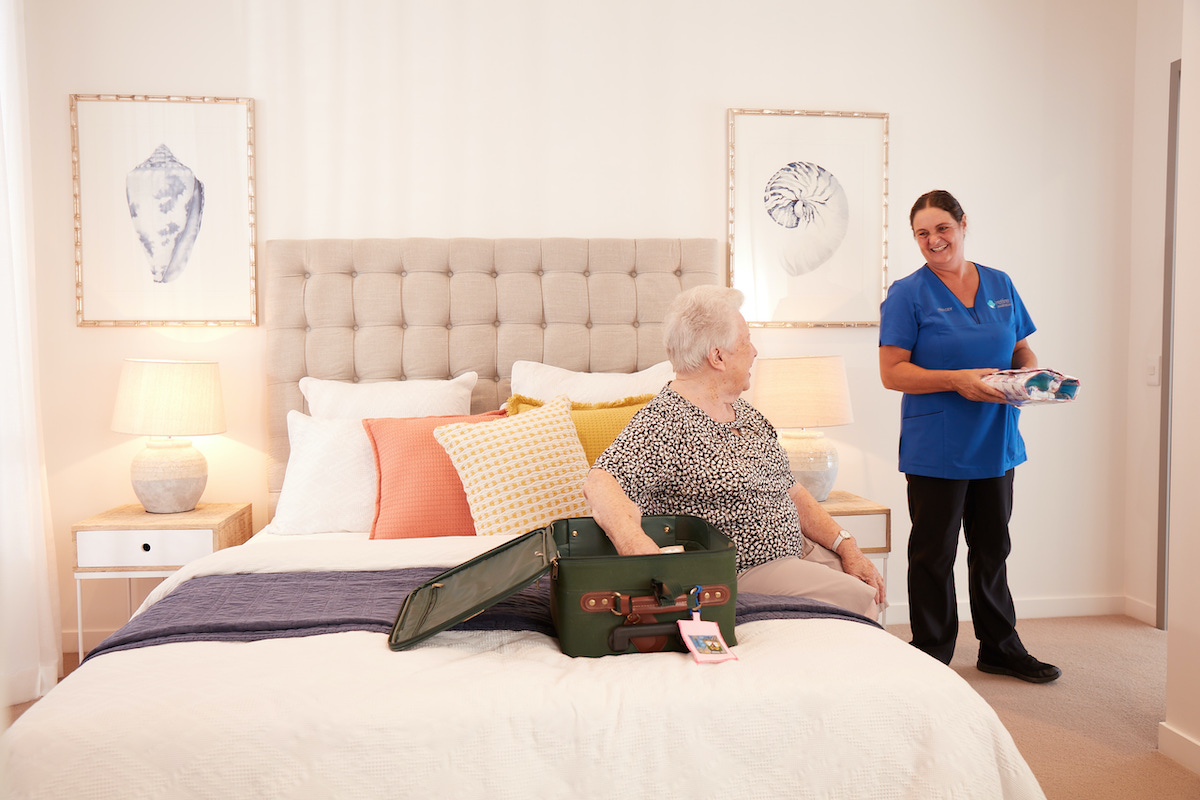
Overturning the traditional nursing home style of aged care, Glengara Care’s apartments are suitable for couples even if one partner does not require aged care.
RetireAustralia Chief Executive Officer Dr Brett Robinson said Glengara Care was a game-changing alternative to aged care on the Central Coast, providing the private support people needed to continue living a meaningful life.
“One of the first things visitors and residents remark on is that Glengara Care is nothing like a nursing home,” he said.
“While it offers an unmatched level of tailored care, it also means that couples such as the Shulzs can continue to be together, living life on their own terms in beautiful surroundings.’’
Certainly, since moving into Glengara Care a month ago, it has been a revelation for the Schulzs and has brought to an end a very difficult and emotional period of their lives.
After such a long stretch of living apart, they say it’s hard to overstate the importance of life’s simple joys such as holding hands and exchanging smiles.
While they are still settling into Glengara Care, they are quietly celebrating each new day.
Now preparing to celebrate 64 years of marriage, Thelma said their new life here was the best anniversary gift they could have hoped for.
“Our daughter Kim found out what was on offer at Glengara Care, and now that we’ve moved in we haven’t looked back,’’ she said.
“We’re still settling in but it’s great just to be together again.’’
“We are also enjoying the way we are being looked after here, and that includes no shopping or cooking,’’ said John.
The pair met at a social game of tennis in Sydney in 1952 when Thelma was asked to join John’s team – leading to a long, happy lifetime together which has included three children.
Glengara Care apartments are co-located within the established Glengara Retirement Village and offer the privacy of a separate bedroom, lounge, bathroom, kitchenette and outdoor space. Meals are prepared by a professional chef and staff are on hand 24/7 to provide an unmatched level of tailored care.
Residents share access to all the village facilities, including an expansive garden, bowling green, gym, café, bar, pool, library, beauty salon, consultation rooms and more.
To find out more about Glengara Care, call 1800 955 070 or click here.
87-year-old Colin Stracey has walked over 100 kilometres in laps around his retirement village to raise money for a charity dedicated to mental health.
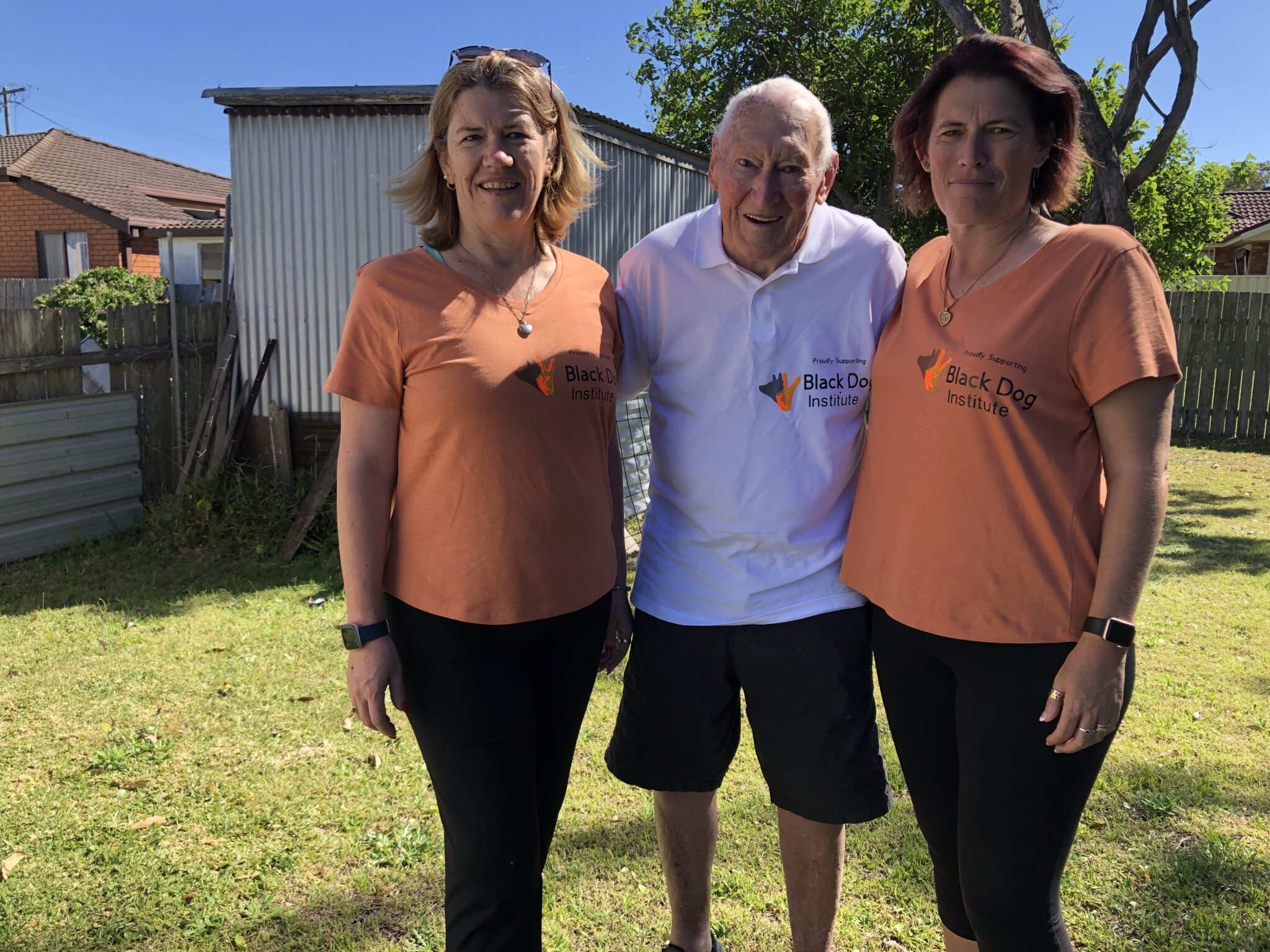
Colin Stracey, centre, walked 115km in a month by doing laps of Belrose Country Club retirement village. Here he is with his daughters Kim (left) and Nycolle (right).
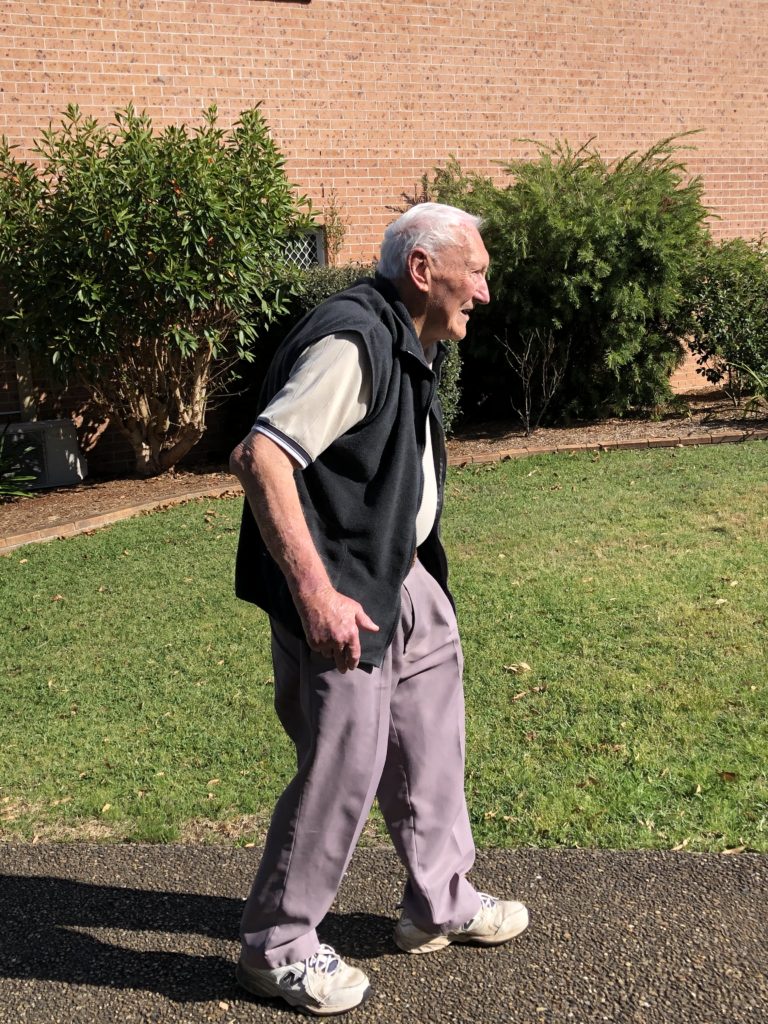
Former milkman Colin Stracey has become a familiar sight striding it out on his twice-daily 1.5-kilometre laps around RetireAustralia’s Belrose Country Club Retirement Village, located within Sydney’s Northern Beaches.
Earlier this year, 100-year-old British war veteran Tom Moore made global headlines when he raised around $60 million for the National Health Service by walking laps of his garden. In July, he was knighted by the Queen for his extraordinary effort.
Mr Stracey was part of a family team of eight raising cash for the Black Dog Institute during October, which was Mental Health Month.
His determination has lifted the hearts of other residents in the community, attracting waves and words of encouragement – with his efforts so far raising more than $640.
“I haven’t had anyone else from here join me yet, but they often give me a wave and speak to me as I go past,” said Colin.
He said he was surprised at the distance he had covered.
Although he has always kept himself fit, he had originally only aimed to cover 40 kilometres, but had managed more than double that.
His said walking for a cause had helped to inspire him.
Colin strides out daily, keeping fit while raising funds for mental health charity the Black Dog Institute.
“In my generation, mental health was and, in many cases, still is a taboo subject, but our children’s generation is a little accepting – but men in particular find it hard to talk about,” he said.
“Each member of our family team was aiming for 100 kilometres in October.
“It isn’t so much about the distance we walk, but the conversations we have along the way, the time spent together and the personal goals reached.”
Colin has been joined several times on his walks by daughter Kym Strode, who said she was proud of her father’s achievement.
“Dad has always walked for exercise but even more so now that he is living at Belrose Country Club, which has been a wonderful move for him.
“The family decided to enter this as a team because we believe it is an important cause and a topic that needs to be highlighted.”
Belrose Country Club Village Manager Dianne Bear said Colin’s achievements were a highlight among a range of local activities during Mental Health Month and had become a regular topic of conversation.
“At Belrose we believe staying active and having the opportunity to socialise and connect with others contributes significantly to an overall sense of wellbeing,” said Ms Bear.
Belrose Country Club offers two distinct living options to cater to a range of needs, with 27 serviced apartments and 200 independent living units. Each strata-titled independent living unit is spacious and elegant with a choice of one, two or three bedrooms while the village’s serviced apartments, located within the Country Club, offer added peace of mind through daily care services.
Interested in living, walking and have a great retirement at Belrose Country Club?
While city folks have therapy dogs for companionship and to enhance wellbeing, they do things a little differently at Newling Gardens Retirement Village in Armidale.
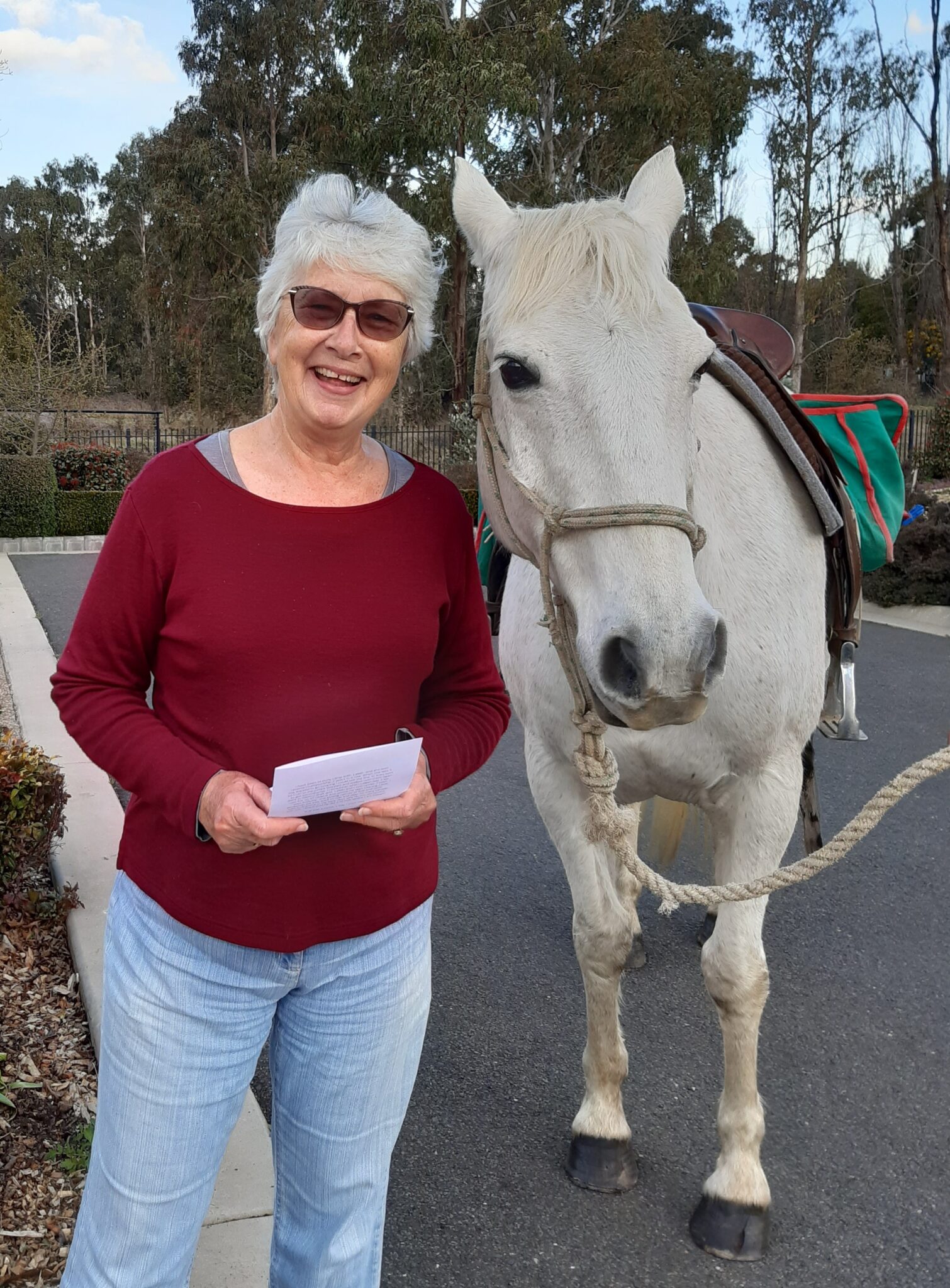
Happy the horse brings back happy memories for resident Kay Harman at Newling Gardens
A greying 20-year-old stockhorse with the sweetest disposition, it seems Happy the horse has found his calling and is proving that there is just no horsing around when it comes to the undeniable bond between animals and people.
Once a highly anxious animal that had worn a knee-deep furrow into the ground from nervous pacing around his enclosure, Happy is now the consummate companion.
At a recent visit to the village, he proved to be a patient and gracious receiver of many pats and brought back a flood of childhood memories for residents, many of whom recalled riding a horse to and from school every day.
Village Manager Sue Nelson said: “We wanted to do something that would brighten our residents’ day during the pandemic.”
“Many of this generation were raised on farms around here, and when they got to pat Happy it brought back so many sweet childhood memories of growing up on horseback.
“Some villages have therapy dogs but horses are something many residents here can really relate to. It was wonderful to watch and at times quite emotional.”
Resident and former jackeroo John Campbell, who founded a pony club at Kingstown in New South Wales 30 years ago, said the day was “just like old times’’
“We had a good old chat and pat. It’s been 10 years since I’ve been on a horse.’’
Raised on a station his father managed outside Mungindi in north western NSW, Mr Campbell said he was only three or four when he learnt to ride a pony his family kept in their garden.
“I remember trying to get the pony – which was named Jimmy – to canter around the yard. I did get him to go faster and I went off over the front. My mother yelled out to see if I was ok, and sobbing I yelled back: “Yeah. I’m OK.’’
Another resident, Kay Harman, said Happy’s visit “fondly brought back some very happy memories’’.
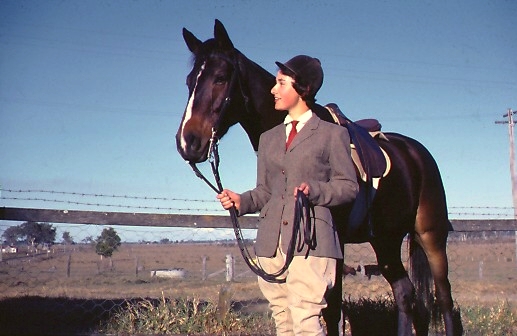
“Indeed, it took me back 58 years to 1962,’’ she said. It was that year she learnt to ride a horse while staying at the family home of her best friend in Casino.
Resident Kay Harnan with her horse Cover in 1962
She bonded with an ex-racehorse named Cover, pictured. “You can see what a handsome fellow he was,’’ she said.
“He stood a grand seventeen-and-a-half hands high and at first, I needed to scale the rails to get onto him.
“I had such professional teachers that I soon got the swing of things, mounted with greater ease and he and I bonded well.’’
Happy is one of eight horses from Ms Nelson’s own property, after she purchased him as a two-year-old with some obvious anxiety issues.
“At the time people were asking my husband and me why we were bothering with him and what use he was ever going to be,’’ she said.
“You would never think that to look at him now. He has turned out to be a fantastic horse and is so gentle and friendly that even our grandchildren can ride him.’’
Happy is now being primed for a return visit by popular demand.
Newling Gardens in an integral part of the Armidale community and is well known for its welcoming residents and award-winning gardens. Conveniently located, it is only a short walk from the city centre with its shops, restaurants, hospitals, medical services and sports clubs.
The best way to find out more about village life is to visit one of our communities, meet a few of the residents – both people and pets! And get to know the social and activity calendar.
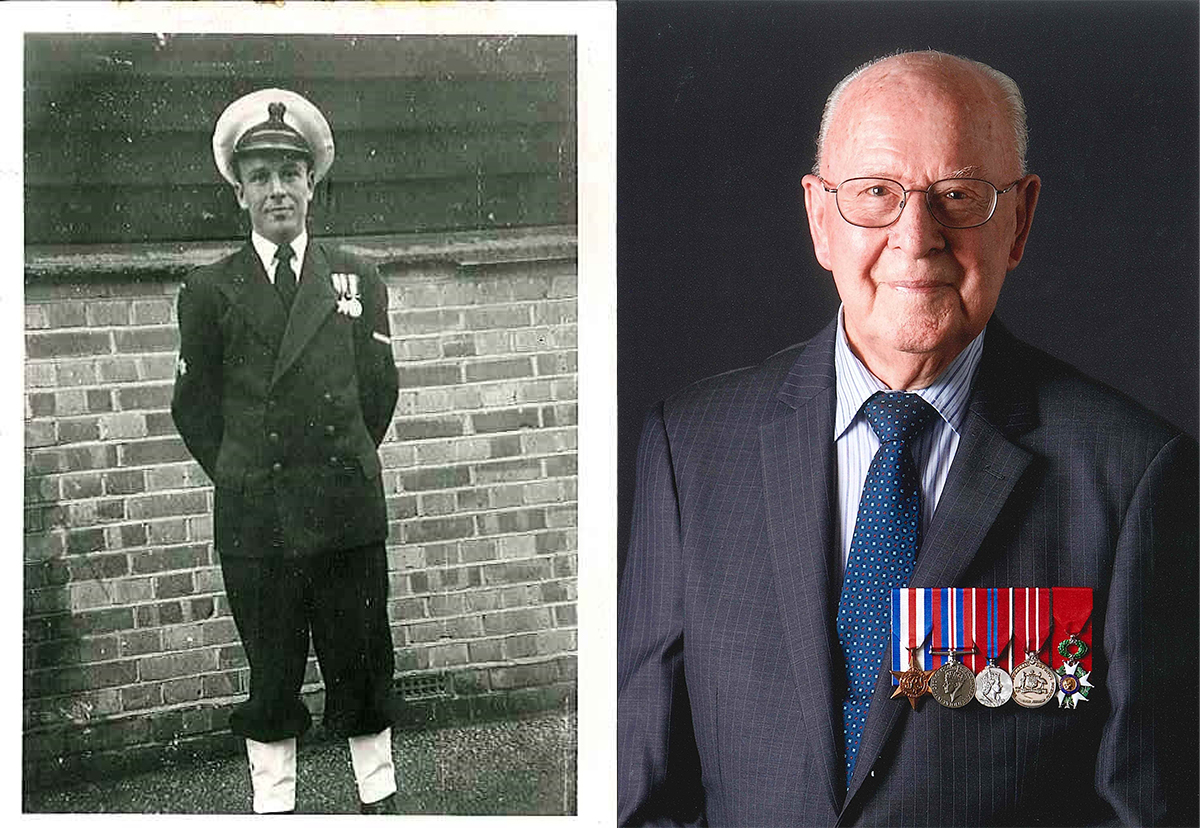
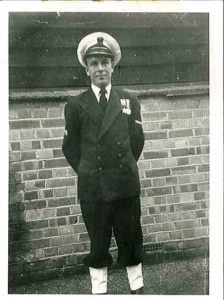
Boambee Gardens resident Ross Kingston, 95, is a World War II and D-Day veteran. He was involved in Operation Neptune, the largest amphibious landing in history, that saw 156,000 allied troops storm the French coastline on 6 June 1944 in the move to liberate France from Nazi Germany’s occupation.
Ross was born in Cardiff, Wales, in 1924, and enlisted in the British Royal Navy at the height of World War II when he was just 19. He was posted to Portsmouth in May 1944, joining the crew of the HMS Bulolo. Here, he tells his story.
“I served under Commodore Douglas Pennant on the HMS Bulolo. I was 19 years old when I enlisted, 20 during D-Day. We had the choice to be either a steward or a cook and I ended up being an Officer’s Cook.
King George IV and Prime Minister Sir Winston Churchill visited just before we sailed. We joined the ship the night before and then we sailed the next morning and were off the coast of France for two weeks. We got bombed a couple of days into it.
No planes were supposed to fly over the convoys, over the ships. This plane came over with the markings of a Spitfire from the English Air Force. It snuck in one day and took everyone by surprise. We were wondering what the plane was doing, we thought it was one of ours but it was a captured aircraft, piloted by a German pilot.
“We thought it was one of ours but it was a captured air craft, piloted by a German pilot.”
We were a combined operations ship so they wanted to put us out of action. Our ship was organising everything that was happening on the coast of France until the shore got established, organising the invasion. This surprise plane came over and dropped the bombs on the cabins and three officers were killed. I was sunbathing on the deck, not very far away. It frightened the life out of us.
There was not a lot of damage. They dropped sulphur bombs and it was meant to set fire to the ship but it didn’t work out. Luckily they put it out pretty quick.
There were plenty of ships around but we were the main ship and the only one bombed.
After the bombing, we stayed for almost two weeks. People were getting killed going to shore, there were bodies in the ocean. It wasn’t a very good sight.
After two weeks on the HMS Bulolo, I went to Portsmouth where I was put on another ship, a small ship. I was in Gibraltar when the war ended, on an LST, a landing craft. We were going out to pay the troops. It was marvellous when we found out the war was over.
It was a very strange time. You live from day to day but everyone was happy. You made the best of it. I’m glad I got through it. I’m 95 now, 96 in a month’s time.
After the war, I married Eileen, my teenage sweetheart. I went back to my old job at a paper mill but things weren’t the same. There wasn’t much money, and we were living with Eileen’s parents. When they were advertising for men to join the Australian Navy, Eileen rode away to apply. I didn’t know she was doing that, but five days later I was down in Portsmouth back in the navy again. I’m very happy Eileen applied. Moving to Australia was the best thing I ever did.
I joined the Australian Navy and served for six years in Nowra. When Queen Elizabeth II came to Sydney in 1954, we were the escort ship for the royal couple. We went to every port in different states, showing the flag. I was very proud. I’ve always loved the water and have always been happy at sea.
I became an Australian citizen in 1980 and received the French Legion of Honour 70 years after the end of WWII. Everyone who took part in the invasion got the French Cross. It was quite a surprise coming so long after the war.
I’ve been back to Wales a couple of times. I was there for the 75th anniversary of D-Day and we had a marvellous time. We went back to France and were treated like lords. The experience you can never explain. We were on the go all the time, one ship to another.
“It was a great life. I wouldn’t miss it for the world.”
I wear my medals every ANZAC Day and Remembrance Day. I think people should reflect and remember every year. People [at the services] are very Australian. People are very proud to be Australian. I know I am.”
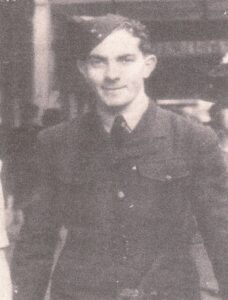
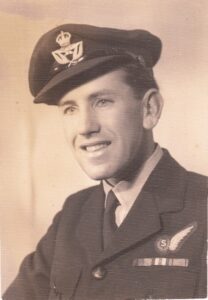
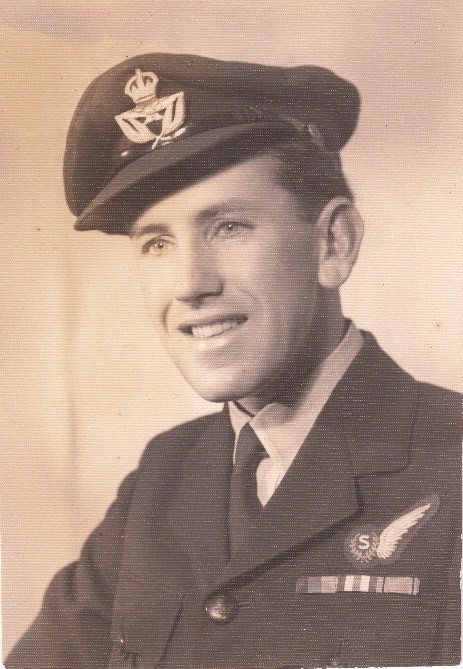
Syd joined the Royal Australia Air Force (RAAF) on 26 January 1943. He was sent to the Townsville Base to help prepare American vehicles for use in the war. It was the first time Syd and his mates had ever driven an automatic. This is his story.
October 1943: ‘Be ready to leave’
On 11 October 1943 I turned 19 years of age. You were not allowed out of Australia to an overseas War Zone until you had turned 19. Not long after, we were woken up one morning at around 4:00am and heard the words, “let’s go boys, we are off. Be ready to leave in one hour”. We were then picked up and loaded onto a truck and taken to the airstrip. There were about 15 of us, and once at the airstrip we boarded a DC3 Freighter. The month was November 1943, and it was quite hot.
A couple of young fellows were loading the gear and another young chap, who looked about 17, with no shirt on, just shorts, flying boots and a cigarette, said, “OK boys, get the gear on and let’s go”. We all looked at each other, then he said, “who’s in charge of you people?”. In the distance I heard, “I am”, and the Sergeant appeared. Then the young fellow in the shorts and boots said “OK, I want a hand up front, we are ready to go”. He locks all doors, checks everything is secure and hops into the pilot’s seat and the Sergeant sits next to him. The engines start, clearance from the tower was requested and given, and off we go. There were no seat belts as there were no seats. We sat on luggage and kit bags.
About two and a half hours later, we arrived at Milne Bay, New Guinea. The young fellow was, in fact, a flying officer and he had made a perfect landing. We arrived in time for breakfast of bully beef and diced carrots – welcome to the War Zone. A few hours later, we boarded another flight to our real destination – Goodenough Island – a small island off the tip of New Guinea. After heavy fighting and bombing to remove the Japanese, the place was a mess.
“We arrived in time for breakfast of bully beef and diced carrots – welcome to the War Zone.”
Our group joined up with Transport Section 7, transport, and movements, which was transport support for two Australian Squadrons; Beaufort Bombers (No. 7) and Beaufort Fighters (No. 100). We handled everything that came in from sea or air. Included in the cargo list were people, food, drinks (including liquor), ammunition, bombs, spare parts, vehicles, and so on. We even collected 44-gallon drums of Japanese fuel which were scattered around in the jungle.
December 1943: all hell broke loose
By now it was December 1943, and our aircraft were making great inroads into Japanese-held territory. The Japanese had taken over most of the islands in the area and were heading for Australia. We had a very large contingent of both Australian and American soldiers on Goodenough Island and we were expecting trouble at any time. Sure enough, there was!
Around midnight, Christmas Eve, 1943, all hell broke loose. We had a large rail hanging from a chain located near the mess hut and it was hit with a hammer at lunch time, or whenever we were all required. It rang like a church bell, very loud, and even louder at midnight. We were told to lay in the trenches, face down, hands over our ears, never mind the trenches being half full of water. The noise of hundreds of ack ack guns, machine guns, bofors guns and anything else that could be fired – all going off at once – was deafening. There were many Japanese bombers, but they were kept up high and silhouetted against the moonlight. The airstrip was heavily damaged, and an Army searchlight received a direct hit. Sadly, five people lost their lives.
“We were told to lay in the trenches, face down, hands over our ears, never mind the trenches being half full of water.”
By the following morning, Christmas Day, all persons were accounted for except the Commanding Officer. A search was organised, and I found him propped up against a tree, dead, his gun by his side. We were all nervous now, wondering when the next attack, possibly with more aircraft, may come. Thankfully, it did not happen. Our Fighters and Bombers traced where the Japanese came from and put that lot out of business.
Mid-1944: a horrific aftermath
By mid-1944, the Japanese were moved further away, and we were also moved up. This time we were relocated to Madang, East Coast, New Guinea. What a sight that was! Japanese ships sunk in the harbour, their vehicles and smaller vessels were also destroyed. Trees stripped of their branches and bomb craters everywhere. I was part of the RAAF Advance group, as was my mate, Jimmy Phillips and a dozen others. The Japanese had only just been pushed out and the aftermath of the battle here was horrific.
We selected an area to set up our tents, only to discover we were walking on live ammunition. A large bomb crater was found, then we set about picking up what we could find and putting it in the crater. Then in good military style, the Sergeant said, “OK, take cover, I am going to throw a grenade into the pile, so keep your heads down”. This he did and the explosion widened the crater to twice the original size.
Army bulldozers moved in to clear the area and we set camp right on the water’s edge. The tents were set up and the rest of our crew arrived from Goodenough Island. All our aircraft had departed so they could reach further north driving the Japanese back and sinking their ships. We still operated the same, however another Transport Unit would take our place further up. This place (Madang) was much busier than Goodenough Island with more aircraft coming and going.
We used to swap fresh fruit with the Navy boys for fresh meat and their iced bubblers below deck was something else. On the island, for most of the year we found plenty of banana and pawpaw, however here in Madang, nothing for some reason.
Another thing we did was a lot of fishing but not in the usual way with lines or rods. We just found where they were and dropped a grenade over the side of the boat, waited for the stunned fish to float to the surface, then picked them up. I guess not getting blown up in the process was the real trick!
“We just found where [the fish] were and dropped a grenade over the side of the boat.”
The Americans had lots of soldiers in the area and they would set up picture shows within the jungle setting. I used to drive one of the big American GMC vehicles to take all the boys to the various venues. The large screen was hung between two palm trees. We had good waterproof groundsheets, which you could also wear. Many a night we sat in the pouring rain, with groundsheet and an Air Force hat on to watch the pictures.
A family reunion
One night, Jim Phillips and I rowed across to a Navy ship anchored offshore. In the distance we could see another ship with all the flags and bunting. We pulled up alongside and sang out to the Duty Officer “what is on tonight?”. He said an Army Entertainment Unit, the ‘Tasmaniacs’, are here. I said to Jim, “my brother Arthur is the Officer in Charge of that unit”. We went on-board and the Officer said, after I told him who I was “we’ll surprise him”, and we did. He could not believe his eyes. We stayed for the show, and I was able to see quite a lot of Arthur for the next week or so. It was really exciting to see him.
Because the war had moved much further north, things quietened down a lot. No more air raids and not a lot happened, just the routine stuff. The time seemed to go a lot slower up until one day, early in 1945, my 18 months away had come to an end and my posting home had come through.
Training: from Lindfield to Narromine, Maryborough to Evans Head
I joined the Royal Australian Air Force at the age of 18. My first camp was Bradfield Park, Lindfield for six weeks of training then we were sent to the Elementary Flying Training School in Narromine, NSW. The only one with a driving licence, I became a temporary driver. First job was to drive an old fuel tanker and re fuel a Tiger Moth aircraft: I was asked to back up a little further, the tanker took a “jerking motion” and tore some fabric off the plane. No more fuelling jobs, or any driving jobs for that matter!
Next job was lighting runway flares for night flying exercises; a burner blew up and scorched my face, burnt off my eyebrows and singed my hair. By this time, they were fed up with me and others, so back to Bradfield Park, where three of us were given the choice of becoming Wireless Operators, Navigators or Gunners. We all chose Wireless Operators, training on single engine monoplanes called Wacketts.
I then went to Maryborough, Queensland, learning Morse Code and Radio Operations. For training in Morse, we were taken out in vans to send/receive messages back to base. I contracted dengue fever and was hospitalised. Returning to training, I was placed in a different group where I met a special friend, Eric Birch. Near training’s end we were placed in “iron sheds” within a large hanger to send and receive Morse messages, while a few guys threw rocks at the sheds to simulate artillery and canon fire.
“We were placed in “iron sheds” within a large hanger to send and receive Morse messages, while a few guys threw rocks at the sheds to simulate artillery and canon fire.”
From Maryborough, it was onto the Evans Head, Bombing and Gunnery School, for aerial gunnery training from worn out British Fairy Battles (aircraft). Target practice was firing at a Drogue, towed by another aircraft. Wind deflection and swaying made for some terrible and comical results. One Drogue plane had bullet holes in its tail, while one fellow put bullet holes in the rudder of his own plane.
On completion of the course we received our half wing with W.A.G. This made us qualified “Wireless Air Gunners”. After some leave, it was back to Bradfield Park amid rumours we were going to England.
1942: Brighton via Angel Island and Fort William Army Base
On 4 November 1942 we were transported to Darling Harbour, where we boarded the commandeered ex-passenger liner, MS Mariposa, destination, San Francisco. When on board, we were handed a brown packet, which turned out to be cigarettes, and that was the start of a smoking habit that continued to 1965.
We arrived in San Francisco on a foggy, dull morning, seeing the Golden Gate Bridge for the first time. After docking, our group was transferred to Angel Island, an American Army camp, where we stayed for 10 days, before being taken to Oakland to board a “Pullman” train bound for New York. Stops were made at Denver and Chicago and the train slowed when passing Niagara Falls so the passengers could enjoy the view of the Falls. After a 6-day journey, we reached New York then were taken to Fort William Army Base. We were given seven days’ leave to take in the city which was a bit of a shock for the boys from the country. Three mates (Eric, Clyde and Speed) and I found a good hotel just off Broadway and stayed there while on the leave break.
No sooner back at Fort William, we were transported to the Hudson River Docks to board another vessel, this time the Queen Mary, bound for Greenock, Scotland. It was an unescorted crossing because she had the speed to outrun German Submarines. After docking at Greenock, we boarded a train going to Brighton, south of London. We billeted in the Grand Hotel and our first meal there was brussel sprouts and cheese.
Operations over Germany were few and far between at this time due to extreme weather and heavy snow at the bomber bases. Consequently, we were holed up in Brighton for some time. Statistically, Wireless Operators had a higher survival rate. One morning in February 1944 I was part of a gathered assembly of wireless operators to hear an announcement from an Officer. They were asking for volunteers to go on operations as Straight Gunners. Being weary from the long delays in Brighton, there were several who stepped forward, including two of my best mates, Eric and Clyde. I tried to pull Eric back, but he had recently received a letter from his brother who was on the Kokoda Trail in New Guinea, and he felt he was not doing enough. Eric and Clyde became gunners.
Next was a transfer to a No. 2 Radio School at Yatesbury, Wiltshire, for training on new radar equipment. It was a large posh place, but the food was something else. First night we had Welsh rarebit and for breakfast we lined up for porridge and discovered it was boiled cheese (sounds like inventive cooking). Lunchtime, we were confronted with brussel sprouts and more cheese; there was a “revolt”. General mayhem erupted with tables and chairs thrown at the windows. The rations improved markedly.
“General mayhem erupted with tables and chairs thrown at the windows. The rations improved markedly.”
1944: A fully trained bomber crew
The reason for the long delay in getting to a squadron for operations, was a surplus of Wireless Operators. In July 1944, we were posted to No. 27 Training Unit, Litchfield, Staffordshire, where all trainees – pilots, navigators, wireless operators, and gunners were to finally crew together. About 200 of us gathered in a hanger to sort ourselves into crews. Sitting on a stool, I was wondering what I would do, when a hand hit my shoulder and an old friend, Lyle said, “hello chum, fancy meeting you here”. We crewed up immediately. Lyle eventually got a full crew together: No. 27 Ops. Training Unit was specifically for Australian aircrew to train on twin engine Wellingtons in all weather conditions. After weeks of training, Lyle was qualified to fly solo. We left Litchfield the first week of October as a fully trained bomber crew.
During October, I received a letter from Eric who had been posted to a Lancaster Squadron in Lancashire. He asked if I wanted to meet in a pub in Ely to have a drink for our birthdays, which were both in the first week of November.
We would have been 21, so it was a special occasion. I caught a train to Ely, found accommodation, intending to stay three days, located the pub, and waited. After two hours, I approached a group of air crew at the bar and asked if they knew Eric Birch. They all looked at one another, with one suggesting I ring the Adjutant. I did and was advised that Eric went missing on a bombing mission over Germany in late October and was presumed dead. This was such a shock. I went back to the Lodge, packed my bag, and caught the next train back to London.
March 1945, 462 Squadron – Foulsham, near Norfolk
We finally arrived on an Operational Squadron. Following two weeks of lectures and instruction, then on 27 March 1945, we went on our first operational flight: Bremerhaven, Germany.
2 April 1945. Our next target was Strade Aerodrome, near Hamburg, which was a major German fighter base. The Mission was to destroy their operation. Two nights later, we found out our next mission objective was to go to Berlin, a 1000 bomber raid.
All aircraft were heavily laden with bombs and additional fuel. We took off at 1905 (7.05pm) and on climbing over the Channel, we ran into thick fog which continued over France. Our aircraft was vibrating so badly, the pilot called out “who’s got a hatch open”. Vibrations became more violent, when suddenly breaking out of the cloud, we were in the slipstream of a Lancaster which was only 50 feet above us.
“Vibrations became more violent, when suddenly breaking out of the cloud, we were in the slipstream of a Lancaster which was only 50 feet above us.”
Berlin was heavily defended; many searchlights and heavy flak bursting around us. The sky was filled with shrapnel. Bombs released, we got out of the target area and avoided the searchlights. The pilot asked me to check on the Navigator as he could not raise him. It was difficult reaching him, however, I found him rigid and staring at nothing. After a couple of sharp jolts, he looked at me and I said, “the pilot is calling you for a bearing home”. The Navigator nodded, contacted the pilot, and gave him a bearing for home. After flying some 20 minutes, the pilot called me to have a look down and what I saw was a river of fire. I said to the pilot, “looks like we are over the Allies’ 2nd front”. Pilot’s response, “2nd front be buggered, that is the Russian front”.
The pilot managed to retrace our steps and by this time, we were 40 minutes behind the main bomber stream. We finally landed back at base at 3:00am after an 8-hour flight and almost out of fuel.
We were briefed on a mission to Munich, take off at 1700 (5:00pm). On nearing the target, I got a blip on the radar screen showing a fighter approaching fast at four miles out. The gunners had visual at one mile out and opened fire. It was a twin engine Messerschmidt. There were lots of search lights but less flak than other times. After the war, my brother Vince told me he was a P.O.W. in Munich at the time, not far from the bombing targets. What a coincidence.
On the return trip, the radio was U/S (unserviceable). Following training procedures, I removed around 15 valves, placed them in order on the deck when we did a big dive to starboard. Yep, you guessed it, the valves rolled everywhere and were now mixed up. Not knowing the right order for reinstallation, I just plugged them in, gave it a big kick with the boot (like kicking a tyre when buying a car) and the radio burst into life. I was commended on my actions. Next thing the pilot called up and asked, “what was that below?”. It turned out to be barrage balloons over London; we were 90 miles off course, another navigator error. Lucky the artillery did not fire on us.
On 7 May 1945, we were on standby for another operational flight, rumoured to be Berlin. However, at midnight it was cancelled. The following day we knew the war was over. Sadly, my other good friend, Clyde Innes, did not survive the war.
My brother Vince had been released from the P.O.W. Camp; we met up in London and spent some valuable time together. I sailed home to Australia on the “Durban Castle”, arriving in Melbourne on Australia Day 1946.
Seniors feel safer in retirement communities during pandemic, survey reveals
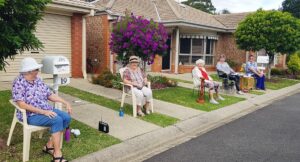
More than 80 per cent of Australian seniors say they feel safer living in a retirement village than in the wider community during the COVID-19 pandemic.
More than 97 per cent of the survey respondents felt “safe and informed’’ and 93 per cent felt “valued and supported’’.
Despite the health risks, only 9.5 per cent ranked fear of contracting the virus as their primary concern, while 48 per cent indicated they were more worried about not being able to see family and friends.
RetireAustralia Chief Executive Officer Dr Brett Robinson said the survey affirmed the sense of safety and wellbeing that older Australians felt when living in a supportive and close-knit retirement community.
“In addition to having medical staff close at hand, being able to socialise with like-minded people can be an important advantage over feeling isolated and alone,” Dr Robinson said.
“Our communities have been extremely creative in the way that they have helped our residents maintain their friendships and continue to have fun over the past few months while adhering to social distancing guidelines,” he said.
“For further peace of mind, a range of our communities have also assisted residents with home delivery of groceries and everyday essentials including medical scripts during general lockdown periods.”
Residents have come up with an array of innovative activities to keep spirits high.
These have included everything from socially distanced dancing in the streets to window decorating competitions. Others have even started leaving anonymous, positive messages written in chalk throughout their communities for neighbours to find and brighten their day.
Almost 70 per cent of the residents surveyed said they had been able to keep busy and productive during social distancing restrictions, using the time to complete household tasks or pursue hobbies they have been putting off – including cooking and cleaning.
More than 50 per cent reported using technology to connect with loved ones and spending extra time online while 42 percent said they were following a new daily routine and 41 per cent were doing more exercise.
A total of 39 per cent of RetireAustralia residents said they hoped that people would learn from their experiences during the pandemic and become kinder and more compassionate towards one another.
Sisters Delma Marsh and Evon Hall, aged 77 and 79 respectively, live next door to each other at Wellington Manor Retirement Village on Brisbane’s bayside and are among those who value the safety and security of retirement village living.
While Mrs Marsh has been at Wellington Manor for six years, Mrs Hall moved in two years ago from Sydney after her husband died. Both agree they feel safer living in a retirement community.
“I shudder to think how I would have coped being on my own in my old home during COVID lockdown,’’ said Mrs Marsh.
“I think everyone here in Wellington Manor would feel the same. I value safety and security highly and if had been living alone and isolated in a big house, I would have been so depressed.
“We have still have stringent rules around social distancing here, but it has kept us all safe and I don’t think anyone would have an issue with that.’’
Mrs Hall said the value of maintaining some form of social contact could not be underestimated.
The best way to find out more about village life is to visit one of our communities, meet a few residents and get to know the social and activity calendar.
Perhaps you are recovering from major surgery or complicated health issues. And because you live alone, you’re wondering how you are going to cope with all the little things like cooking and cleaning, let alone changing bandages.
Alternatively, maybe you’re a carer for a family member. This can be one of the most demanding jobs of all. You may just need some valuable space to rest and recharge – because everyone needs a holiday!
At Glengara Care, we offer short-term respite care for all of these circumstances and much, much more. In addition, you won’t need ACAT/ACAS approval to qualify for respite care with us.
‘A five-star hotel without the cost’
While our residents and guests are assured the highest quality of care during their stay, we also go to extra effort to ensure those in our care feel special and valued.
Some of those who’ve stayed with us have even described it as a “five-star hotel without the cost’’.
Anne Cleaton, who booked in for respite care while recovering from an operation, says she was most impressed with the “pampering’’ she received – allowing her to return home happy and healthier.
“I had an operation and since I live alone I knew once I left hospital it would be difficult for me to function and get my own meals,’’ Anne said.
“Respite was the best way for me to go for two weeks. It was really good because everything was done for you.
“A respite stay at Glengara Care gives you the space to recover.’’
Anne said that no task appeared too hard for the friendly, caring staff.
“It was all of the little things that the staff did for me,’’ she said. “I was on a walking frame which was very difficult.
“Being in Glengara Care, a lot of the little things like making the bed were done for me.
“I left dishes in the sink one day and I came back into my apartment and they had been washed up and put away. The staff were so caring.
“Go and have a look round. If they aren’t too busy, one of the staff will show you over the complex. It’s like a five-star hotel without the cost.’’
Think of it as a vacation
While you stay with us, you will receive a registered nurse-led model of care and 24/7 assistance from our dedicated, on site care team.
Your own private care apartment is beautifully furnished and has a lockable door for additional privacy. Live at your own pace, and stay for as little as 14 nights or as long as six weeks.
Respite care can also be the best way to experience all the benefits of living in a Glengara Care apartment and can offer peace of mind for those who might be considering making the move permanent.
This respite service allows you to experience the Glengara Care community and all of Glengara village’s stunning facilities. Treat your time here as a relaxed and supported vacation, for both you and your caregiver.
Enjoy the beautiful gardens, relax in our comfortable lounge and get involved in community life. Activities vary from billiards and bowls to movie nights and craft afternoons.
Discover life in our beautiful Glengara Care community and experience the benefits of short-term respite care. Call 1800 955 070 or click here.
Barry spent 17 years as a jockey in New Zealand, South Australia, Victoria and Coffs Harbour, winning the Coffs Harbour Cup on Sabre Luck in 1991. He was also a successful horse trainer for 10 years. Here, he tells us a little about his background, and shares a rollicking tale he wrote about a horse he once rode.
In Barry’s words
“Mum was a keen racegoer and two or three of her younger children would tag along with her, including me, when she went to the races.
We children loved it and always had a penny ice-cream and sometimes a meat pie, which would be cut in half with a pocket knife. We knew all the jockeys and told everyone that they were our friends.
I could hardly wait until the day I could put on colours. In my very first horse race after being legged up on the horse, I didn’t know what was happening as I had no idea how to ride. After it was all over, they told me that my horse had run first. What the hell had happened?
“I could hardly wait until the day I could put on colours.”
When I was 21 years old I met a woman about twice my age who said she was a medium and would read my palm. She told me that I would soon have many winners and money, but I had to get rid of my girlfriend. Anyway I went to Australia for two years for a holiday and rest, however that was over 60 years ago and I married an Aussie and since have had a happy life and been pretty well off.
It’s been so long now since I touched a horse. I forgot which end bites and which end kicks.”
Barry’s tips for the Melbourne Cup: Barry takes little notice of the horses when picking a Cup winner. He looks to the jockeys and chooses successful riders, taking particular notice if they’ve had success over similar distance to the Cup in question. Only then does he look to the horses they are riding for the big race. He says if a horse has no form and hasn’t won in the last 20 starts, the jockey would have to be a miracle rider to get it across the line in the lead, but if the horse has reasonable form too, you’re onto something!
Barry writes: The tale of the box brownie photo
It’s that time of year again and all the smart race people have the Saturday paper spread out on the nearest table reading the Race Section!
Yes, it’s Melbourne Cup Day and anyone with half a brain will know that the oldest, biggest, brown male will win! Or it may be the smallish red one that takes their eye? And of course, there’s that small person that sits on his or her back!
You only have to ask your barber. He knows exactly what will win, as he picked last year’s winner and it only took him about 24 choices. He’s the best to ask.
I spent most of my life around horses, was apprentice to a stable at 14 years old and had my first race nine months and 10 days later. I rode in 88 races in four years and managed to ride four winners. The old trainer only wanted the lightweight kids to ride their team track work. Yes, it was early mornings and only seven days a week. We had to be on the track by 4am and have the track work done by 9.30am. Then the rest of the team was worked on the roadside. After that it was a small lunch, mostly some piece of old mutton or some old chook. Didn’t see too many roast dinners!
A good horse could cover one furling, or 200 metres, in eight or nine seconds, so that was always saved for the last furlong. All the real slow ones either became jumpers or ended their last days waiting to become dog tucker. They passed by quite regularly.
Seventeen years passed by and I had had enough and although my weight remained light, I left and became…. Yes, a barber, giving winners out to the hopefuls!
I was often asked if I had ridden a Melbourne Cup winner. I always answered yes, as that was the truth. “Dalray” won the Cup in 1952 and I rode him in a track gallop on the 1st of January 1950 at one of the small country race meetings where his owner, Cyril “Apples” Neville lived and owned a produce store. He knew our family so Mum asked him could I have the glory of riding Dalray on that work out. He felt so strong and, although he only had to run down the straight, the power and speed he had, it made the tears run from my eyes. And poor old Mum had a box brownie photo of me coming down that track!
So, I DID ride a Melbourne Cup winner and he won that day the hearts of many.
Newling Gardens resident Thelma McCarthy has mixed with Prime Ministers, been a well-recognised advocate on women’s issues, and opened many of Armidale’s public buildings.
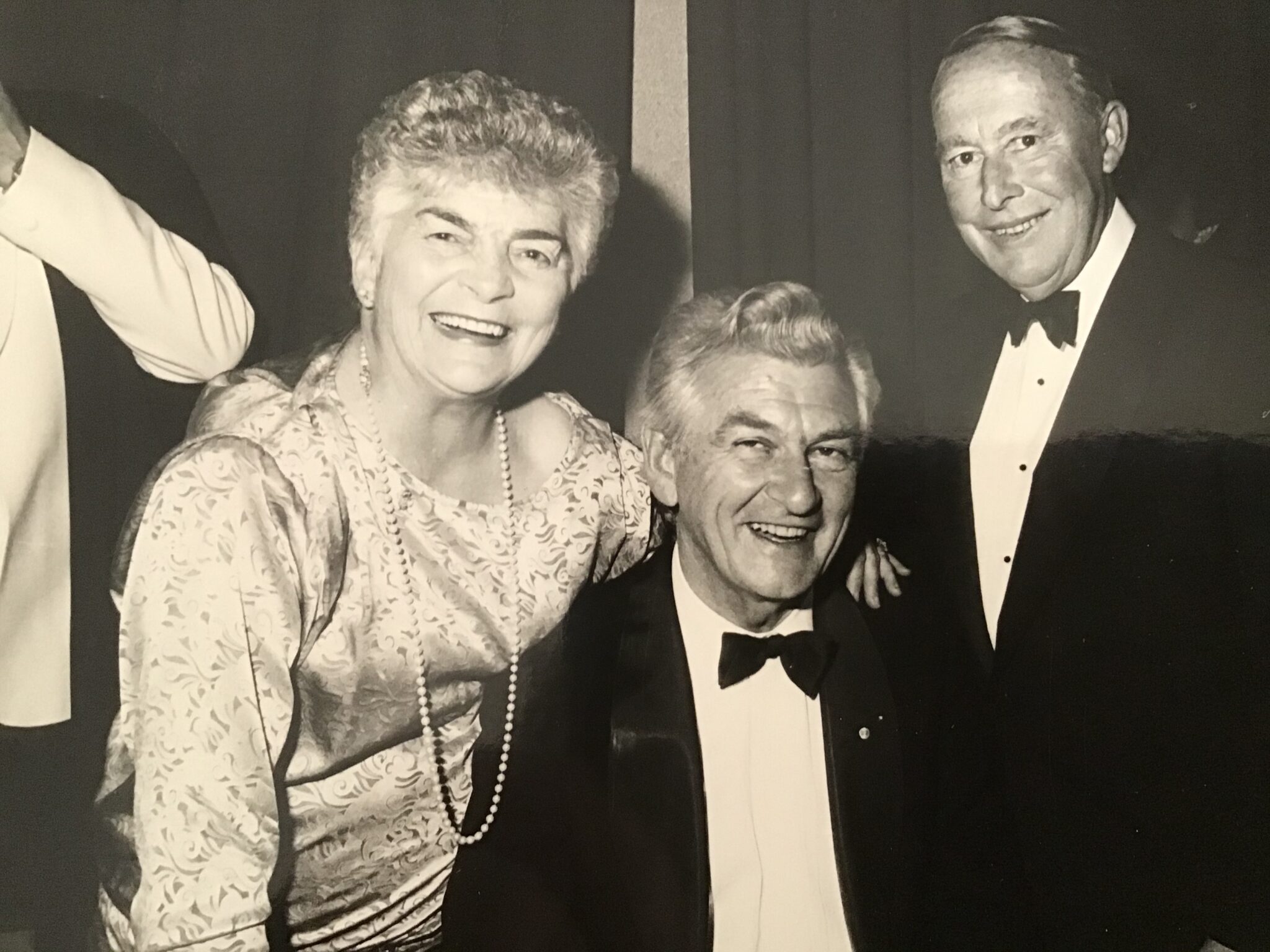
Thelma McCarthy with Prime Minister Bob Hawke and husband Bill McCarthy
Now, at 95, she has been recently awarded Labor Party Life Membership for more than 40 years of service.
She has already received an Order of Australia for her service to the community and New South Wales.
On top of all that, she was among eight veterans recently invited to Armidale’s Legacy House to receive a medallion marking the 75th anniversary of the end of World War II.
Of a life devoted to giving back the community in various ways, she says unassumingly: “I suppose I was in the right place at the right time.
“Over the years I’ve become a voice and a face of the Labor Party in Armidale.
“With anything you are interested in, I would encourage you to try it and follow your dreams.’’
She and late husband – NSW MP Bill McCarthy – counted former Prime Minister Gough Whitlam as a family friend. She also helped run a rural property with Bill, and was Deputy Chair of the NSW Council for Bicentennial office, and has served on the NSW Ministerial Advisory Committee on Ageing.
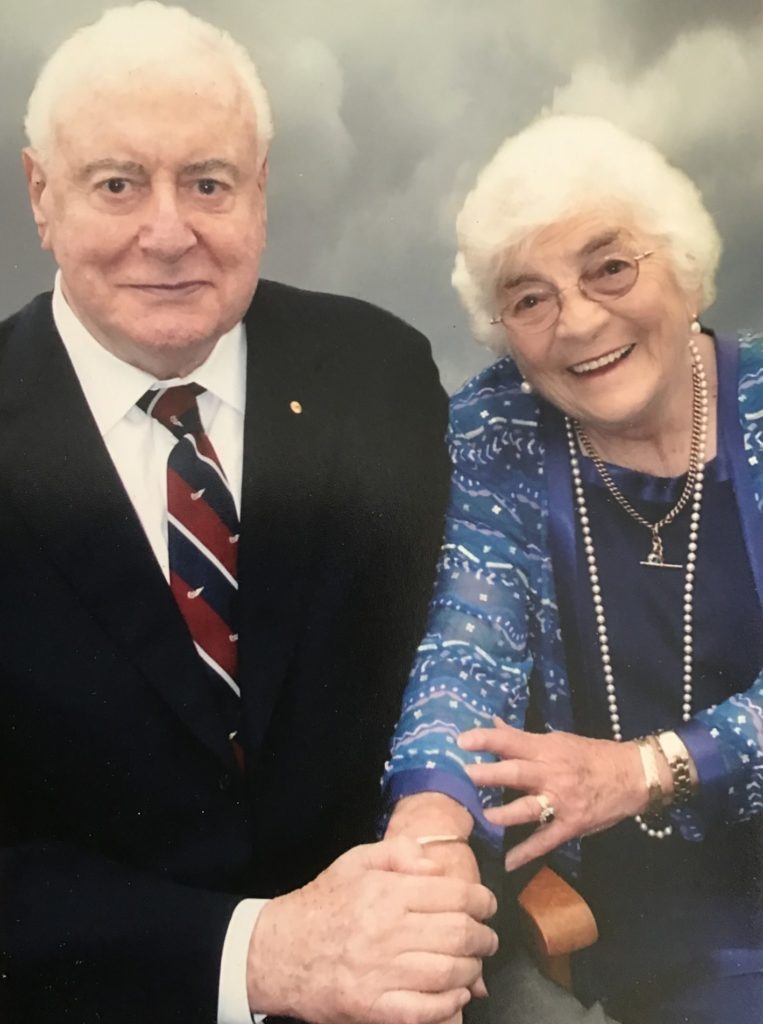
Thelma with former Prime Minister Gough Whitlam
Joining the war effort
Stepping up to join the war effort after the bombing of Darwin in 1942, Thelma was posted to a Royal Australian Air Force (RAAF) base at 17 in Canberra – becoming a wireless telegraphist.
“I was so young, so I put my age up,’’ she said. “Before we were posted our trainer said to us: “Remember, we don’t want to be the same as men, but we want to be equal to them.
“That’s something that has stuck with me over the years.’’
Rising to the rank of sergeant at the RAAF base, it was here that she met her pilot husband Bill, a flight officer in the 13th squadron, as well as navigator Gough Whitlam.
“I wasn’t particularly interested in politics at that age but Bill was – and obviously so was Gough,’’ said Thelma.
“Those men who flew together became close. They were a very tight-knit group and that’s how Gough became part of our family life – he even came to my 80th birthday party.’’
Into the fray of politics
The McCarthys became immersed in political life when Bill won the Country Party-held State seat of Armidale in 1978.
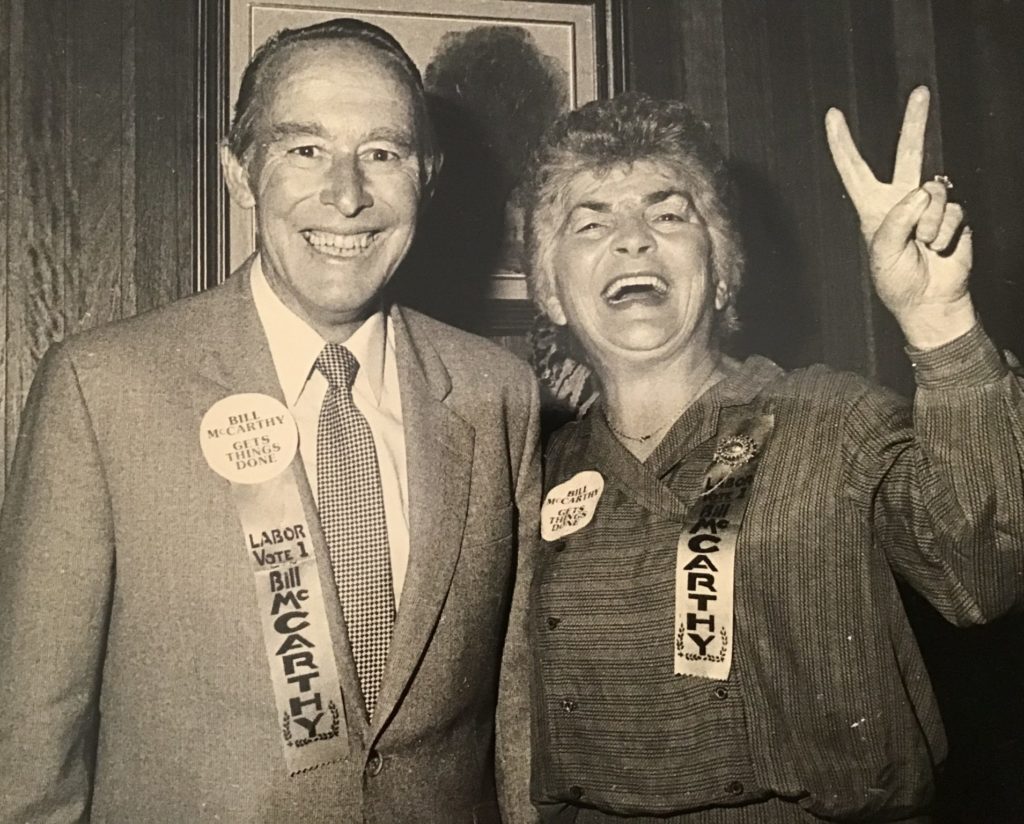
Bill and Thelma McCarthy
He later held the seat of Northern Tablelands, but resigned in 1987 – sadly passing away from cancer just three days later.
“When Australia was preparing to celebrate the Bicentennial, we received a call from the former Premier Neville Wran. He asked if I would consider being on the Board of the NSW Committee,’’ said Thelma.
“Although I initially turned it down, Bill insisted I ring him back and take the position. It was this role that kept me busy after Bill’s death, and stopped me from completely hitting the deck.’’
Among the many projects she worked on in her role as the Deputy Chair of the NSW Bicentennial Council was Armidale’s arboretum, which is a now a city landmark. She officially opened a major renovation of the 16 hectare site in 1988 – a project which drew together service clubs, schools, businesses, individuals and the City Council.
A meal with the Prime Minister
One of Thelma’s first brushes with the higher echelons of national politics came when she and a group of work colleagues unexpectedly found themselves dining at The Lodge at the request of Prime Minister John Curtin.
It arose from an incident at Canberra at the signals station during the war.
“The telephonists were always being teased by the guards saying things like: ‘The Japanese are coming and so on.
“When the operator answered a call that said: ‘This is the Prime Minister calling. I’d like to invite the Commanding Officer to lunch’, she thought it was a hoax. She replied, “Yes, and I am Mary Queen of Scots. I don’t know about lunch, but I’ll be free for dinner.
“The caller said he understood she was unconvinced about his identity and gave her a number to call back. When she called back, it was indeed the number for The Lodge.
“She started to apologise but the Prime Minister said it was his fault for not observing protocol, but asked about the dinner.
“He asked how many girls were on duty that day. There were four – so he sent his driver to pick us up after we finished our shift. We had cold meat and salad and he later took us for a tour of The Lodge.
“Years later, I was invited to The Lodge by Bob Hawke with the Chair of the Bicentenary to present to the women of Australia a banner that was painted and taken to England in 1900 in support of women’s right to vote.
“He was showing us around and I was able to say: ‘Yes, I’ve been here before.’ ”