HomeStories & InsightsThank you the Green Clone Test

It’s time to talk about care

Whether we like it or not, most of us are going to require some form of care as we get older.


While many are weighing up the pros and cons of living at home versus moving into residential aged care one day, there’s another group who have discovered an alternative with RetireAustralia – an independent lifestyle with support when you need it.

In our villages, the focus is on offering an independent lifestyle with the right level of support to maintain a quality of life so that residents can spend the rest of their lives in a community they are familiar with.

Residents tell us that the peace of mind that comes with being able to grow old in a community you are familiar with and which supports you is unbeatable. By continuing to live in your own home, regardless of age, or ability, you can maintain as much of your independence, comfort, and lifestyle as possible.

At RetireAustralia, no matter how life changes, you can feel confident and supported in the retirement village you have chosen. Right now, you might have limited support needs or none at all. If that changes, our experienced team can offer a range of care options to meet your needs.

Tailored support, on your terms

Staying healthy, happy and active is so much easier when your home is the centre of a welcoming community with a vibrant social and activities calendar, excellent amenities and in a convenient location with easy access to facilities outside the village.

In a RetireAustralia village you’ll be able to age positively and live on your terms.

When you’re healthy, you can enjoy relaxing in a beautiful, maintenance-free and secure home with all the time and opportunity you need to enjoy the things you love with the people who matter most to you.

With time, your care needs may change – but that won’t mean you’ll stop wanting to live your life comfortably, in your own home, in a community you are familiar with – surrounded by family and friends and a team of familiar faces.

When that time comes you can choose from a range of care and support services to meet your individual needs, whether that means ongoing, daily support in one of our care apartments or flexible home care services delivered right into your independent living unit or care apartment.

Our trusted, on-site team members genuinely care about each and every resident and take pride in promoting their independence by delivering quality care and support.

Home Care

Our Home Care services make life a little easier and give you peace of mind that, should your needs change, you can continue to stay safely in your own home for longer.

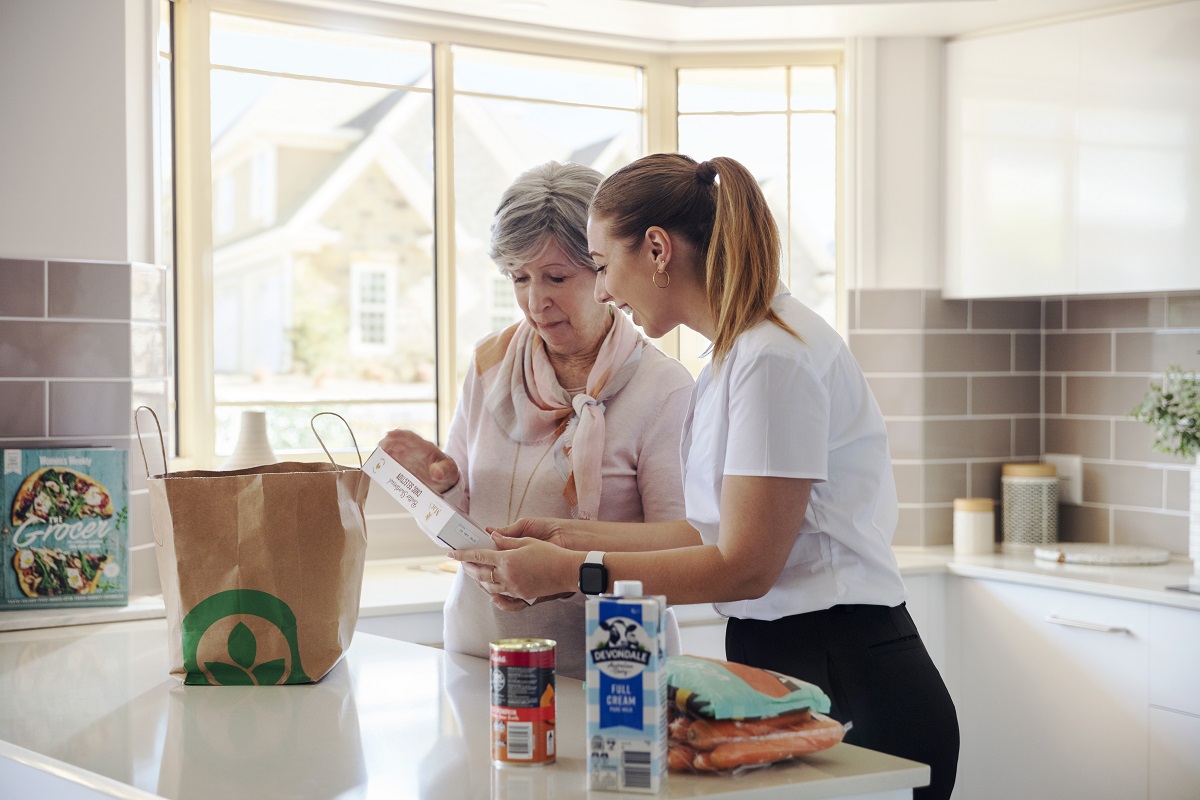
Our care team can help with household chores, meal preparation, showering, dressing, and medication support, to name a few. Care is tailored to your individual needs and funded privately or through access to an approved government funded Home Care Package (HCP). We can even help you navigate HCP approval through My Aged Care, the government assistance platform.

 

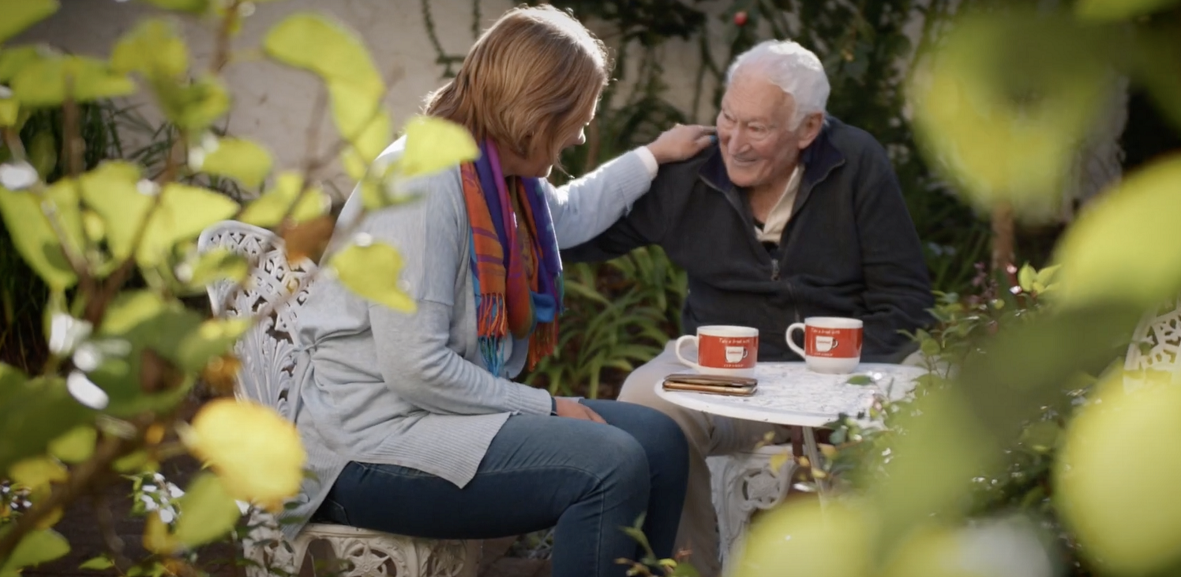
“The loving care provided by Elizabeth, Pam and Cherie in assisting me with showering and making the bed, changing and laundering the linen, delivering an evening meal in all weather and even taking the bins out was more than 5 star service. I was being pampered back to health by these ‘care angels’ and my wife.” Norman, RetireAustralia Resident

Care apartments

Our purpose-built care apartments will support you to keep doing what you love, no matter your age or ability. They are perfect if your care needs become higher and you want to continue living an independent lifestyle alongside your friends and family.

Unlike traditional aged care, the most important person in your life – your partner – can continue to share your life. Our care apartments are designed for both of you, even if one of you has few if any, care needs. In some of our villages, your pet can even join you if that is what you wish.

You’ll be able to enjoy life in a private, secure apartment with the support you need to remain independent, from chef-prepared meals to help with cleaning and laundry and additional care and support if you need it.

Before you move in, our care manager will sit with you to design a personalised care plan. We’ll take everything into account: your independence and your physical, mental, emotional and social wellbeing. And, as your needs grow or change, we’ll respond and support you.

Care apartments are available in most of our villages close by to The Rise on the New South Wales Central Coast.


 

“In 2009 I had a major stroke, so I wanted to think about my life and my health. When I studied up on this village, it had independent living apartments and it had serviced (care) apartments, so I could think of the long term in the village.” Noelle, RetireAustralia resident.


Our on-site teams genuinely care about each and every resident and will be here for you through thick and thin, so you can live every day with confidence and options to choose from.

Living in one of our communities, you’ll experience our commitment to best practice and beyond, as we compassionately deliver quality care and support. You’ll always have the dignity of choice, allowing you to maintain control of the way your life unfolds.

Find out more about how our services could make your life easier. Contact our sales consultants today to find out more on 1800955070.

 

Turbocharging social events at The Verge

Gold Coast Volunteer of the Year and Jog for Jugs founder Jeff Burchell is turbocharging the social events calendar at The Verge.

Gold Coast identity Jeff Burchell has embarked on a new challenge – turbocharging the social events calendar at his Miami retirement village to make it a top place to live.

As the convener of Breast Cancer fundraiser ‘Jog for Jugs’ on the Gold Coast and a long-time volunteer at the Mermaid Beach Bowls Club, the retired real estate agent and volunteer of the year recipient is no stranger to putting on a good event.

But he’s really upped the ante after boldly declaring that putting on first-class events is part of his quest to make his new home, The Verge, the ‘Number 1’ village in the portfolio of its operator, Retire Australia.

Creating an inclusive social calendar

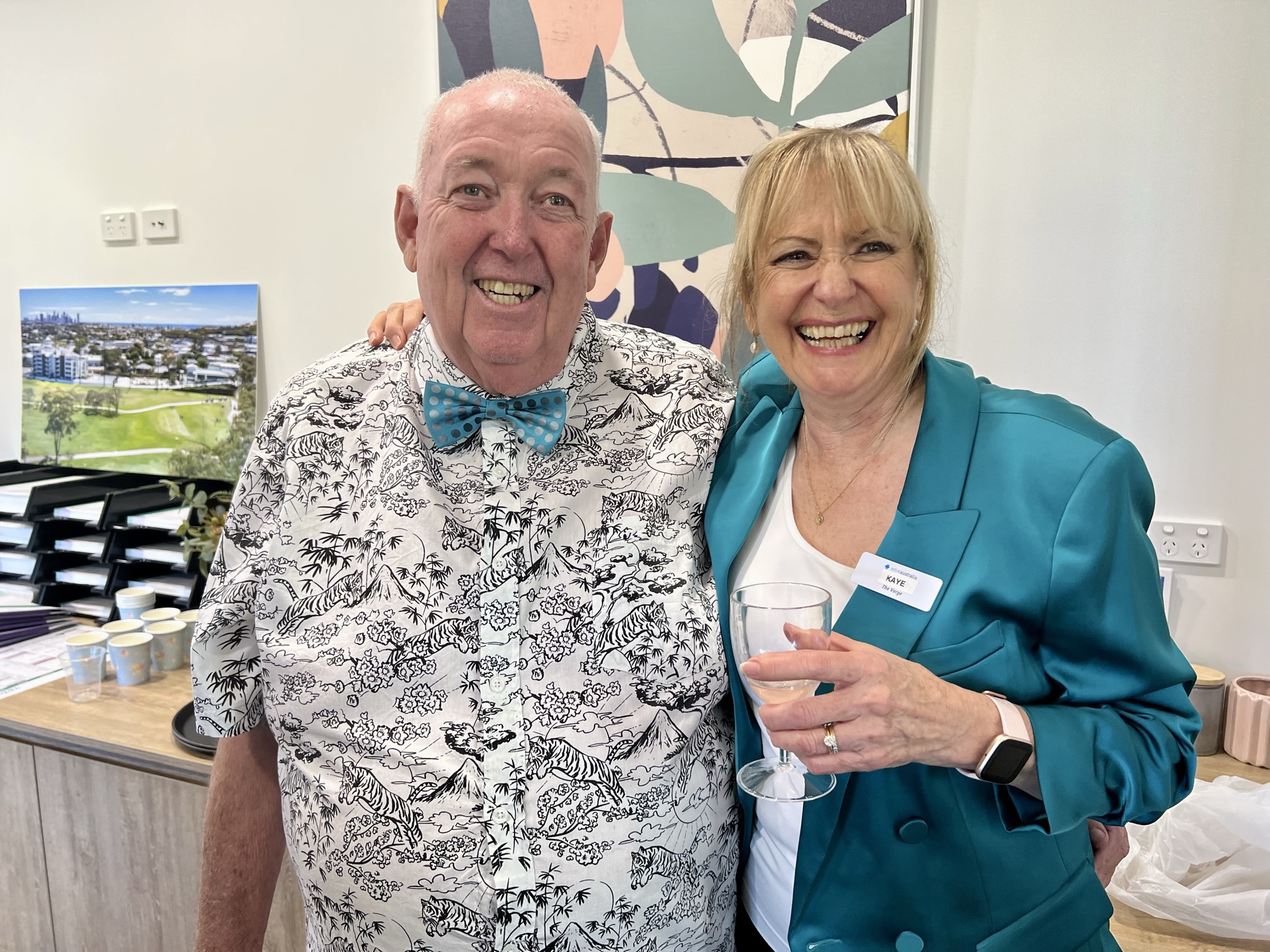
It’s a mission that really kicked into gear on June 17, when Jeff and the social committee hosted a grand event to celebrate The Verge’s first birthday – just six months after he suffered a major stroke.

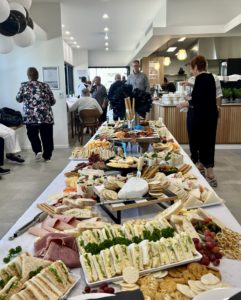
There was live music, hot canapés, custom bar and grazing table. Jeff even thought of a theme – black and white with a dash of colour!

Guests getting ready to enjoy the mouth watering grazing table.

“It’s was a grand event for everyone in attendance, including Federal Member for Moncrieff Angie Bell and Gold Coast Councillor Pauline Young,” Jeff said.

“The gauntlet is down – I declared to all the RetireAustralia executives and village managers at a recent conference that we will be number one in the stable!”

“We’ve already had some great social events for Anzac Day and Mother’s Day, we have Christmas booked at the Burleigh Heads Golf Club and we have the best happy hour on Sunday afternoons, plus craft and card games. It’s all about creating an inclusive social calendar where no-one is excluded, and everyone has a lot of fun.”

RetireAustralia’s CEO Brett Robinson also attended the birthday celebration, along with about 60 residents and several future residents who have put their names down for Stage 2 of the village, which is now selling and will boast 66 spacious apartments.

Being part of a like-minded community

Jeff and his wife Maureen moved into The Verge in March, two months after Jeff suffered a major stroke that caused him to go blind in one eye and left him with limited vision in the other.

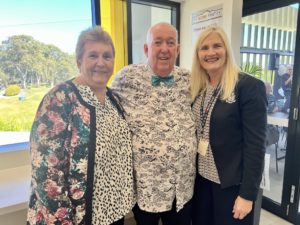
Maureen and Jeff Burchill with Cllr. Pauline Young

The care and support offered at The Verge gave Jeff peace of mind in knowing that if something ever happened to him then Maureen would be taken care of and part of a like-minded community.

“One of the lady bowlers at Mermaid Beach Bowls Club was living here. Maureen and I came over and it was all done and dusted in 24 hours. I just did it – the quality was there, and we loved the feel of the place,” Jeff said.

The location also meets the needs of Jeff and Maureen – it’s a short distance from the bowls club, where Jeff has volunteered for five years as chairman, and is not far from their daughter and two grandsons.

Jeff and Maureen’s lives have been centred around giving to their community. Maureen was heavily involved in her two daughters’ education and their broader school community, running playgroup, canteen and fundraisers. Jeff was awarded Mid Gold Coast Volunteer of the Year in 2021 and has been recognised by the Breast Cancer Foundation for his ongoing work with Jog for Jugs on the Gold Coast after his sister was diagnosed with breast cancer.

Naturally, it didn’t take Jeff long to jump into the role of Social Committee Chair at The Verge. Nor did it take him long to sign off his emails with ‘The Verge – No 1 Village in the RA portfolio’!


Find a like-minded community near you

Medication management for older Australians

There are few simple ways we can safely manage our medication in our later years to remain happy and healthy.

As we age, we may be required to start taking or increase the amount of both prescription and non-prescription medications. These can be an integral part of ensuring we stay healthy and fit in our later years.

Unfortunately, as we age our risk of medicine-related issues can also increase. In hospital admissions of people aged over 65 years, up to 30% are related to medicines, it’s possible that up to half of these could be prevented*. This means it’s essential to be aware of what medications you are taking and seek professional advice.

The effects of ageing

Our bodies go through changes as we age, so the way we absorb and metabolise medications can change too. This means that medications we once took with no ill effects can start to cause adverse reactions. We can become more sensitive to some medications, while not properly processing others. Our bodies can also start to have more difficulty in removing some medications from our system.

More pills to swallow

Another common issue as we get older is we will often need to take more medications. This can increase our risk in a few ways, including:

  • Taking multiple medications increases the risk of contraindications between drugs.
  • Taking a number of medications can also cause more undesirable side effects.
  • There is also the simple fact that when you’re taking a number of medications there is an elevated risk that you can make a mistake in the dosage or when you take your medicine.

How do I safely manage my medications?

While there are some dangers when taking medications as we get older, there are simple ways we can safely take what we need to remain healthy. It’s important to be aware of what you’re taking, why you’re taking it and get the advice of a medical professional.

Keep track of your medicines

It’s important to keep a detailed list of your medications including the dosage, when you’re taking them and why you’re taking them. This list can help give you an overview of all your medications and is an easy way to share with your medical providers say if you are admitted to the hospital or need to see a specialist.

If you’re tech-savvy, there are apps available for your phone where you can store this information and easily share it. Otherwise, you can keep it in your calendar or diary.

Organise your medications

No matter what your age, we’ve all had that moment of “Did I or didn’t I take that tablet?” To help clear the confusion and ensure you take the right medication at the right time you can organise your medications into dosages for day/time. You can purchase your own dispenser container from the chemist and put your medications into it for the week ahead. Some pharmacies will also create blister packs or sachets that contain all your medications marked for the time/day you’re required to take them. This way you know exactly which medications you need to take and when you need to take them. There is also the added convenience of having all your medications in the one place. Talk to your pharmacy to see if this service is available for you.

If you’re not taking an array of medicines, you could simply set yourself a reminder on your phone or alarm clock to ensure you never miss a dose.

Ask for a medication review

We all know that a regular visit to our GP is important to keep our health on track. Part of these visits should include a review of the medications you’re taking. Let your GP know what medications you’re taking, so they can ensure you’re on the right dosage and there are no counter indications. Don’t forget to let them know if you’re taking other over-the-counter-medications or vitamins, as these can have an effect as well and is something we don’t always consider.

When you visit the pharmacy to fill a prescription, it’s always a good idea to let them know what other medications you’re taking, so they can assess if there are any potential risks.

Be aware of your symptoms

You already know that you should speak to your doctor if you develop symptoms after taking a new medication, but it’s important to note if the symptoms you’re trying to relieve are responding to the medication as well. Sometimes you will be prescribed something to help with aches and pains and in our day-to-day life it’s easy to keep taking them even when they’re not fully effective or stop working. If you’re still experiencing symptoms and you’ve been prescribed something to alleviate it, speak to your doctor. They may be able to change the dosage or prescribe something else. You never want to take more medicines that you have to.


Get your exclusive guide to retirement village living.

Download now button  

* Roughead, E. E., Semple, S. J. Medication safety in acute care in Australia: Where are we now? Part 1: a review of the extent and causes of medication problems 2002–2008. Australia and New Zealand Health Policy 2009. 6: p. 18.

New advertising campaign challenges how Australians perceive aged care

One of Australia’s leading retirement village operators is challenging the concept of aged care in a new advertising campaign that asks viewers to think about what real care looks like.

The ‘Your Care Factor’ campaign features confronting vision that compares the challenges of older Australians staying alone in their homes to those who receive hands-on care and support.

The digital and local television ad campaign is for Glengara Care, RetireAustralia operated aged care apartments at Tumbi Umbi on NSW’s Central Coast.

The advertisement juxtaposes elderly people struggling with loneliness, isolation and mobility – a grim reality faced by many older Australians – against Glengara Care residents being served nutritious meals prepared by a chef, enjoying social activities with friends and family, and living independent lives in their luxury, modern apartments.

RetireAustralia CEO Brett Robinson said the ‘Your Care Factor’ ad campaign was designed to break the mould in aged care advertising.

“We know the ad will be provocative because it challenges the viewer to think about what real care looks like for those we love,” Mr Robinson said.

“People often have pre-conceived ideas of what aged care looks like, and many consider it a last resort.

“We wanted to lead the charge in challenging those preconceptions by creating an advertising campaign vastly different to the aged care ads people are used to seeing.”

Mr Robinson said it was important to illustrate how Glengara Care offered a genuine alternative to aged care that offered residents a rich and fulfilling life.

“Glengara Care offers a true alternative – one that goes beyond ticking boxes of basic care criteria like having your groceries delivered, and instead offers an advanced level of care that supports the whole individual, with an emphasis on maintaining their dignity and independence,” he said.

That means living in an apartment home in a community, rather than just a room, and having freedom of choice when it comes to lifestyle and schedule.

“It was important to us to show that Glengara Care doesn’t look or feel like a nursing home. It’s a community, but one with all levels of care available,” Mr Robinson said.

“We know our residents have worked hard in their lives and we want them and their loved ones to expect real care and an enjoyable supported lifestyle.

“Why give up all the things that fulfill your life? We think our residents have earned so much more than that.”

Glengara Care has 70 care apartments, and offers regular events and activities for its residents, as well as a 24-hour care team and respite care. More than half of these apartments are already sold.

The advertising campaign, made with creative agency New Word Order and production company Two Little Films, will run as a digital campaign, as well as on Central Coast TV networks from 1 June.

Watch the ad here: https://www.youtube.com/watch?v=O7jqtkLrRuc&feature=youtu.be

Doing the work for a dream retirement

Sandy knows that village life equates to dream retirement living, which is why she and her husband moved to Tarragal Glen Retirement Village.

No nonsense, Sandy Ward, was top country Century 21 Sales Person of the Year in 2016, she knows village life equates to dream retirement living, and she will tell you every day of the week. In fact, that’s exactly what she used to do when she worked as a sales consultant at RetireAustralia’s Forresters Beach Retirement Village.

In August 2018, after 15 highly successful years working as a real estate agent on the Central Coast, NSW, Sandy commenced as a sales consultant at RA.

“I truly enjoyed working at RA, the managers at the helm are genuine and I worked with a wonderful bunch of people. You can certainly sell something if you believe in it and I did. While you’re selling the dream every day, you start to take note and catching up with grateful new residents certainly reinforced it,” she says.

In early 2021, after hearing how delighted residents were and seeing the level of care and community in the lifestyle she was selling, Sandy and her husband Mal moved into the tranquil surrounds of Tarragal Glen.

“Just because I worked at RA doesn’t mean I didn’t do my research further afield, we reviewed all options suitable for us, but nothing came close to Tarragal Glen,” she says.

Finding the dream

Location was one factor — a few minutes to the beach, right next to Erina Fair shopping centre and minutes to the freeway, suiting them even more perfectly now as they’ve recently bought a caravan.

Sandy and her husband Mal enjoying village life.

“As we return from our caravan trips, we’ll pass through the village gates and know that everything has been taking care of. The gardeners know exactly how I like the trees trimmed, and our villa is safe and secure in our peaceful neighbourhood,” she says.

While doing their research, Sandy says, that Home Care and Care Apartments weren’t a part of the planning for them — no one likes to admit they’ll need care, however, they found there was comfort in knowing it’s available when the time comes.

One thing Sandy recalls from working at RA is how many people were unsure of the practical way of village life.

“Many of my clients were unsure and asked if they could have visitors stay or bring their pet to live with them. I’d reassure them, ‘Of course, it’s your home!’,” says Sandy.

In truth, as Sandy and Mal discovered first hand, it’s that great big extended family, visitors, community and beloved pets that bring a village to life.

Living the dream

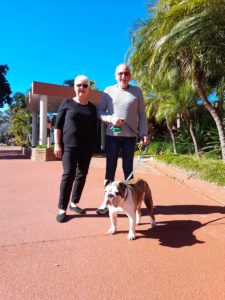
When Sandy and Mal moved into their villa, Hudson, their six-year-old British Bulldog, came too. Happily lapping up all the attention from their new neighbours.

“He was a great assistant in building friendships,says Sandy.

Sandy, Mal and Hudson.

Hudson has since moved to live with Sandy and Mal’s son and family, but delights in his regular ‘day care’ visits back to the village.

“In the 13 months we’ve been here, we’ve met lots of great people in our community and made some wonderful friends, so many more than we did living 32 years in our previous suburb,” says Sandy.

Sandy and Mal established the now famous fortnightly ‘drinks on the hill’, where residents gather and BYO everything — a tradition, rain or shine. Sandy’s also on the committee to build a community vegetable garden, which she believes is another great opportunity to bring people together.

“Sitting in the spa on a Sunday morning looking out over the palm trees, and saying to my husband, ‘we live here’!” brought Sandy joy.

Yet, dreamily swaying palms and bubbles aside, when a high-achieving, top sales person buys into village life, there’s certainly something there worth investigating.


Get the facts about retirement,
download your exclusive guide to retirement village living. 

Top 5 reasons people move into a retirement village

Curious to know why people choose a retirement village? We’ve rounded up the top 5 reasons people make the move.

Why do people move into a retirement village? Is it a good idea? And is it worth packing up a lifetime of memories to do so?

We’ve spoken to several RetireAustralia residents and chatted to our sales team to understand what motivates people to choose a retirement village.

In fact, most of the top reasons we uncovered are aptly summed up by Margaret from Tea Tree Gardens.

“The community looks after you, you have no concerns about repairs, you have company, and you also have the safety measure of someone nearby if you need them,” she said.

Let’s dive in with the results and explore the top five reasons people move into a retirement village.

1. No home maintenance or gardening to worry about

As we age, maintaining a house and garden can become time-consuming and frustrating. If you live on a large block or have a big home, you might find that cleaning, weeding, and mowing the lawn are especially taxing.

Many residents tell us that once their children have moved out of home, the burden of home maintenance just doesn’t seem worth it.

A key benefit of retirement villages is not having to look after home maintenance or gardening.

As Margaret from Tea Tree Gardens put it,

“I couldn’t maintain a large four-bedroom house on a big corner block. My health was running through my mind. I thought, ‘if I can’t manage it now, how will I go managing in another four or five years?’”

Likewise, if something needs to be repaired in your home, you can simply call your village manager, who will arrange for it to be fixed or replaced.

Del from Wellington Manor loves not having to worry about mowing the yard or doing the gardening.

In fact, after Del and her husband moved in, his favourite sound became the lawnmower outside – “because he wasn’t the one having to push it!”

2. Planning for future care needs

We often don’t appreciate our health until something changes. Many residents find that as they get older, they start to notice changes with their mobility or general health. At this point, they realise how important it is to plan for the future. Of course, we don’t want to think about a time when we might be less mobile or need support with daily tasks. But the truth is, the more we plan, the easier any transition will be.

In many cases, residents’ children or other family members start thinking about future care needs first.

Colin and Kym had peace of mind that there was help, especially if there were health changes.

This was the case for Belrose Country Club resident Colin. After his wife died, his family was worried he would fall ill and not be able to contact them. One day he tripped and hit his head, and this was the catalyst for change.

“That was when we made the decision that we needed to look for somewhere that had some support and assistance if required,” said his daughter Kym.

Now, she has “peace of mind, knowing there’s someone on duty 24 hours a day”.

Meanwhile, Sue and Gordon at Tarragal Glen are very fit and active, but wanted to plan for the future.

“We have a beautiful home and relaxed lifestyle, plus peace of mind knowing we have the option of care and extra support if we need it later on. We’re living life to the full now, and aren’t stressed about the future,” they said.

3. Safety and security

Many residents start looking at retirement villages because they’re concerned about safety, security and want to avoid becoming isolated.

“I speak with many people who’ve started to feel unsafe in their neighbourhood,” said Qld sales consultant Amy Roach. “There might be new neighbours they haven’t forged a connection with, or an increase in crime and break ins in their area. Or it might simply be down to lots of loud parties.

“Many people like the idea of leading an independent lifestyle in a village but still being part of a community, knowing there’s always someone looking out for them.”

Multi-generational family sitting on courch
For many residents, feeling safe is a key reason for moving into a retirement village.

This is true for Wisteria Grove resident Rob. He wanted a place that would be suitable for him and his dog Kylee, and he “was attracted to the quiet location and safety of village life. I also wanted a place where social interaction with neighbours is the norm.”

4. Clear financial outcome

While each retirement operator has different contracts, you can rest assured you’ll know exactly what you’re getting at a RetireAustralia village.

“We have a clear and transparent contract,” said Boambee Gardens village manager Lexi Connor. “Before people move in, they know exactly how the contract works and how much money they will walk away with.”

Like all our village managers, Lexi encourages prospective residents to come back with their loved ones, have a cup of tea and join in activities.

“I say to everybody: ‘You don’t always know where you want to live. Look at other villages and ask everyone the same questions, and I guarantee you’ll know where you don’t want to live.’”

You’ll find this same upfront approach in all our villages, and this helped Margaret from Tea Tree Gardens make her decision.

“When I was thinking of moving into a village, I added up all the costs I was going to have to pay by being in a village and I found that the village life would make me able to save money. Costs are not as extensive as maintaining my own home.”

5. Caring community

Finally, many people tell us they’re concerned about being isolated at home, particularly if their partner is unwell or has health issues.

Colin at Belrose Country Club found he was “very lonely” after his wife died.

Retirement villages come with a caring community, which means you’re never isolated or lonely.

Since I moved here, I decided I wanted to be involved in things. I’ve developed a lot and am more outgoing than I was before I came here.”

His daughter Kim said Colin has a better social life than she does.

“The most important thing for me is that he’s happy. If he were still at home living by himself, that happiness and joy you can see on his face certainly wouldn’t be there.”

As for residents Glenn and Pam, they chose Glengowrie Retirement Village because they “wanted to live in a like-minded community … We like that everybody is friendly, there’s a community feel, and we have lovely neighbours”.


Get your exclusive guide to retirement village living. 

Download now button

Retirement village on the Gold Coast achieves Queensland first in going green

A vertical retirement village on the Gold Coast has become the first new development to be built in Queensland with a 4 Star Green Star rating and a gold accreditation for accessible design.

The Verge at Burleigh’s first building, Jasmine House, achieved the 4 Star Green Star rating from the Green Building Council of Australia (GBCA) by using passive design principles including smart insulation, glazing selection, LED lighting and electric vehicle charging stations.

The rating distinguishes The Verge as ‘best practice’ in sustainable design and is the first Green Star certification on a greenfield site for the village’s operator, RetireAustralia.

RetireAustralia Senior Development Manager Judi Hutchinson said achieving the green rating and Gold Australian Liveable Housing accreditation was a major achievement.

“4 Star Green Star rating represents best practice in environmentally sustainable building practices, which is not only good for the environment but good for our residents as it helps keep energy and water costs down,” she said.

“The Gold Australian Liveable Housing accreditation recognises that the building has been designed in a way that it is easy to access and navigate as people age. An example of this is wider kitchen areas, which allows residents to use a mobility walker.”

Designed by specialist senior living architects O’Neill Architecture, Jasmine House at The Verge features various green elements including:

  • Energy: Grey laminated glazing to provide low solar heat gain through window surfaces, construction of facades in alignment to solar pathway, ceiling fans to apartment bedrooms, living rooms and external balconies, low intensity LED lights, motion detection and lighting control
  • Water: Reducing portable water consumption through water efficient design initiatives, namely the installation of high efficient WELs rated fixtures and fittings, water efficient appliances and an air cooled VRF plant

In addition, The Verge has also been designed to meet energy and water reduction targets.

The energy design for Jasmine House is a 40 per cent reduction in energy use in comparison to the Green Star standard benchmark. For water, the design is a 20 per cent reduction from the benchmark.

“The driver for this is two-fold – it’s good for the environment and helps keep operational costs down for residents,” Ms Hutchison explained.

GBCA’s Senior Manager of Market Engagement, Nick Alsop said the Green Star certification is a great outcome for RetireAustralia and the residents of The Verge.

“The Verge is a great example of a building that has been designed to be healthy for residents to live in, better for the environment and cheaper to run. We look forward to continuing to work with RetireAustralia on the next stage of development.”

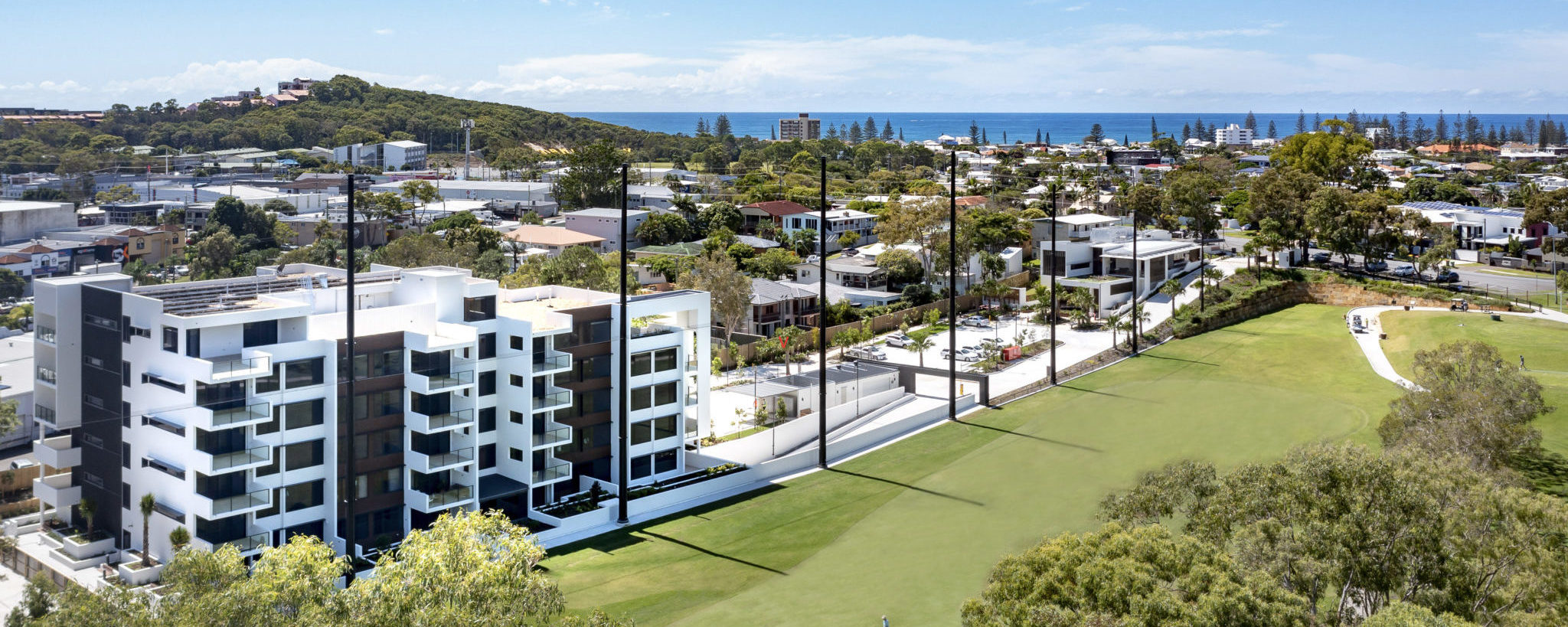
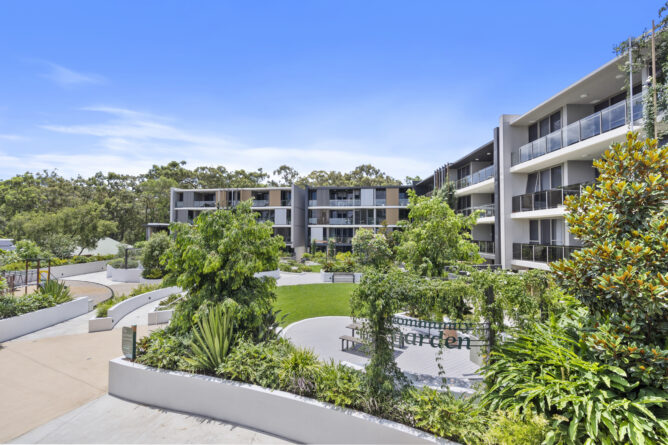
The Verge is a staged vertical retirement village which, when complete, will consist of three six-storey buildings featuring expansive apartments that capture views of the adjacent Burleigh Golf Club course.

Stage one features 40 one, two and three-bedroom apartments and penthouses positioned along the fairway of the 10th hole, plus an innovative wellness centre.

RetireAustralia has applied for a 4 Star Green Star design rating for the second building, which is under construction and will include 66 independent living apartments.


ENDS

What is a serviced apartment?

Wondering if a serviced apartment is a good fit? Explore what it is, who they’re designed for, and whether it’s right for you.

There’s no doubt that retirement is an exciting chapter – you might have worked or volunteered for decades, raised a family, and feel ready to embrace this next stage of life. But what’s the best place to live where you can feel supported, access care as needed, and be part of a friendly, inclusive community?

Retirement living: serviced apartments

First things first. Researching retirement living options can be a bewildering process, with countless new words and acronyms to wrap your head around. While this blog will focus on retirement village serviced apartments, let’s start by breaking down some key definitions.

A retirement village is a lively residential community designed for older Australians. Retirement villages can be incredibly diverse and are as unique as the people who call them home. You can choose from leafy, spacious communities featuring single-level homes, as well as apartments in mid-rise vertical villages designed for over-70s. No matter what type of home, location and lifestyle you choose, they’re ideal if you want to enjoy the freedom and independence of life on your terms, with the safety net of a like-minded community and care and support you can count on.

The Verge at Burleigh G.C
Retirement villages are lively residential communities that give you the freedom to enjoy life on your terms.

Each RetireAustralia village offers independent living units (ILUs) and selected villages also offer serviced apartments – sometimes known as care apartments for those who’d like a little extra support to make life easier. In a serviced apartment, our trusted team takes care of housekeeping, maintenance and cooking, and we can offer tailored care services as required.

On the flipside, nursing homes or aged care facilities (sometimes known as a RAC or residential aged care) are for those who can no longer live independently and require full-time care. Many aged care facilities cater to both low care and high care residents, while other facilities specialise in just one level of care. Residents requiring low care receive help with personal care such as showering, dressing, eating, taking medication and some nursing care. High care residents are generally frail with high or complex care needs, and require continuous nursing care.

Before you make a move, it’s vital to choose a home that suits your values, needs and lifestyle long term. If you’d like to know more about retirement living options, it’s best to check out our Retire Ready guide. If you’d prefer to read a comprehensive explanation of the differences between retirement villages and nursing homes, we’ve written a blog on just that topic.

Why care is important

Retirement village serviced apartments are perfect if your care needs are increasing, and you want to keep doing what you love. With no maintenance, housekeeping or cooking to worry about, you’ll have the freedom to maintain your independence and spend time on what matters most to you.

If your care needs are increasing and you want to be part of a vibrant and inclusive community, a serviced apartment might be right for you.

While each of our villages is different, with individual layouts and design, there are a few things that come standard with a retirement village serviced apartment.

Serviced Apartments
Location All serviced apartments are private and secure, and are located in the heart of the village. This means you’ll have easy access to social activities and community facilities
Layout Serviced apartments are generally studio-sized or have a separate bedroom, and include a private bathroom, kitchenette and living area. They are bathed in natural light with ample storage and a modern, neutral colour palette. Many also come with a private balcony or patio.
Suitable for 1 or 2 We have apartments suitable for couples so you and your partner can continue to live together – even if one of you has few, if any, care needs.
Care You don’t need an Aged Care Assessment Team (ACAT) or Assets test, so you can move into your new apartment straight away. In a serviced apartment, you can access Home Care and Primary Care tailored to your needs. Our trusted team can help with personal care, showering and dressing, administering medication, wound management, grocery shopping, and driving you to appointments.
Safety Call bells are monitored 24 hours a day by our on-site team.
Plus – Freshly prepared meals every day
– Regular cleaning and linen laundry
– Home and garden maintenance


What life in a serviced apartment looks like

To put it simply, life in a retirement village serviced apartment looks however you want it to look. Our serviced apartments are purpose-built to give you support you can count on, and the freedom to focus on what’s important to you.

We take care of the little things – like meals, linen laundry and apartment cleaning – so you can continue living an independent lifestyle alongside your friends and family. We can also arrange additional support tailored to your individual needs and delivered in your apartment.

As a valued member of the community, you’ll have full access to the village’s amenities and social activities calendar. This varies by village, but could include regular happy hours, movie nights, dinner events, mahjong, bingo and card games.

Retirement Village Library
Life in a serviced apartment looks however you want it to look. With cooking and cleaning taken care of, you can focus on what’s important to you.

We’ve welcomed hundreds of residents into serviced apartments over the years, and consistently hear similar feedback. Namely, residents report they have more energy and vitality once they no longer need to worry about cooking or cleaning. And more energy means more time to connect with people you love, take part in village activities, and enjoy life in a warm and welcoming community.

The best part? You can live in a serviced apartment with your partner, even if just one of you has care needs or requires extra support.

A great way to learn about life in a serviced apartment is to hear from residents themselves. Here’s what some RetireAustralia residents had to say:


“I’m so happy now. I have everything I could possibly need and I feel safe. My family don’t have to worry so much as they know I’m being looked after. I also still have my independence.”

Denise, Lincoln Grove resident


“My wife and I have lived in this village for over 10 years now and we have enjoyed it so very much. She suffered macular degeneration 12 years ago and we really feel comfortable in this environment. I know that my wife is safer [here] than anywhere else”

Gordon, Murray Gardens


Want to see for yourself?

If you’re interested in seeing if a serviced apartment is right for you, it’s best to organise a tour of your nearest retirement village. This allows you to get a feel for the community, meet the Village Manager, chat to residents, and view the village facilities and available properties.


Find your nearest community and book a tour today.

Colin's story – finding life’s spark again at Belrose

After a serious fall, Colin Stracey was apprehensive about making the move to Belrose Country Club. Now, he’s the happiest he’s been in years.

After a serious fall, Colin Stracey was hesitant to leave behind the family home he shared with his beloved late wife and move into a serviced apartment at Belrose Country Club. Just over four years down the track, he’s never looked back.


The light of his life | Finding his spark again | I should have moved sooner


The light of his life

Family is everything to 88-year-old retired milkman Colin Stracey. Blessed with four children, 12 grandchildren and now one great grandchild, Colin cherishes each and every moment he spends with his growing clan. The only thing missing is his beloved wife Beverley by his side.

Colin and Beverley on their wedding day

Throughout their life together, Colin was dependent on Beverley for many things. She was a brilliant cook, a doting wife and a social butterfly that kept the couple active in their local community. She was the light of his life and when she passed away in 2010, the beacon that brightened his days sadly dimmed.

“I was very dependent on my wife… only by the kids and family being so supportive, I got through that period without being depressed,” said Colin.

After her passing, Colin moved in with his eldest daughter, Kym, and her family for a few years before returning to the family home in Frenchs Forest on his own. While Colin enjoyed the familiar surrounds of the home he’d lived in for over 50 years, the neighbourhood just wasn’t what it used to be. The friendly faces he used to pass on his walks were no longer there. Over the years, Colin began to withdraw.

Not only were the family concerned about Colin’s increasing isolation, Kym and her siblings were worried that if something serious were to happen, he wouldn’t have the immediate help on hand to make sure he was okay.

Sadly, Kym’s greatest fear became a reality when Colin suffered a serious fall while she was away on holidays, leaving him bedbound in hospital for two weeks.

 “As it turned out, he was living at home at the time, went for a walk in the afternoon and tripped, fell and hit his head.

“That was when we made the decision that we needed to look for somewhere that had some support and assistance if required,” said Kym.

The family came together looking for a place that could provide a safe and secure living environment, nutritious meals and most importantly, the company Colin was missing without his wife by his side.

Knowing he was a member of the local bowls club, the family made an enquiry into Belrose Country Club, the retirement community located across the road. After speaking with the team at Belrose, they were notified a serviced apartment had recently become available and arrangements were made for Colin to move into the village.

Colin was initially hesitant to make the move and insisted the family hold on to their home in Frenchs Forest in the event he wanted to return.

Over four years down the track, he’s never looked back.

Finding his spark again

Colin relaxing in his apartment at Belrose

Having now settled in to village life at Belrose, Kym believes Colin has found his spark again and is the healthiest and happiest he’s been in years.

“Dad’s been here over four years and really the time has gone very fast. He is just such a different person, I think he is the healthiest he’s been for probably, 12 to 14 years,” said Kym.

All the support and assistance his family were looking for is right on his doorstep. Every morning, Colin’s breakfast is delivered to his serviced apartment, then enjoys lunch and dinner with friends in the dining room. He also receives assistance from the village team with washing and changing his linen and cleaning his apartment, as well as applying lotion to his feet and legs daily.

“The staff here are very helpful and very co-operative and very considerate,” said Colin.

But for Kym, it’s the comfort of knowing that help is available any time of day that’s the most important thing to her and her family.

“Knowing that there’s someone on duty 24 hours a day, gives us peace of mind,” said Kym.

From social recluse to man about the village, Kym notes that Colin’s diary is full to the brim with activities scheduled every day of the week.

“He has a busier social life than what I do – and my family put together probably!” said Kym.

Since moving to Belrose, Colin has become a croquet connoisseur, honing his skills with a game every morning. He also plays cards and mahjong a few times a week, is a regular at the bowls club across the road and keeps physically active by going for lots of walks around the village. In fact, in October 2021, Colin walked a total of 185 kilometres over the month to raise funds for the Black Dog Institute.

Colin enjoying the social connection at happy hour

“He is extremely active; his mind is still very sharp but the most important thing for me is that he’s happy,” said Kym.

And happy he certainly is – especially on a Thursday and Friday afternoon.

“I do enjoy Happy Hour because you get together with some of the people in the Club who you normally don’t see much of and you get to know people,” said Colin.


I should have moved sooner

Colin admits he should have considered moving into a retirement community a lot sooner.

“I probably would have been better off if I had come here earlier, but since I’ve come here, I’ve developed a lot and I’m more outgoing than what I was before I came here,” said Colin.

Kym is delighted they were able to find Colin a new home that provided the care, support and company he needed in this next chapter of his life.

Colin with daughter Kym at Belrose Country Club

“If he was still at home, living by himself, that happiness and that joy that you can see on his face, certainly wouldn’t be there,” said Kym.

Colin is thankful his family helped him make the move to Belrose, stating he “Wouldn’t want to be a burden in my older age”. Kym lovingly shakes her head and responds through misty eyes,

“I look at the fact that he and my Mum raised four children and did absolutely everything they could for us … so to me, Dad will never be a burden. It’s just my way to show my appreciation to him.

“To know that dad is so happy, it’s priceless,” said Kym.


Find a community that lights the spark within you

Puppy love at The Laurels

Residents at The Laurels Retirement Village name future hearing dog as part of enduring association with Australia Lions Hearing Dogs.

Introducing Laurel

A Labradoodle puppy that will become a Hearing Assistance Dog has been named by residents at The Laurels Retirement Village, which is already home to a clever pooch that belongs to a resident with hearing loss.

Introducing Laurel

The Adelaide Hills retirees had been vying for the honour to name the pup as RetireAustralia has exclusive naming rights because it is contributing towards the cost of training the puppy.

The winning puppy name was revealed at a special morning tea on April 5, an event which celebrated the ‘pawsome’ and enduring association between RetireAustralia and Australian Lions Hearing Dogs.

The Laurels has been home to Hearing Assistance Dogs in recent years, including a highly intelligent canine named ‘Spud’ that provides a set of furry ears for resident Bronwyn Paddick.

Giving back

Now the RetireAustralia community is giving back to a charity that has benefited residents by helping with the cost of training a puppy, which will have a few visits to the village before being placed with its new owner.

Hearing Assistance Dogs play a vital role in the lives of their owners – they increase the quality of everyday living and help alleviate conditions often associated with hearing loss including depression, anxiety and communication withdrawal.

Residents at The Laurels are familiar with the work of Australian Lions Hearing Dogs, with Hearing Assistance Dog ‘Spud,’ moving into the village in September 2020. Since then, he has been alerting deaf owner Bronwyn to potentially life-threatening risks around her home.

An enduring association

RetireAustralia’s Industry and Community Liaison Anna Zinenko said the organisation’s contribution towards the training costs of the puppy was a fantastic opportunity for the village to strengthen its connection with the charity.

“It’s a way for residents to support Australian Lions Hearing Dogs,” she said.

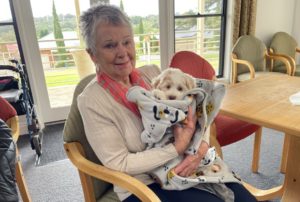
Laurel visiting with residents 

“They get to name the puppy and the sponsorship money goes towards training the puppy.”

Australian Lions Hearing Dogs CEO David Horne said the contribution was valuable, given the charity is 100 per cent funded by donations and sponsorship, and training a Hearing Assistance Dog can cost upwards of $37,000.

“We are incredibly grateful for the support from RetireAustralia,” he said.

“They know the benefits that a Hearing Assistance Dog has on a person who is deaf or hard of hearing, seeing first-hand the impact on The Laurels resident Bronwyn with Hearing Dog Spud.”

Australian Lions Hearing Dogs Development Director Alix Katala said it was incredibly special for the charity, located at Verdun, to engage retirees who were part of the same community.

“To give The Laurels residents an opportunity to meet and name an adorable future Hearing Dog puppy is so rewarding, we look forward to sharing the puppy’s training journey with them,” she said.


Find a community that would welcome both you and your furry friend