
How to support your loved one to make informed decisions about retirement living

Helping a loved one transition into retirement living can be emotionally charged and complex. You want the best for them – including comfort, safety and connection – but you’re also juggling your own family, career and life. Add in the maze of retirement living options available and it can feel overwhelming.
Let’s help you cut through the confusion, so you can empower your loved ones to make informed decisions that align with their individual goals, needs and financial situation.
Lead with curiosity
It’s natural to want to step in and “solve the problem.” But even with the best intentions, taking over the decision-making process can leave your loved one offside and feeling powerless. Retirement living decisions are deeply personal and it’s essential your loved one feels heard and empowered.
Open up the conversation with questions like:
- What does a good day look like for you now?
- Have you ever thought about what kind of lifestyle you’d like in the future?
- Would you like to explore some options together, just to see what’s out there?
Approach it as a shared journey, not a predetermined plan. You’re not deciding for them, you’re offering your support to them.
Frame it as a choice, not a crisis
It’s much harder to make a calm, informed choice when it’s forced by a fall, hospitalisation or sudden illness. By starting the conversation early, when things are going well, you give your loved one the space and time to explore options, compare lifestyles and decide what they want, not just what’s available in an emergency.
Think of it as future-planning, it’s about designing the next chapter, not ending the current one.
Understand the retirement living options available
Your loved one’s needs and preferences will guide which option is right. Here are some of the options available:
Retirement villages
Perfect for active, independent retirees who want low-maintenance living with social opportunities. In a retirement village, your loved one will enjoy the privacy and space of living in their own home without the worry of day-to-day property maintenance or gardening. Residents in a retirement village also have access to a range of facilities, activities and social events.
Some retirement villages also offer serviced apartments. Life in a serviced apartment has all the same benefits of living in a retirement village, but also offers additional support such as meals, weekly cleaning and linen laundry.
RetireAustralia have a range of retirement villages in South Australia, New South Wales and Queensland.
Home Care or Support At-Home
Many older Australians want to “age in place”. With home care services, your loved one can stay in their home with support like domestic assistance (such as cleaning, shopping, transport and social assistance), personal care or mobility aids. RetireAustralia offers home care services to their residents through their care team or a trusted partner. These are available through a government-subsidised package, if eligible, or fee-for-service.
Residential aged care
Also known as nursing homes. For those with more complex health or mobility issues, these facilities provide 24/7 nursing care. Entry requires an assessment through My Aged Care (ACAT).
Factor in emotional and social wellbeing
It’s easy to focus on physical wellbeing, but emotional and social health are just as important. Many older people struggle with loneliness or a loss of purpose, especially after losing a spouse or friends.
When researching consider things such as:
- Regular activities and events.
- Social dining, group outings or classes.
- Pet-friendly policies.
Help your loved one look for a place where they can thrive, not just exist.
Do your homework on costs and contracts
The financial side can be confusing for retirement living or residential aged care, as they have different to models than what you may be used to.
Moving into a retirement village often involves:
- An entry payment
- Ongoing service fees
- An exit fee or deferred management fee
For residential aged care, the costs are broken down into:
- Basic daily fees
- Means-tested care fees
- Accommodation costs (which can be paid as a lump sum, daily fee, or combo)
Consider consulting a financial advisor who specialises in retirement living or aged care, who can help you understand the implications for things like the family home, Centrelink benefits and future planning.
Tour together and trust your gut
Once you’ve shortlisted a few options and your loved one is ready to explore options in person, offer to join them. Be there, not to make the call, but to be a second set of eyes and ears. Afterwards, give them space to process and lead the discussion.
You might like to ask:
- What did you like or not like about that place?
- Could you see yourself living there? Why or why not?
- Would you like to look at another option before making any decisions?
Let them set the pace and be there as a sounding board. It’s also important to remember it’s not always just about the bricks and mortar, it’s about the vibe. The community and lifestyle aspect of retirement living is just (if not more) important than a home’s design and function.
Support, don’t steer
You might not agree with your parent’s choice. Maybe you’d feel more comfortable if they had more support or lived closer to you. But this is about their independence, not your convenience.
Even after a decision is made, keep checking in, offering emotional support and encouraging them to participate in their new community if they’ve moved.
Empowering loved ones to make a decision about retirement living can make a world of difference. You’re not just helping them find a place to live, you’re helping them shape the life they want to lead. By understanding their needs, the options available and seeking expert guidance when needed, you can help create a new chapter that feels safe and full of possibility.
Your free guide to retirement village living
Not receiving our Vitality monthly newsletter yet? Share your details below and we’ll send you monthly updates, helpful tips, and inspiring stories to support you on your retirement journey.
You might also be interested in:



Rolling together: Building connection through bowls
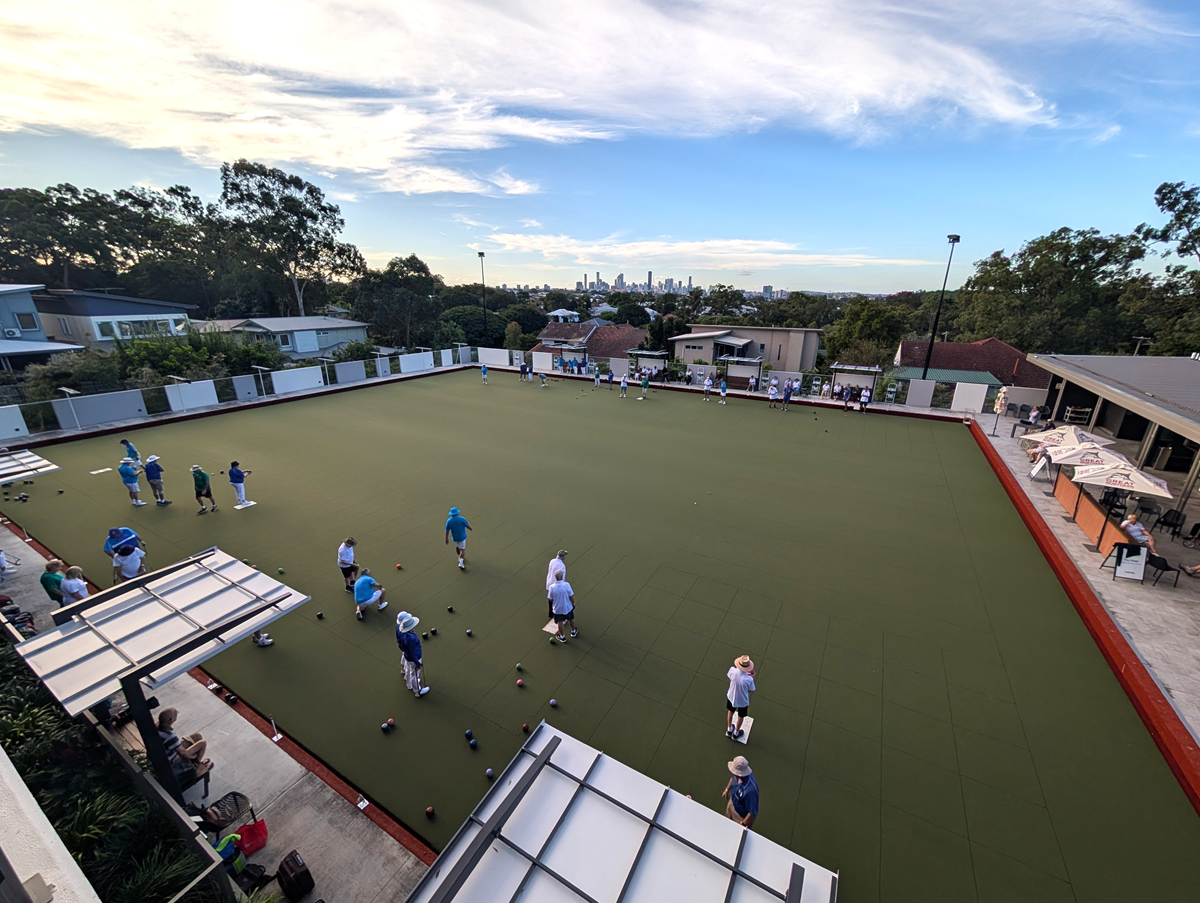
A friendly game of bowls turned into something much more in April when over 60 residents from four RetireAustralia retirement villages across south east Queensland gathered for their inter-village bowls day.
Hosted at The Green Tarragindi Retirement Village – one of RetireAustralia’s newest communities – the event brought together bowlers from The Green, The Verge at Burleigh G.C. Retirement Village, Noyea Riverside Retirement Village and Wellington Manor Retirement Village.
Throughout the afternoon, teams faced off in a spirited yet light-hearted competition that offered far more than a trophy –it offered connection, camaraderie and community.
What started last year as a friendly match between a few villages – organised by residents Jeff Jones and Erik Roberts from The Green – has quickly grown into a highlight of the social calendar. With more villages joining in and momentum building, it’s on track to become a much-anticipated tradition.
Resident-driven, community-powered
This year’s inter-village bowls day was proudly resident-led, with Jeff Jones (The Green) and Jeff Burchell (The Verge) collaborating to bring the event to life.
Supported by their village managers, the two helped ignite a wave of enthusiasm and ownership that shaped the event from start to finish.
“Having the ability and support to run resident-driven events empowers individuals, strengthens leadership within the village and ensures activities reflect what residents genuinely enjoy,” said Jeff Jones.
Co-organiser Jeff Burchell echoed the sentiment, “When residents meet peers from other villages, it broadens their social networks and brings fresh energy and new ideas. Many find it deeply rewarding to share stories and experiences with others on a similar journey.”

(Left to right) Alison Fynes-Clinton (Village Manager – The Green), Scott Burton (Manager – Regional Operations – QLD), Jeff Jones, Jeff Burchell, Tarmar Christensen (Village Manager – The Verge)
Beyond the fun of the competition, Jeff highlighted that gatherings like these play a vital role in supporting mental and emotional wellbeing –helping residents build friendships, feel connected and stay active.
In true village style, the event blended a touch of competition with a whole lot of heart. While Wellington Manor ultimately took home the trophy, the real prize was the new friendships and shared memories made on the day.
Strength in connection
For many, the highlight wasn’t just the action on the bowling green, but the connections made beside it.
Laughter, camaraderie and storytelling flowed freely both on the green and during the celebratory dinner and presentation ceremony.
One resident from The Verge captured the spirit of the day perfectly, saying:
“Everybody’s happy. They’re laughing, they’re talking, and while yes, everyone wants to win, I don’t think at the end of the day it’s going to matter because it’s really about the camaraderie. It’s a great idea to get everyone together. We’ve all been chatting about where we live, meeting new faces –it’s been really welcoming. It’s been really good.”
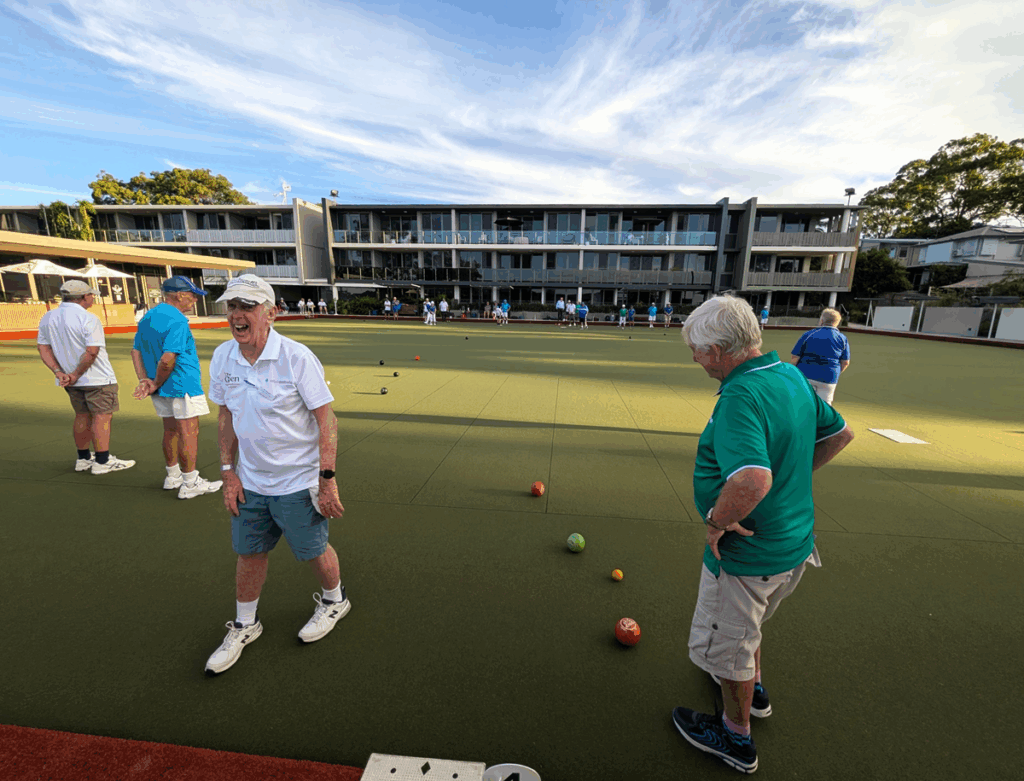
Image: Bowlers (Greg Bahlmann – The Green) enjoying the afternoon on the green
RetireAustralia’s Manager – Regional Operations QLD, Scott Burton, said the event exemplified the lifestyle many residents seek when choosing to downsize to a retirement village.
“One of the key reasons people are drawn to village living is the opportunity for social connection,” said Burton.
“Events like this show how residents create opportunities that cater to diverse interests and build a community culture that genuinely promotes inclusion and belonging.”
“This kind of initiative gives residents a sense of purpose and ownership,” he added. “Not only are they staying active and social, but they’re also shaping their own experiences and fostering a strong, engaged community.”
Looking ahead
The day celebrated the thriving social culture that exists within The Green and across neighbouring villages, brought to life through friendly competition, laughter and connection.
As the sun set on a day of unforgettable moments, conversations naturally turned to the future. Another bowls day? Absolutely. But also talk of new sports, new activities and other collaborative events designed by residents, for residents.
Because at the end of the day, it’s clear that retirement living isn’t just about where you live – it’s about how you live.
Discover a community that's right for you
Not receiving our Vitality monthly newsletter yet? Share your details below and we’ll send you monthly updates, helpful tips, and inspiring stories to support you on your retirement journey.
You might also be interested in:
It’s time to talk about care at Tarragal Glen

When weighing up where to live in retirement, you want to relax and enjoy life now, knowing that your future support needs are taken care of. At Tarragal Glen Retirement Village, you have freedom in an age-friendly home that will continue to support in the years ahead, safe in the knowledge that there are care options available should you need them.
At Tarragal Glen, the focus is on offering an independent lifestyle with the right level of support to maintain a quality of life so that residents can spend the rest of their lives in a community they are familiar with.
Residents tell us that the peace of mind that comes with being able to grow old in a community you are familiar with and which supports you is unbeatable. By continuing to live in your own home, regardless of age, or ability, you can maintain as much of your independence, comfort, and lifestyle as possible.
At Tarragal Glen, no matter how life changes, you can feel confident and supported. Right now, you might have limited support needs or none at all. If that changes, our experienced team can offer a range of care options to meet your needs.
Tailored support, on your terms
Staying healthy, happy and active is so much easier when your home is the centre of a welcoming community with a vibrant social and activities calendar, excellent amenities and in a convenient location with easy access to facilities outside the village.
At Tarragal Glen you’ll be able to age positively and live on your terms.
When you’re healthy, you can enjoy relaxing in a beautiful, maintenance-free and secure home. You will have all the time and opportunity you need to enjoy the things you love with the people who matter most.
With time, your care needs may change – but that won’t mean you’ll stop wanting to live your life comfortably, in your own home, in a community you are familiar with. When that time comes you can choose from a range of care and support services to meet your individual needs. Whether that means ongoing, daily support in one of our serviced apartments or flexible support at home services delivered right into your independent living villa or apartment.
Our trusted, on-site team members genuinely care about each and every resident and take pride in promoting their independence by delivering quality care and support.
Support at home
Our support at home services make life a little easier and give you peace of mind that, should your needs change, you can continue to stay safely in your own home for longer.
Our care team can help with household chores, meal preparation, showering, dressing, and medication support, to name a few. Care is tailored to your individual needs and funded privately or through access to an approved government-funded package. We can even help you navigate approval through My Aged Care, the government assistance platform.
“The loving care provided by Elizabeth, Pam and Cherie in assisting me with showering and making the bed, changing and laundering the linen, delivering an evening meal in all weather and even taking the bins out was more than 5-star service. I was being pampered back to health by these ‘care angels’.” Norman, Tarragal Glen resident
Serviced apartments
Our purpose-built serviced apartments at Tarragal Manor will support you to keep doing what you love, no matter your age or ability. They are perfect if your care needs increase and you want to continue living an independent lifestyle alongside your friends and family.
You’ll be able to enjoy life in a private, secure apartment with the support you need to remain independent, from chef-prepared meals to help with cleaning and laundry and additional care and support if you need it.
Before you move in, our care manager will sit with you to design a personalised care plan. We’ll take everything into account: your independence and your physical, mental, emotional and social wellbeing. And, as your needs grow or change, we’ll respond and support you.
Watch Elaine’s story to discover her how she transitioned from independent living to a serviced apartment at Tarragal Manor.
Living at Tarragal Glen you’ll experience our commitment to best practice and beyond, as we compassionately deliver quality care and support. You’ll always have the dignity of choice, allowing you to maintain control of the way your life unfolds.
Discover what’s on offer at Tarragal Glen. Perfect for now, ideal for later our brand-new independent living apartments offer age-friendly design for a secure future.
Not receiving our Vitality monthly newsletter yet? Share your details below and we’ll send you monthly updates, helpful tips, and inspiring stories to support you on your retirement journey.
You might also be interested in:
Elaine's happy transition to The Manor

After 15 happy years living independently at Tarragal Glen Retirement Village, Elaine chose to transfer to a serviced apartment in the village for her next phase of life. With the care and support she needs to keep living the good life, Elaine has been able to maintain her independence in the community she knows and loves. Watch her story above.
Not receiving our Vitality monthly newsletter yet? Share your details below and we’ll send you monthly updates, helpful tips, and inspiring stories to support you on your retirement journey.
You might also be interested in:
Retirement villages: what are the costs?

If you’re considering moving into a retirement village, you’ll likely have lots of questions, not just about how much it will cost to move in but how much it will cost on an ongoing basis, and when it comes time to leave.
We understand you need certainty about your financial future, and that you might feel concerned about affordability and hidden fees. Let’s walk through each step of the process so you know exactly what to expect.
Payments – how much, when, and will they change over time?
Tarragal Glen Retirement Village operates under a leasehold agreement where residents purchase a long-term lease to live in their home. This is the most common types of agreement in RetireAustralia villages.
Our sales contract offers financial clarity, certainty and peace of mind. We specify, upfront, which costs you’ll need to pay, and what they cover. Here’s a quick breakdown of the fees you would need to pay for the duration of your stay in at Tarragal Glen.
Entry payment
Your entry payment gives you the right to reside in your new home on a long-term lease (usually 99 years).
Unlike most property transactions, you will not have to pay stamp duty on your apartment. This equates to a significant cost saving on entry.
Service fees
By law, RetireAustralia makes no profit from village fees, which are charged on a cost-recovery basis and only increase in line with village costs.
Fees cover village operating costs including:
- Council and water rates
- Building insurance
- Building and garden maintenance
- 24-hour emergency call system
- Village staff
- Access to and upkeep of communal village facilities
For additional peace of mind, village finances are audited by an independent party each year.
Capped management fee
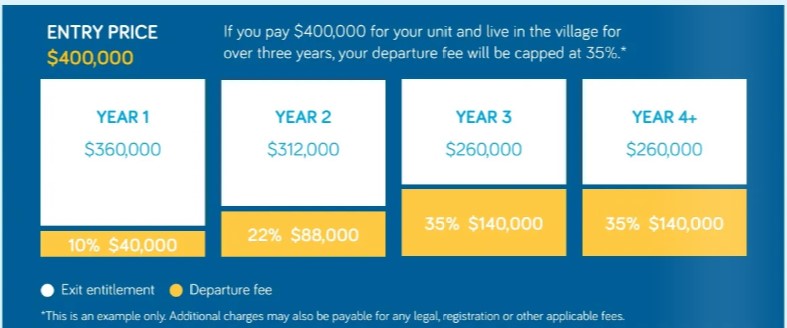
A management fee is payable when you leave the village. It is capped at 35% of your entry payment and accrued om a pro-rata basis during your first three years in the village.
This allows you to benefit from your choice of lifestyle and ensures you have access to quality social and recreational amenities, which would incur additional costs if you lived outside a retirement village. This is our form of income and contributes to capital improvements, community infrastructure, support staff and refurbishing and selling vacant homes. From the day you move in, you’ll be able to calculate how much you will receive when you leave the village.
Exit entitlement example
As a prospective resident you can easily calculate your exit entitlement at any time, giving you financial certainty about your future.
What do I get for my money?
Our residents tell us that choosing to move into a retirement village is about a lot more than bricks and mortar. In reality, it’s an investment in you. You’ll be moving into a friendly community filled with people at the same stage of life, and you’ll have access to a range of amenities.
At Tarragal Glen, this includes things like:
- Country Club with lounge/dining area and bar
- Bowling green
- BBQ area
- Cafe
- Workshop
- Swimming pool
- Gym
- Medical consulting room
- Library
- Hairdressing salon
You can also get involved in a range of interest groups, social activities and events – it’s really up to you and the community.
What’s more, when you don’t need to worry about maintaining your home and garden, you’ll actually have time to explore new interests!
These intangible benefits are an important consideration and should be weighed up alongside the financials. Moving into a retirement village is about so much more than the property. Residents tell us that the lifestyle, health and wellbeing benefits enhance their quality of life immeasurably.
What if I change my mind?
We want you to feel secure and confident with your decision to move into a RetireAustralia village, so our contract includes disclosure, cooling-off and settling-in periods.
After you receive a Disclosure Package, you have 14 days before you can enter into a contract. We recommend you use this time to get independent advice before you sign on the dotted line.
What’s more, should you change your mind within 7 days of signing your contract, we’ll refund your deposit in full.
Further to this, if you decide Tarragal Glen isn’t right for you within 90 days of moving in, we’ll repay your entry payment minus any accrued service charges, any reasonable costs incurred for renovations made at your request, and a pro-rata rental fee for your time in the village.
What if my care needs change?
At The Tarragal Glen you’ll find comfort and belonging in our community where everyone looks out for each other. You’ll experience the care and support you need now and in the future — when life is going to plan, and when it’s full of the unexpected.
A professional home care team will be by your side, helping you to access care and connection to meet your changing needs — from assistance with personal care and daily tasks, to transport for appointments or basic clinical care. Plus, the people who love you can also rest easy, knowing each resident has access to a PERS (Personal Emergency Response Service), should you need it.
How can I compare the cost of living in a retirement village with other options?
A true cost of living comparison can only be obtained by spending time with a sales consultant in a village, talking through your circumstances and needs, and understanding the fees and inclusions in your chosen village. You also need to do your own homework and make sure you have an accurate picture of your current living expenses to make the comparison valid.
In a general sense, retirement villages offer great cost of living value but trying to put a specific dollar figure to this comparison can easily become misleading. Your own cost of living and those applicable to villages can vary substantially, so it’s best to check with your village of choice directly.
On top of the hard costs listed above, which village fees cover, the costs associated with living in a retirement village also provide residents with a sense of community and belonging, support from friends and staff, and numerous opportunities to lead a happy, active and healthy life.
Placing a value on these intangible benefits is very personal to each individual. To get more of an insight into what it is like to live in one of our retirement villages, take a look at some of our resident stories. Or read up on global research about the health benefits of retirement living.
If you’d like peace of mind and clarity on the cost of your retirement home in years to come, take a closer look at Tarragal Glen Retirement Village.
Not receiving our Vitality monthly newsletter yet? Share your details below and we’ll send you monthly updates, helpful tips, and inspiring stories to support you on your retirement journey.
You might also be interested in:
7 reasons why people love living at Tarragal Glen Retirement Village

1. Fantastic location
Tarragal Glen Retirement Village is conveniently located in the thriving suburb of Erina on the stunning NSW Central Coast and is just a short drive to Terrigal Beach and next door to the popular Erina Fair Shopping Centre.
Situated on 12 acres of stunning parkland, allowing you to live among peaceful surrounds and enjoy easy access to walking tracks, theatres, galleries, swimming, golfing and great weather year-round.
2. A home for everyone
Offering classic retirement village villas, serviced apartments and brand-new independent living apartments, there is a home for everyone at Tarragal Glen. Best of all, it’s all set in the well-established village with a range of amenities and activities onsite.
If you’re looking for a traditional retirement village experience, the spacious villas with private garden or patio offer contemporary, low-maintenance living. While our brand-new independent apartments offer modern, age-friendly design and secure living in the centre of the well-established village. If you require more support and assistance, our purpose-built serviced apartments at Tarragal Manor offer an independent lifestyle along with meals, cleaning and linen laundry.
3. Seamless support when you need it
At Tarragal Glen, the on-site RetireAustralia Support at Home team can help you access the support you need to meet your changing needs. From assistance with personal care and daily tasks, to transport for appointments or basic clinical care. At home support is tailored to your individual needs and funded privately or through access to an approved government funding. We can even help you navigate access through My Aged Care, the government assistance platform.
Plus, the people who love you can also rest easy, knowing each resident has access to a PERS (Personal Emergency Response Service), should you need it.
If your care needs change and you require extra support, you can transfer to a serviced apartment at Tarragal Manor and relax knowing that you will not have to pay a second deferred management fee.
4. A supportive community
Tarragal Glen is a place where community comes together in a genuine way that enriches everyone’s lives. The community at Tarragal Glen offers comfort and belonging in a place where everyone looks out for each other. You’ll experience all the care and support you need both now and in the future, whether life is going to plan or when the unexpected happens.
Our RetireAustralia team members, including an on-site Village Manager, will always be on hand to provide assistance if and when you require it.
“Our village is a real community supported by our Village Manager and her team,” says Gordon, a resident at Tarragal Glen. “We discovered a sense of community we had not expected. Villagers talk to each other, not only in regular activities but when they meet in the street or walking, very often with dogs, in the park. I now consider many of the residents’ friends. Friends who care about each other and keep an eye out for anyone having difficulties.”
5. A range of community facilities
At Tarragal Glen, we have a range of premium facilities available for all our residents, so you’re able to connect with others and live life to the fullest. Our facilities include:
- Country Club with lounge/dining area and bar, able to cater for large events
- BBQ area
- Café
- Medical consulting room
- Lawn bowls
- Library
- Swimming pool
- workshop
- Gym
- Hairdressing Salon
6. Safety and security
We understand safety and security are important priorities. Rest assured, you’ll quickly get the help you need, when you need it, with a personal emergency response system incorporated into your home.
The age-friendly design of our homes and village enhances your safety and helps you living in your own home for longer. Our newly-built independent living apartments also offer low maintenance living with a secure entry.
7. Contract certainty
At RetireAustralia, we understand that retirees want financial clarity and certainty. That’s why the Tarragal Glen sales contract offers a simplified and clear financial process.
We want our residents and their families to have certainty from the very beginning, so we specify upfront what the costs are, and what they cover. From the day you move in, you will be able to calculate what you will receive when you leave Tarragal Glen. What’s more, by law the monthly service fees are charged on a cost-recovery basis.
To discover why Tarragal Glen offers the best of choice in retirement living and learn more about our unique community, book an appointment to speak with our team today.
Not receiving our Vitality monthly newsletter yet? Share your details below and we’ll send you monthly updates, helpful tips, and inspiring stories to support you on your retirement journey.
8 reasons why retirement villages are good for you

At any stage of life, a focus on health and wellbeing and having the support of a community is important. As we age it tends to become even more important and valuable to our quality of life.
For this reason, it’s fascinating to discover the research that shows how living in a retirement village can positively impact your health, your connection with loved ones and your sense of community.
Here are just 8 of the ways retirement village living is good for your health and wellbeing.
1. Reduce isolation and improve mental wellbeing
Even before COVID-19, one in five older Australians was estimated to suffer from social isolation which can negatively impact one’s mental health and even lead to depression. The pandemic highlighted to the wider community just how important it is for our wellbeing to stay connected with each other.
Life in a retirement village is specifically designed to counter social isolation and foster a sense of belonging and community. Residents have many opportunities to connect with each other through a range of social activities and events, which has a positive effect on health and wellbeing. Indeed, recent research from the Retirement Living Council shows that retirement village residents are 5 times more socially active and 41% happier than non-residents, combating loneliness and depression. They’re also twice as likely to get together with family and friends.
2. Boost longevity
Living better and healthier is great, but what about living longer? A Swedish study has shown that being socially active can add up to five years to the life expectancy for women, and six years for men.
Researchers studied 1800 people over 18 years, and found that several factors impacted longevity, including having healthy lifestyle behaviours, a better social network, and participating in more leisure activities.
The research is in – a retirement village is the perfect place to boost your longevity through social connections and involvement in sporting and social activities and interests.
3. Support and care during a crisis
We have learnt over the past few years that life can be unpredictable, whether it be a global pandemic or natural disasters, such as fires, floods and storms. Living in a retirement village like Tarragal Glen can help ease the anxiety and stress of the unknown with the knowledge that you have a supportive team and community around you.
The RetireAustralia team regularly keep up-to-date with the latest health advice and are continually improving their emergency responses, so that you’re secure and safe in the event of a crisis. Knowing that you have the support you need should something happen also reduces worry and improves your general wellbeing.
4. Reduce the risk of disability
Research conducted by Rush University has shown that people who are more socially active are less likely to become disabled. In other words, they’re less likely to need help with daily activities or mobility.
The good news is that researchers looked at a broad range of social activities, so whatever your interests, your social activities will have a positive impact. Researchers measured social activities like going to restaurants, playing bingo, volunteering, going on day or overnight trips, and visiting relatives and friends. With a busy social calendar on offer at Tarragal Glen Retirement Village, you’ll be spoilt for choice in how you wish to stay active.
5. Fewer hospital stays
Access to health services and wellbeing activities and amenities can reduce hospitalisations for residents after moving into a retirement community. In fact, research shows that retirement village residents are 20% less likely to require hospitalisation compared to non-residents. This increases to 28% when a resident has lived in a retirement village for more than 18 months.
What’s more, purpose-built housing reduces risks, like falls, common in traditional homes. When you consider that one of the main factors for hospitalisation in people over 60 are falls, it’s no wonder that a safe and secure home and community helps keep retirement village residents out of hospital.
6. Visit to the GP less often
The Property Council of Australia estimates that over 65s visit their local GP about 6-7 times a year, but that residents in retirement villages make 1-3 fewer visits each year. Recent research also shows that facilities such as gyms, pools, and access to care promotes better health for retirement village residents.
At Tarragal Glen Retirement Village, residents can choose from a wide range resort-style facilities, as well as personalised in-home care services. Our experienced care team can help with household chores, meal preparation, showering and dressing, assistance with taking medication and more, so that you can stay in your home and community for longer.
7. Lower the risk of dementia
Research shows that engaging in meaningful activities can reduce the risk of stress-related illnesses and dementia. Specifically, activities with purpose – like music, drawing, meditation, reading, and arts and crafts – are particularly helpful in boosting health and wellbeing.
Our retirement villages offer ample opportunities to take part in social and leisure activities and Tarragal Glen is no exception. Designed to maximise social connection, residents will be able to enjoy activities and amenities surrounded by friends, family and like-minded neighbours. Here, you’ll be part of close-knit community and can get to know your neighbours by taking part in one of the regularly organised social events.
8. Delay the move to aged care
Would you like to hold off on moving into residential aged care? If the answer is yes, then living in a retirement village could be a good start.
A report from the Australian Institute of Health and Welfare found that residents of retirement villages enter aged care later than those moving from the family home. This isn’t a matter of weeks or months, but years – an average of five years to be exact. This also means you get to enjoy the village facilities and lifestyle benefits of retirement living for longer.
It seems the course is clear – life in a retirement village is likely to boost your health and wellbeing, but also your sense of fulfilment. And a life well lived is worth aspiring to!
If you’re interested in retirement living that ticks all the boxes, take a look Tarragal Glen, a retirement village that offers traditional villas, serviced apartments and brand-new, modern independent living apartments. Tarragal Glen offers everything you need for a lifestyle of independence and connection, with a safety net of care when you need it.
Not receiving our Vitality monthly newsletter yet? Share your details below and we’ll send you monthly updates, helpful tips, and inspiring stories to support you on your retirement journey.
The 5 most common retirement living options

Like any big decision, it is best made when you have all the relevant information. To help you with your research, we’ve summarised the 5 most common types of retirement living in Australia to take some of the guesswork out of where to call home, both now and in the future.
1. Staying in the family home
Staying in your family home ensures you stay in the neighbourhood you’re familiar with, close to the social networks you’ve built over many years.
It suits people who value their independence, love their surroundings and enjoy their established routines. It works best for those with strong family and social networks, as loneliness and isolation are a higher risk for those ageing in their own home.
Considerations:
- Repairs and maintenance: You will still need to coordinate your own home repairs and house and garden maintenance, so it’s worth thinking about how you’ll feel about this in the years to come. By the time Australians retire, many of them have lived in their homes for over 20 years, if this sounds like you, you should consider that the costs of maintaining older homes can be significant.
- Accessibility and safety: How well will you be able to navigate your home if your mobility is compromised? Being open-minded about home modifications is important to ensure that your home continues to be a safe place for you as you age.
A home can be full of fall hazards, as well as other potential safety problems. Getting a home safety assessment for ageing in place will give you peace of mind about this. It will also help you make an informed decision about what changes are needed to ensure your home is safe. - Isolation: You could become lonely and isolated living alone if your mobility or activity is ever limited.
- Care and support: As the years go by, you may find you need help managing daily tasks and at some point, you may even need some level of nursing care. A great resource for understanding what options are available to you is the My Aged Care website.
2. Downsizing into an apartment or townhouse
Downsizing has many positives in retirement, not least having less space to maintain which frees up more time to do the things you enjoy most.
Moving into an apartment or townhouse generally offers similar security as a detached house, but they have smaller yards and lower upkeep costs, while still giving you privacy in balconies, courtyards and perhaps even a small garden.
Considerations:
- Home modifications: Before moving in, consider making some minor modifications in preparation for the future. For example, installing handrails in critical locations and making sure the hallways are wide enough to accommodate someone walking with a cane or a wheelchair user. Most townhouses are designed with stairs to maximise land use, so it pays to think about how long you’ll be happy with going up and down the stairs.
- Ownership: The titles for some units and townhouses may be different, and you will want to understand the term ‘strata title’. This title is a certificate of title for a lot, and a share of common property. It is worth the investment to get legal advice to assist you in reviewing the ‘strata scheme’ to ensure that you will own what you think you will own. You will also need to take into consideration the body corporate fees for which you will be liable for the maintenance of common areas.
- Downsizing: With less space comes the task of deciding what to do with all the possessions that you’ve spent years accumulating. The prospect of sorting through a lifetime of possessions and memories can be overwhelming and can take on a negative connotation. This has a lot to do with how emotionally attached we can get to our possessions and the memories associated with those items.
We’ve put together a list of handy downsizing tips to make the process a little easier. Unfortunately, there’s no denying it is a big task and it could take you a lot longer than you think, so tackling it early on and giving yourself plenty of time is key.
3. Retirement villages
Retirement villages are the most common and well-known retirement living option in Australia. A major feature of this style of retirement living is the sense of community, with residents creating an informal support network and social groups. Increasingly, retirement villages also offer access to flexible care and support. This will give peace of mind, knowing that should your needs change in the future you can receive suitable care. Having the right support also means that you can stay safely in your home for longer.
Retirement villages are especially popular with both older singles and couples, who want more security and support while living independently. You can have an active life and focus on the things you love, without worrying about day-to-day property maintenance or gardening needs that are taken care of by village staff.
Designed to provide safe and secure homes as we age, retirement villages should have no, or very few steps in the home (or the village), corridors and doorways are wider, bathrooms are adapted for mobility devices and each home is fitted out with a 24-hour personal response system.
Considerations:
- Choice: There are several different types of retirement village, and each offers a different range of accommodation choices from single family homes, townhouses, villas, and apartments. Retirement villages can also have an array of amenities ranging from gyms, heated indoor swimming pools and billiards rooms through to tennis courts and bowling greens. Many offer services such as cleaning and laundry services, and transportation, as well as a diversity of sporting and social activities and facilities. In many villages, small pets are welcome and residents love inviting family and friends to visit.With so much choice, it is important to educate yourself on what each village offers and what suits your lifestyle. Be sure to visit a number of them before making a decision.
- Costs and ownership: The most common type of contract arrangement in retirement villages is lease or licence, where you purchase a long-term lease (usually 99 years) to live in your home. Just like buying an apartment or townhouse, it is important that you read your contract and seek independent legal and financial advice before you sign on the dotted line.
Having a complete understanding of upfront, ongoing and outgoing village costs is also important. One of the attributes of RetireAustralia’s contract that many people find attractive is the certainty it offers. There are no hidden costs, and from the day you move in, you will know how much you will receive when you leave. In uncertain times, you may find it comforting to know where you stand financially. If that is you, a RetireAustralia village could be the right choice. - Care and support: It’s important to consider how your care needs will be supported as you get older. Many retirement villages offer some form of onsite care, while others are co-located with an aged care facility. While you may not need care now, you may in the future and the type of care and support offered in your preferred retirement village will determine if you can stay in your home and community for as long as possible.
4. Land lease communities
A land lease community, also known as a lifestyle community, manufactured home estate, over 55s village or residential park, is typically nestled in scenic locations, often on the sites of former caravan parks. Here, residents own their ‘manufactured home’ or ‘moveable dwelling’ but lease the land it sits on. They have two agreements: one for purchasing their home and another for renting the land. Regular site fees contribute to maintaining community facilities and grounds.
Considerations:
- Contract: Each operator is free to develop their own contract for the rent and rental agreement contract covering the land.
- Costs and ownership: Most homes are considered affordable and in nearly all cases you will buy a new home from the operator. However, the weekly fees are controlled by the operator and they can vary the fees as they wish.
Also, while the manufactured home will be your own, you don’t own the land your home is positioned on and will be required to pay rent for this land. This rent can be increased by the park owner and there is no guarantee that the park owner will operate the park indefinitely, which may require you to remove your home and vacate the land. - Care needs and ageing in place: Unlike retirement villages and residential aged care, there is no requirement for land lease communities to be age friendly, so you need to consider accessibility and mobility if things change later in life. Land lease communities also do not offer any care, but you can arrange for home care services to be delivered into your home.
5. Residential aged care
Deciding whether residential aged care is right for you or a loved one is one of the toughest decisions a person can make. If you find yourself facing this choice, consider the following pros and cons.
Residential aged care facilities, also known as aged care or nursing homes, are a live-in option for people requiring full-time care. Most aged care facilities focus on clinical-based care for older Australians who are unable to live independently in their own homes.
Considerations:
- Quality of care: residential aged care facilities are evaluated, and these reports are available through the Aged Care Quality and Safety Commission. Do your homework and read the reports about the homes you are considering, so you can be sure that you or your loved one will be staying in a safe home that delivers high quality care.
- Proximity of partner/ family: You may have to travel lengthy distances to visit your loved one if there isn’t a nursing facility near your home. And, unlike other retirement living options, partners don’t get to share apartments or rooms in an aged care facility.
- Social activities and community: Residential aged care facilities provide differing levels of social activities and social connection. A sense of community is important at all ages and stages of retirement, so finding out what’s on offer and getting a sense of the community will be important.
Every person’s situation is unique and you will know what is right for you. The key is to think about your preferences and set a plan that suits you and takes into account what is important to you. Don’t shy away from factoring in the unknown by building in contingencies and sharing your plan with close family and friends.
If comfort and security in retirement are important to you, take a look at Tarragal Glen Retirement Village on the NSW Central Coast – featuring classic retirement village villas, serviced apartments and brand-new independent living apartments. A well-established retirement community where you can relax and enjoy your well-earned freedom now, safe in the knowledge that as your needs change your future is secure. Speak to us today, to discover what makes Tarragal Glen special and the perfect choice to live life the way you want.
Not receiving our Vitality monthly newsletter yet? Share your details below and we’ll send you monthly updates, helpful tips, and inspiring stories to support you on your retirement journey.
Future-proofing your retirement: planning for your evolving needs

Retirement is a time of freedom and relaxation, made even better with some thoughtful planning. When thinking about retirement, financial considerations often take centre stage, but there are other things to make this chapter truly stress-free. These include care, legal safeguards, your home setup and overall wellbeing. Preparing now can help you maintain independence and ensure you’re well-supported as your needs evolve.
Optimising your home for ageing
A well-designed home can support independence for longer. Firstly, you need to consider if you’d prefer to stay in your home or downsize? One option is to downsize to a retirement village. Staying at home has the benefit of comfort and familiarity. While moving to a retirement village can offer a range of housing options that are specifically built for our senior years. Plus, there are a range of services and amenities to make retirement more enjoyable and fulfilling.
Whether you stay at home or downsize, here are some things that you should consider:
- Accessibility: ramps, handrails and wider doorways can assist if there are ever mobility challenges.
- Bathroom safety: walk-in showers, grab bars and slip-resistant flooring can reduce the incidence of falls.
- Single-level living: stairs may become difficult if reduced mobility arises.
- Smart home technology: devices like voice-activated assistants, medical alerts and automated lighting can enhance safety and convenience.
RetireAustralia retirement villages offer housing options that have been built with age-friendly design, meaning you don’t need to think about it. As you age and your needs change, your home will be able to accommodate this.
Planning for future care needs
While you may be active and living independently now, it’s important to think ahead. By considering what the future may look like and putting some things into place now, you can continue to live independently for a long time to come.
Things to consider include:
- At home support: services such as in-home care, meal deliveries and community support, can make life easier and allow you to keep your independence. Services can be made available through a government-funded Home Care Package or through fee-for-service. Consider registering now for My Aged Care so when you require extra help, the first step has already been taken.
If you live in a RetireAustralia village, you can access care services through our Home Care team or trusted partner. Some villages also offer serviced apartments, where meals, cleaning and linen laundry are taken care for you. Leaving you to focus on what you enjoy most.
- Residential aged care facilities: while the goal is always to live at home for as long as possible, you may need residential care. It is always helpful to explore your options and understand the costs and waiting lists well in advance. Having knowledge is always beneficial, even if you don’t need to use it.
At RetireAustralia, premium alternatives to aged care are currently offered at Glengara Care on the NSW Central Coast and the Care Hub at The Verge on the Gold Coast.
- Health insurance: if you have private health insurance, make sure you’re aware of what’s covered and whether you need additional policies. You may be able to remove items that are no longer necessary, such as reproductive health, etc.
Legal safeguards: enduring power of attorney and guardianship
Preparing legal documents early ensures your wishes are respected if you become unable to make decisions. This removes the stress off family members and loved ones. This can often be quickly and easily done in one visit to your solicitor. While there are differences in each state and territory, key documents include:
- Enduring Power of Attorney (EPOA): appoint someone to manage your finances and legal matters if you’re incapacitated.
- Guardianship: Assign a trusted person to make personal and medical decisions on your behalf if needed.
- Advance Care Directive: outline your preferences for medical treatment and end-of-life care.
- Updated will and estate planning: whenever you begin a new stage of life or have a change in circumstance, you should ensure your will is up to date and reflects your wishes. This way your assets are distributed as you intend and you minimise complications for your family.
Wellbeing: staying physically and mentally active
Long-term health isn’t just about medical care, it’s also about staying engaged and active.
- Physical health: regular exercise, a balanced diet and preventive healthcare check-ups are crucial.
- Mental stimulation: lifelong learning, puzzles, reading or even a new hobby can help maintain cognitive function.
- Social connections: maintain friendships, join clubs or volunteer to stay connected and combat loneliness.
- Purpose and enjoyment: retirement is about more than just planning for potential challenges; ensure you still pursue what makes you happy.
Future-proofing your retirement isn’t about expecting the worst. It’s about preparing so you can enjoy life with confidence and maintain your independence. A little bit of preparation now can set yourself up for smoother, more enjoyable senior years. The best time to plan for the future is today.
Your free guide to retirement village living

Not receiving our Vitality monthly newsletter yet? Share your details below and we’ll send you monthly updates, helpful tips, and inspiring stories to support you on your retirement journey.
You might also be interested in:
What to expect at your first appointment
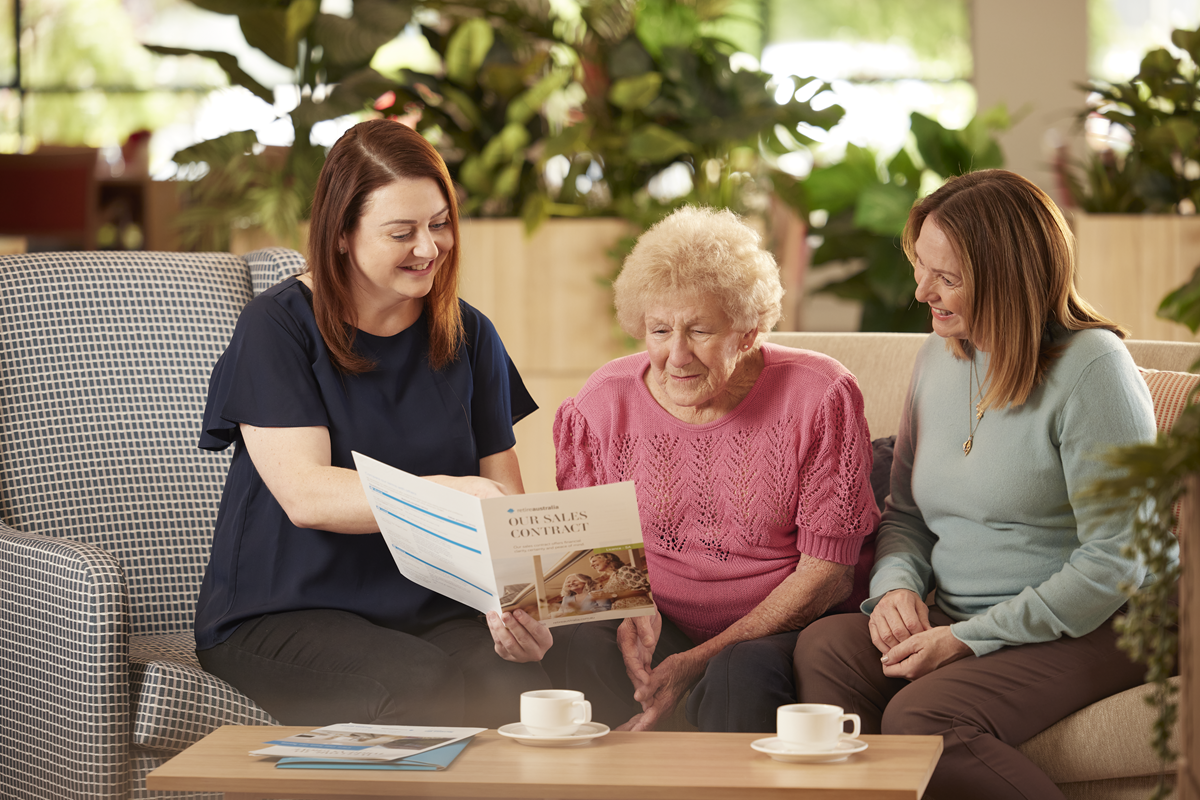
Thinking about making the move to a retirement village is a big decision, and a very personal one. It’s natural to feel a mix of excitement and uncertainty. That’s why your first appointment with a village sales consultant is all about making things clearer, more comfortable and to give you a taste of village life.
Here’s a closer look at what you can expect during this important first step toward your next chapter.
A personal conversation, just for you
Your appointment begins with a relaxed, friendly conversation. This is your chance to share what matters most to you. This will include your lifestyle, your preferences and what you’re hoping to find in a retirement community.
Your consultant will ask a few simple questions to get to know you better, such as:
- What does your ideal village lifestyle look like?
- Have you visited or looked into other villages?
- What did you like or dislike about them?
- What are your priorities in choosing a new home?
This chat is about understanding your goals so your consultant can guide you in the right direction.
A tour tailored to you
Once your consultant has a better idea of what you’re looking for, you’ll take a guided tour of the village. This often starts with a visit to the community centre. Here, you’ll see the heart of village life in action and may have the opportunity to meet some of the friendly faces who call the village home, as well as team members and even the village manager.
You’ll explore shared spaces like lounges, gardens and activity areas, places where friendships are formed and community life thrives. It’s a great way to imagine how village living could suit your day-to-day lifestyle.
Exploring the homes
After soaking in the village atmosphere, you’ll be shown some of the available homes. This is your chance to see what the living spaces look and feel like. You’ll be able to discover whether they align with what you’re after. By this point, you’ll have a fuller picture of what village life is like, which will help you make more confident choices.
Meet the team behind the village
Throughout your visit, you’ll meet some of the team members who help make the village a welcoming, supportive place. This could include the village manager, maintenance people and, possibly, the care team. It’s an opportunity to see the people who’ll be there to support you, should you choose to make the move.
Talking through the financials
Toward the end of the appointment, your consultant will walk you through the financial details, these include management fees, ongoing costs, exit fees and how the resident contract works. Even if you’ve done a bit of research already, this is your chance to ask questions and get clear, honest answers. The legal and financial aspects of a retirement village purchase are quite different to a residential property purchase, so this is your opportunity to find out more. No pressure, just helpful information, explained simply.
Exploring other options
If you find the village isn’t quite the right fit, your consultant may be able to suggest other nearby RetireAustralia communities. You might be able to learn about other nearby villages that offer something a little different, so you can compare and find the best match for your lifestyle.
Getting the most from your visit
There’s no need to come prepared with all the answers. Just bring your questions, your curiosity and an open mind. Whether you’re just starting to explore or already have a few ideas in mind, your consultant is there to support you at every step.
A step toward your next chapter
This first appointment is all about you. It’s a chance to explore, connect and start imagining what life could look like in a welcoming, well-supported community. You’re not just visiting a place, you’re taking the first step toward finding a home that truly fits your next stage of life.
Download your free retirement living guide now
Not receiving our Vitality monthly newsletter yet? Share your details below and we’ll send you monthly updates, helpful tips, and inspiring stories to support you on your retirement journey.