In the wake of Ex-Tropical Cyclone Alfred, you may be asking how you could feel more secure in the event of a natural disaster or severe weather event. Natural disasters and emergencies can be overwhelming, especially for older adults who may have additional health or mobility concerns, or who may just feel a little isolated or vulnerable. However, living in a retirement village provides a level of security, support, and preparedness that can make all the difference during a crisis. Here’s how RetireAustralia retirement villages help residents stay safe and supported in an emergency.
Emergency preparedness
While you still have all the benefits of living independently, one of the biggest advantages of living in a retirement village is its proactive approach to emergency preparedness. In some cases, such as Ex-Tropical Cyclone Alfred, there will be time to prepare, however, at other times disaster can strike unexpectedly. To ensure RetireAustralia villages are prepared, they have emergency plans in place. This means that residents know what to do before, during, and after a disaster.
The ways retirement villages can assist include:
advising residents on how to prepare themselves, including steps to take if they rely on medical devices that require power.
providing clear instructions on who to contact for different needs during an emergency.
preparing the village itself. This includes ensuring buildings are safe, securing outdoor furniture and equipment, and mitigating potential hazards.
having a strong communication strategy in place to keep residents informed at every stage of an emergency.
With these measures, residents can feel more confident and reassured, knowing they have a clear plan to follow and who to call on should the need arise.
Community support
One of the biggest fears during a natural disaster is being alone. But in a retirement village, you’re always surrounded by a supportive community. This means that:
neighbours and friends check in on each other, ensuring someone is always close by.
village teams and the contact centre are available by phone to help provide guidance and reassurance.
Having a strong sense of community helps reduce anxiety and makes it easier to get through challenging situations together. Rather than facing an emergency in isolation, residents have a built-in support network to rely on.
Maintenance and repairs
After a disaster, dealing with home and garden repairs can be stressful and complicated. Living in a retirement villages take this burden off residents’ shoulders by:
having builders, electricians, and plumbers on standby, ready to assess and fix damage as soon as it’s safe.
managing all necessary repairs so residents don’t have to worry about sourcing and coordinating tradespeople themselves.
This ensures that homes are quickly restored to a safe and comfortable condition, giving residents peace of mind.
Safety and security
Retirement villages are designed with age-related safety in mind, making them a secure place to be during an emergency. Key features include:
Personal Emergency Response Systems (PERS) that allow residents to call for help at the push of a button.
well-maintained buildings.
systems in place to enable emergency services quick and easy access to the community.
Knowing that safety is a top priority provides not only residents, but their families as well, with added reassurance during uncertain times.
You’re not alone
Perhaps the most valuable aspect of living in a retirement village during an emergency is the sense of connection. Isolation can be a significant concern during a crisis, but in a village, you are never truly alone. Whether it’s staff, neighbours or the wider village community, there’s always someone looking out for you. This was evident during Ex-Tropical Cyclone Alfred at The Green Retirement Village at Tarragindi, Brisbane, where residents weathered the storm together by playing Bingo. Keeping each other distracted and bonded by their sense of community, residents made sure they got through the turbulent weekend as best they could together.
When an emergency strikes, having the right support network can make all the difference. Retirement villages offer a secure, prepared and community-driven environment that helps residents stay safe, informed and cared for when it matters most. RetireAustralia are always reviewing emergency procedures to make continuous improvements for the safety of residents
Not receiving our Vitality monthly newsletter yet? Share your details below and we’ll send you monthly updates, helpful tips, and inspiring stories to support you on your retirement journey.
Retirement is often seen as a time of freedom and relaxation – no more daily commutes, work stress or rigid schedules. But while this phase of life brings new opportunities, it can also present challenges, especially when it comes to maintaining social connections. Without the built-in interactions of a workplace, many retirees can find themselves feeling lonely or disconnected.
Strong social connections are essential for a happy, healthy and fulfilling next chapter. Discover why they matter and how you can actively maintain and grow your social circle during this stage of life.
Why social connections matter in retirement
They boost mental and emotional wellbeing
Loneliness and isolation are major risk factors for depression and anxiety. Having close relationships and regular social interactions can improve mood, reduce stress and provide emotional support during life’s ups and downs. Having like-minded people that you regularly catch up with can make you feel better about life.
They improve physical health
Studies have shown that people with strong social ties tend to live longer and enjoy better health. Social connections can help lower blood pressure, reduce the risk of heart disease and even strengthen the immune system. Engaging in activities with others, such as walking groups, exercise classes or sports – like lawn bowls or golf – also encourages physical movement, which is key to maintaining overall health.
They keep your mind sharp
Social engagement stimulates the brain, reducing the risk of cognitive decline and dementia. Conversations, new experiences and problem-solving with friends and family help keep the mind active and engaged. Solving the world’s problems over a game of cards or Scrabble, can combine social interaction with mind exercise.
They add purpose and meaning to life
Feeling connected to others provides a sense of belonging and purpose. Whether it’s through volunteering, mentoring or simply spending time with loved ones, social relationships help all of us to feel valued and involved.
How to maintain and strengthen social connections in retirement
Stay in touch with friends and family
Maintaining long-standing relationships takes effort, but it’s worth it. Regular phone calls, video chats and in-person visits help keep connections strong. Scheduling recurring coffee dates or family gatherings can make it easier to stay in touch. Or simply pick up the phone for an afternoon chat. Living in a retirement village makes building and maintaining friendships easy. Living in a community of like-minded people means there is always someone around to say hello to or catch up with over your favourite drink.
Join clubs and groups
Retirement is a great time to explore old or new interests and hobbies with like-minded people. When you live in a retirement village there is an array of interest and social activities on offer. These include:
book clubs or writing groups
gardening or crafting groups
walking or exercise groups
morning teas and happy hours.
If you’re looking for interaction outside of a village, there are faith-based groups, volunteer societies or theatre groups.
All of these activities provide built-in socialisation, broaden your interest and offer the chance to meet new friends who are interested in the same things you are.
Volunteer your time
Giving back to the community is one of the most rewarding things you can do. It’s a wonderful way to stay socially active, as well as improve your local community. Volunteer opportunities include:
mentoring younger generations. Your skills and knowledge are invaluable and important to share.
help at local charities or food banks.
assist at libraries, schools or hospitals.
join environmental or advocacy groups.
join a visitor program at a local aged care facility.
Volunteering provides a sense of purpose while also expanding your social network. When you live in a retirement village there is the opportunity to volunteer in roles on numerous committees, such as resident or social committees. This provides an opportunity to use the skills you have honed throughout your life and help in the running of your community.
Embrace technology
Technology makes it easier than ever to stay connected, especially when distance is a challenge. To stay in touch with friends or family you could consider trying:
social media.
video calls (Zoom, FaceTime) for virtual meetups.
online forums or interest-based groups for discussions.
digital games or apps to play with friends remotely.
Learning new technology may feel overwhelming at first, but it can open-up a world of social opportunities. Plus, it will keep your brain firing.
Travel and explore new experiences
Retirement is the perfect time to travel, whether it’s taking a big trip or exploring local attractions. Group travel tours, cruises and travel clubs provide opportunities to meet new people while experiencing new places. This is the perfect opportunity to meet like-minded people, share an experience and grow a new friendship on your return home.
Make the effort to reach out
Sometimes, the key to staying socially connected is simply taking the initiative. Don’t wait for others to reach out – send a message, plan a catch up or join a new activity. Small efforts can lead to meaningful relationships.
Live in a retirement village
Life in a retirement village provides a wealth of activities and opportunities to make new friendships. With social clubs, interest groups, fitness classes, group outings and shared dining experiences, it makes it very easy to stay engaged and connected. The social connection and sense of community is what residents say they love most.
“There’s something going on in this village every day of the week – Sundays included. Last Sunday, we had a function for 70 people in the clubhouse and there was a lot of laughing and a lot of fun,” says Lloyd, a resident at Noyea Riverside Retirement Village.
While at Magill Retirement Village, Ann says: “I try to make friends and be helpful. I think most of the people who come here are happy to be friends. We check on each other, all the residents interact in some way or another. I like people, I’m a people person.”
By making an effort to nurture relationships and seek out new social opportunities, older people can enjoy a vibrant, connected and meaningful chapter of their lives.
Discover if retirement living is the right choice for you. Download the free Retire Ready guide to find out more.
Not receiving our Vitality monthly newsletter yet? Share your details below and we’ll send you monthly updates, helpful tips, and inspiring stories to support you on your retirement journey.
Moving into a retirement village is a significant life transition, often filled with a mix of emotions, including excitement and uncertainty. However, with careful planning and open communication, you can help your loved ones make the process smooth and positive. Here’s how you can support them during this important change.
Start the conversation early
Rather than waiting until a crisis forces the decision, begin discussing retirement living and downsizing options well in advance. This allows your parents to be actively involved in the decision-making process. Listen to their concerns, preferences, and expectations, and reassure them that this transition is about enhancing their quality of life.
Research suitable retirement villages
Finding the right community requires research. Consider factors such as:
Location: proximity to family, friends and retail and medical services.
Facilities: availability of social activities, care services and recreational amenities.
Cost: ensure everyone understands the financial implications, including entry payment, fees while in the village, exit fees, and what’s included. Seek independent legal and financial advice, to ensure your loved ones make the right choice for their individual circumstances.
Lifestyle fit: visit different villages to get a feel for the atmosphere and community.
Accompanying your parents on tours of potential villages and speaking with current residents can provide valuable insights and ensure they make the right choice.
Allow them to make the decision
It’s crucial that your loved ones are in control of the process, and make the final choice about where they live. Assist them in understanding contracts, services and potential long-term considerations while ensuring they are empowered rather than pressured.
Plan the move thoughtfully
Moving can be overwhelming, especially when downsizing is involved. Help your loved ones:
Sort through their belongings, keeping sentimental and essential items.
Donate or pass down possessions they no longer need.
Set up their new home with familiar furniture to make it feel like home.
Arrange utilities, mail redirection and medical transfers ahead of time.
Taking a gradual approach can help ease stress and ensure they settle in comfortably.
Provide emotional support
Even if your loved ones are excited about the move, change can be daunting. Validate their feelings and reassure them that it’s normal to have mixed emotions. Stay positive and remind them of the benefits, such as less home maintenance, increased social opportunities and better access to care if required. Visiting often in the initial weeks can also help with the adjustment period.
Encourage social engagement
RetireAustralia residents often say that one of the greatest benefits of retirement villages is the sense of community. Help your parents:
Explore social clubs, group activities and events.
Connect with neighbors and build new friendships.
Stay engaged in hobbies or even start new ones.
Maintain relationships with existing friends and family.
Encouraging them to participate in social life can make the transition feel more like an exciting new chapter rather than a loss of their previous lifestyle.
Stay involved
Your support shouldn’t stop once they’ve moved in. Regular visits, phone calls and check-ins can help your loved ones stay connected. Knowing they have a strong support system will make them feel more secure and content in their new environment.
Transitioning to a retirement village is a big life change, but with patience, encouragement and thoughtful planning, you can help your loved ones embrace this new phase with confidence and positivity. Some of our residents say that it can take a couple of months to settle in, while some are settled from day one.
Not receiving our Vitality monthly newsletter yet? Share your details below and we’ll send you monthly updates, helpful tips, and inspiring stories to support you on your retirement journey.
Retirement is a time for relaxing, adventure and pursuing passions that may have taken a backseat during your working years. As we age, staying mentally sharp is just as important as staying physically active. Engaging in brain-boosting activities can improve memory, cognitive function and overall well-being. Here are some enjoyable and effective ways to keep your mind sharp in retirement
Lifelong learning: never stop growing
Challenging your brain with new information helps keep it active. Things to consider include:
Taking an online course or attending a local class on topics like history, technology or philosophy.
Learning a new language, which can improve cognitive ability and memory.
Reading regularly, it can be fiction, non-fiction or even newspapers, to stay informed and engaged.
RetireAustralia villages can be a great place to continue your learning. There are libraries, special interest groups, outings and sometimes even guest speakers who share their expertise.
Puzzles and brain games: mental workouts
Just like physical exercise strengthens muscles, mental exercises strengthen the brain. Things to try include:
Crossword puzzles, Sudoku, and logic games to enhance problem-solving skills.
Chess or strategy-based board games for improved concentration and planning.
Living in a retirement village provides opportunities to play numerous different card games as well as chess, chequers, Mah Jong and a variety of other board games with fellow residents. Many villages have regular card and games groups, keeping residents social and their brains active.
Creative pursuits: stimulate your imagination
Creativity is a powerful brain booster. Expressing yourself through art, music, or writing can stimulate different areas of the brain. Things to consider include:
Painting, sketching, or pottery for improved focus and hand-eye coordination.
Playing a musical instrument or singing, which enhances memory and auditory processing.
Writing a journal, memoir, or poetry to keep your language skills sharp.
Many of our RetireAustralia villages have creative groups such as arts, crafts, creative writing and lots more. This is the perfect opportunity to learn something new, expand on existing hobbies or reignite an old passion.
Social interaction: stay connected
Staying socially active is crucial for mental well-being and cognitive health. Ideas include:
Joining a book club or gardening group.
Volunteering for a cause that interests you, which provides purpose and engagement.
Playing cards, trivia games or simply enjoying coffee with friends to maintain social connections.
RetireAustralia residents regularly tell us that the social opportunities and sense of community are the best parts of living in a retirement village. There are social activities and events, plus lots of opportunities to spontaneously connect with like-minded people. Whether it’s simply stopping for a chat or having a catch-up with neighbours over your favourite beverage.
Physical exercise: move your body, strengthen your mind
Physical activity is closely linked to brain health. It improves blood flow to the brain, reduces stress and helps prevent cognitive decline. Things you can do to keep active include:
Walking, swimming or yoga to maintain overall health and mental clarity.
Dancing, which combines coordination, rhythm, and memory.
Strength training, which has been shown to boost cognitive function.
Many RetireAustralia communities have exercise classes, swimming pools, bowling greens, croquet lawns and other facilities to keep physically active. Making it easy for residents to keep moving and have fun while doing it.
Mindfulness and meditation: train your focus
Mindfulness has been shown to improve concentration and emotional well-being. Things to consider include:
Practicing meditation daily to reduce stress and enhance memory.
Engaging in deep breathing exercises to improve mental clarity.
Trying Tai Chi, which combines movement and mindfulness for cognitive and physical benefits.
Learning technology: stay up to date
Embracing technology can keep your brain engaged while connecting you with the modern world. Things you could try include:
Learning to use new apps, social media or video calling to stay in touch with loved ones.
Exploring digital photography, blogging or online research for fun and education.
Playing video games, especially puzzle-based or strategy games, which challenge reflexes and thinking skills.
Healthy nutrition: feed your brain
Your diet plays a significant role in cognitive function. Keep your brain healthy by:
Eating omega-3-rich foods like salmon, walnuts and flaxseeds.
Including antioxidants from berries, leafy greens and nuts.
Staying hydrated and limiting processed foods.
Many of RetireAustralia village have cafes and meal services, offering delicious and nutritious meals, making it easy to eat well. Meal preparation and assistance with grocery shopping is also available through RetireAustralia Home Care.
Hobbies and new experiences: stay curious
Engaging in hobbies helps keep your mind engaged and provides a sense of accomplishment. Things to try include:
Gardening, which stimulates the senses and promotes relaxation.
Travelling to new places, even if it’s just exploring a nearby town or suburb you’ve never visited before.
Experimenting with new recipes, craft and DIY projects or woodworking.
A retirement village is the perfect place to get involved in new hobbies – most villages have craft rooms, workshops and many groups to try out new hobbies. Villages offer bus trips and other excursions too.
Keep your mind active, stay young at heart
Retirement is not just about slowing down it’s about making the most of your time while keeping your brain healthy and engaged. By incorporating a mix of mental, physical, and social activities into your routine, you’ll not only stay sharp but also enjoy a more fulfilling and vibrant retirement.
Consider life in a retirement village, where you have so many opportunities to keep your mind and body active, connect with a community and live a good life.
Discover if retirement living is for you. Download the FREE Retire Ready Guide.
Not receiving our Vitality monthly newsletter yet? Share your details below and we’ll send you monthly updates, helpful tips, and inspiring stories to support you on your retirement journey.
With Tropical Cyclone Alfred currently forecast to make landfall in South East Queensland on Thursday or Friday, we want to keep you informed about how we are preparing the Care Hub and what this means for you and your family members.
What we’re doing
The safety and wellbeing of our residents is our top priority. In preparation for the cyclone, our team is:
Actively monitoring the situation and taking steps to keep residents and team members safe
Securing outdoor areas by removing potential projectile hazards
Closing and locking all louvres as wind strength increases (this has already been done in the Sun Room)
Preparing for potential power and water loss by securing adequate food, fresh water, LED lamps, torches, batteries, and portable power devices
Lowering all electric beds to their lowest level as a precaution, in case we lose power
Ensuring emergency contact details for residents and next of kin are up to date and available in case of an emergency.
What you need to know
Our team is committed to maintaining our 24/7 care roster and will do everything possible to ensure continuity of care.
If a team member is unable to attend their shift, we will make every effort to arrange a replacement.
Despite our best efforts, we have been unable to secure a generator sufficient to power the village, including the Care Hub. However, we have now secured a generator which will power the fridges in the Care Hub. We will manage resources accordingly.
For everyone’s safety, louvres must remain locked until further notice.
Our team will use gas/butane cooking to prepare meals.
Questions
We understand that this may be an uncertain time, and we want to reassure you that we are here to support you. If you have any questions, please don’t hesitate to speak with our care team:
Not receiving our Vitality monthly newsletter yet? Share your details below and we’ll send you monthly updates, helpful tips, and inspiring stories to support you on your retirement journey.
Moving into a retirement village is a major life decision that can bring a mix of excitement and apprehension. While the idea of a secure, community-focused lifestyle is appealing, many people have concerns about what this change will mean for their independence, finance and overall wellbeing.
If you’re considering life in a retirement village but have lingering doubts, we will help address the most common concerns and provide clarity on what to expect.
Will I lose my independence?
Many people fear that moving into a retirement village means giving up control over their lives. They worry that rules, schedules or a structured environment will limit their freedom.
The reality:
Retirement villages are designed to support independence, not restrict it. Residents live in private homes, make their own daily decisions and have the freedom to come and go as they please.
Most retirement villages also offer services like gardening, maintenance and sometimes even transportation to help residents maintain their independence and live an easy life. Across RetireAustralia’s villages, home care services, like cleaning, meal preparation, showering, mobility aids and nursing care, to name a few are also available. These services, which help residents live independently in their home for as long as possible, can be paid out-of-pocket or through a government-subsidised Home Care Package.
Are retirement villages too expensive?
Financial concerns are common, as many villages have entry fees, ongoing costs and exit fees. Some worry that the cost may not be worth it.
The reality:
While moving into a retirement village does require financial planning, it often provides good value when considering the included services, amenities, community lifestyle and security. It’s important to remember that a retirement village is not a financial investment, it’s an investment in yourself and your lifestyle.
Costs vary widely depending on location, size and contract type. Before signing on the dotted line, it’s essential to do your homework and understand the costs involved in moving in, living and leaving a retirement village. This includes the entry payment, service fees, the management fee and any costs associated with refurbishing and selling your home when you leave. Seeking financial advice can help ensure you make a well-informed decision that is right for your individual circumstances.
What if I need more care in the future?
Ageing often brings increasing health concerns, and many people worry that a retirement village might not meet their long-term care needs.
The reality:
RetireAustralia villages offer a range of living options to suit your stage of life from independent living to home care services and serviced apartments (with cleaning, meals and linen laundry), as well as aged care alternatives like care apartments or care suites in a care hub (with on-site nurse led care teams).
Every home in a RetireAustralia village has a 24/7 emergency response system. If you live in a RetireAustralia community, we can also help you navigate the My Aged Care assessment process to obtain a Home Care Package to receive government-subsidised services to help you stay independent in your home for as long as possible. If you’re not eligible for a Home Care Package, but would still like to receive home care services, they are available on a fee-for-service basis from our reliable Home Care team or a reputable local provider.
Will I feel lonely or isolated?
Leaving behind familiar surroundings and longtime friends can make people hesitant about moving to a new community.
The reality:
Retirement villages are designed to encourage social interaction with communal areas, organised activities and special interest groups. Whether you enjoy fitness classes, book clubs, happy hours or simply chatting with neighbours, there are plenty of opportunities to connect with like-minded people who are at a similar age and stage of life. If you prefer a quieter lifestyle, you can also enjoy your space and privacy while having the option to socialise when you choose. Many RetireAustralia residents say their favourite thing about living in a village is the community feel and social interaction they have.
Can my family and friends visit?
Some worry that moving into a retirement village will limit visits from loved ones or impose strict rules on guests.
The reality:
Retirement villages welcome visitors and allow overnight stays for family and friends. Policies vary, so it’s important to check the specific rules regarding guests before making a decision.
If staying connected with loved ones is a priority, look for a community that encourages family involvement. In RetireAustralia communities, we love it when family and friends come to visit and stay, all we ask is that visitors are respectful of the broader resident community. In fact, across our communities, children are regularly spotted visiting and enjoying the village amenities with their grandparents.
What if I don’t like it?
Moving into a new environment can be daunting, especially if you have lived in your family home for many years. Some people fear they won’t settle in or enjoy the lifestyle.
The reality:
Adjusting to any major life change takes time. Many new residents find that after a few months they feel more comfortable and engaged in the community. Visiting a few villages and speaking with current residents can help you determine if it’s the right fit before making a commitment.
If you decide that a RetireAustralia community isn’t right for you within 90 days of your settlement date, we will reimburse your entry payment less a pro rata rental fee and any accrued service charges for your time in the village, plus any reasonable costs incurred for renovations made at your request.
While moving into a retirement village is a big decision, understanding the facts can help ease concerns and make the transition smoother. By choosing a community that aligns with your needs and lifestyle, you can enjoy a secure, fulfilling and independent life in both now and in the future.
Not receiving our Vitality monthly newsletter yet? Share your details below and we’ll send you monthly updates, helpful tips, and inspiring stories to support you on your retirement journey.
Talking to your parents or loved ones about ageing can be a difficult conversation. Here are some tips to make it simple, productive and good for your relationship.
Talking to your parents or loved ones about ageing can be daunting. Many of us feel uncomfortable confronting the reality of our family members growing older. Raising the subject of health, independence and future care can quickly lead to awkward silences or emotional reactions. However, having these discussions early on is crucial for their peace of mind and yours too. When done with empathy, these conversations can strengthen your relationship and ensure that everyone is on the same page when it comes to decisions about living arrangements and care in the future.
Here are some tips to help you start the conversation about ageing with your parents.
Start early
It’s easy to put off talking about ageing, especially when things seem fine. But the best time to start is before a crisis hits. Waiting until a health emergency, accident or significant change happens can create unnecessary stress and pressure for everyone involved. By starting the conversation early, you allow time to discuss concerns, explore options and set a plan in motion that works for everyone.
Approaching the topic when your parents are still relatively healthy and independent allows for a more relaxed and productive conversation. You might start by casually asking about their long-term plans or how they feel about their health as they get older. The goal is to create a space where you can talk openly, without the urgency that comes with a crisis.
Choose the right moment
Timing and environment matter. Avoid starting the discussion during a family gathering, when they’re stressed or when you’re in a rush. Instead, look for a quiet, comfortable time when you can give them your full attention.
Make sure the environment feels safe and private, allowing your parents to speak freely. Reassure them that you’re coming from a place of care and concern, not pressure or control. A warm, non-judgmental tone can go a long way toward making the conversation more productive.
Be ready to listen
While you may have ideas about what your parents need, it’s important to give them the space to share their own thoughts, wishes and concerns. They might have strong feelings about maintaining their independence, staying in their home or receiving certain types of care. Let them speak openly without interruption and make sure you acknowledge their feelings, even if they differ from your own.
For example, if your parent expresses a desire to stay in their home for as long as possible, validate that by saying something like, “I completely understand. Let’s talk about ways we can make that happen while also keeping you safe.”
Discuss their health and future care needs
A conversation about ageing should cover their health and future care. This may include:
Care options: If your parents become unable to care for themselves, what would their preferences be? Would they be open to home care, or would they consider a serviced apartment in a retirement village? Explore their preferences about home care, family involvement and other options. Registering for My Aged Care can be an important first step to ensure they receive the right care when then need it.
Safety at home: Are there modifications or assistive devices that might help them remain safe at home? This could be as simple as installing grab bars or considering a personal emergency response system. If eligible, these could also be covered under a Home Care Package.
Medical needs: Does your parent have chronic conditions that need ongoing management? Do they see a doctor or specialist for regular check-ups?
It’s important to remain flexible as their wants, needs and requirements may change over time. Reassure your parents that the goal is not to take away their independence, but rather to support them in maintaining it as long as possible.
Discuss practical and legal matters
As difficult as it might be, it’s also important to talk about practical and legal matters. This might include things like financial planning, wills and power of attorney. While these discussions can feel uncomfortable, having clear documentation in place will ensure that everyone knows what to do if your parents become unable to make decisions for themselves.
Topics to cover might include:
Wills and estate planning: Make sure your parents have a will and that it reflects their current wishes. Encourage them to consult with a solicitor to ensure everything is in order.
Power of attorney and advanced care directive: It’s crucial for your parents to designate someone they know and trust to make legal and/ or medical decisions if they are ever unable to do so.
While it may be hard to discuss such topics, approaching them with kindness and respect will help ensure that all their wishes are met.
Be prepared for resistance
It’s important to remember that not every parent or older relative will be eager to talk about ageing. Some may be in denial, while others might resist the idea of changing their lifestyle. Be patient and give them time to process the conversation. Don’t expect to resolve everything in one sitting. Keep the lines of communication open and allow space for them to think about their options and to voice their concerns.
If they resist, you might gently bring up the topic again later or address their specific worries. For example, if they’re concerned about losing independence, you might discuss ways to maintain independence, like using assistive technology or bringing in caregivers to help with daily tasks. Suggest options such as retirement living where they can safely downsize and remain independent without the responsibility of repairs and maintaining a garden.
Do your research
Take the time to look into the different options available that may help your parent or older relative to age well. This could be retirement living, home care, or residential aged care options. Knowledge is power and having all the right information ahead of time can make any future transition simpler and less stressful.
Revisit the conversation regularly
Ageing is a long-term process, and people’s needs will evolve over time. It’s essential to revisit the conversation every now and then, especially when there are changes in health or circumstances. Check in regularly with your parents to see how they’re feeling about their care and what adjustments might be necessary. This also helps reduce anxiety, as everyone knows there is ongoing communication about future plans.
Remember, it’s okay to have the same conversation multiple times. What’s important is keeping an open dialogue where everyone feels comfortable sharing their thoughts and concerns.
Could retirement living be the right choice for your relative. Download the free RetireReady guide to find out more.
Not receiving our Vitality monthly newsletter yet? Share your details below and we’ll send you monthly updates, helpful tips, and inspiring stories to support you on your retirement journey.
This Christmas many of us will be enjoying a special meal with friends and family. We asked the chefs at the Belrose Country Club Retirement Village and Bramblewood Retirement Village to share what they would be serving this festive season. From traditional ham to a tropical take on trifle there will be something for everyone to enjoy – and we hope you do too!
Honey-Glazed Ham with Pineapple & Spices
Ingredients
1 whole leg of ham, bone-in (about 4-5 kg)
Whole cloves (for studding)
½ cup honey
½ cup brown sugar
¼ cup Dijon mustard
¼ cup pineapple juice
¼ tsp ground cinnamon
¼ tsp ground cloves
Fresh pineapple slices or canned pineapple rings (optional)
Method
1 Preheat the oven to 160°C (fan-forced) or 180°C (conventional). Using a sharp knife, carefully cut away the skin from the ham, leaving a layer of fat. Score the fat in a diamond pattern and stud each diamond with a whole clove. 2In a small saucepan, combine honey, brown sugar, Dijon mustard, pineapple juice, cinnamon, and ground cloves. Stir over low heat until the sugar dissolves and the mixture is well combined. 3Place the ham in a roasting pan lined with foil. Brush the glaze generously over the ham, covering the surface. Place pineapple rings over the ham, securing them with toothpicks if necessary. 4 Roast the ham for 1.5 to 2 hours, basting with glaze every 20-30 minutes, until it’s golden and caramelised. The internal temperature should reach around 60°C. 5 Let the ham rest for 15 minutes before carving. Serve with additional pineapple slices and garnish with fresh herbs, if desired.
Brussell Sprouts with Chestnuts, Pancetta & Parsley
Ingredients
1kg brussel sprouts, trimmed with a cross in the bottom
250g pancetta, rind removed and cut in 1cm cubes
1 tbsp olive oil
30g of butter
250g chestnuts
60ml marsala
1 bunch parsley, chopped
Method
1 Cook the sprouts in a large saucepan of salted, boiling water until tender.
2 Heat oil in a large fry pan, cook the pancetta until crisp and brown.
3 Add the butter and chestnuts, pressing on the chestnuts with a wooden spoon as you go to break them up a little.
4Add the marsala and let it bubble until it forms a syrup.
5 Add the drained sprouts and mix. Sprinkle over half the parsley. Season with salt and pepper to taste.
6 Serve on a warm plate and sprinkle over the remaining parsley.
Guinness & Chocolate Cake
Cake ingredients
250ml of Guinness
250g unsalted butter, sliced
75g cocoa powder
400g caster sugar
150ml sour cream
2 large eggs
1bps vanilla extract
275g plain flour
2 ½ tsp bicarb of soda
Icing ingredients
300g cream cheese
150g icing sugar
2 tsp cornflour
125ml double cream
Method
1Preheat oven to 180 degrees/160 Fan forced. Line and grease a 23cm springform cake tin.
2 Pour the Guinness into a large, wide saucepan and the butter. Heat until the butter is melted.
3 Whisk in the cocoa and sugar.
4 Beat the sour cream with the eggs and vanilla, then pour into the beer mixture. Then whisk in the flour and bicarb of soda until just combined.
5 Pour the batter into the prepared cake and bake for 45 minutes to 1 hour. Leave to cool completely in the cake tin.
6 Lightly whip the cream cheese until smooth. Add the icing sugar and cornflour and beat to combine.
7 Add the double cream and beat until you have a spreadable consistency.
8 Ice the cake with the mixture, it should resemble a frothy top of a Guinness pint!
Mango & Coconut Trifle
Ingredients
1 store-bought sponge cake or ladyfingers
1 cup mango juice
2-3 ripe mangoes, diced
400 ml coconut cream
1 cup whipped cream
¼ cup sugar
1 tsp vanilla extract
Fresh passionfruit pulp (optional)
Toasted coconut flakes (for garnish)
Fresh mint leaves for garnish
Method 1 Cut the sponge cake into slices or chunks and layer them at the bottom of a trifle bowl. Drizzle with mango juice to moisten. 2 Spread a layer of diced mango on top of the sponge. Set aside some mango pieces for garnish. 3 In a bowl, mix coconut cream, whipped cream, sugar, and vanilla until smooth and slightly thickened. 4 Add a layer of the coconut cream mixture on top of the mangoes in the trifle bowl. Repeat the sponge, mango, and cream layers until you reach the top of the bowl, finishing with a cream layer. 5 Garnish with fresh mango pieces, passionfruit pulp, toasted coconut flakes, and mint leaves for a festive look. 6 Refrigerate for at least 1-2 hours before serving to allow the flavours to blend and the trifle to set.
Not receiving our Vitality monthly newsletter yet? Share your details below and we’ll send you monthly updates, helpful tips, and inspiring stories to support you on your retirement journey.
Imagine life in a caring, connected community in one of Sydney’s premier suburbs with the best the city has to offer – welcome to Queens Park Retirement Village.
The recently redeveloped Queens Park offers independent living units and serviced apartments for older people looking for a stress-free retirement with quality care for now and the future.
Why choose a serviced apartment?
Serviced apartments are purpose-built to give you support you can count on, and the freedom to focus on what’s important to you. We take care of the little things – like meals, linen laundry and apartment cleaning – so you can continue living an independent life. We can also arrange additional support tailored to your individual needs and delivered inside your apartment.
Every serviced apartment resident will receive a personalised care plan tailored to their individual needs. This ensures that residents receive the right care exactly when they need it. Rest assure our experienced team will ensure that you’re always well looked after.
You will also be part of a caring and connected community. Enjoy a laugh with residents over regular get-togethers such as morning teas, happy hours, bingo and themed dinners. You’ll discover a range of facilities in the village, including a plunge pool, hair salon, lounge, library and alfresco area, perfect for socialising with residents, family or friends.
We’ve welcomed hundreds of residents into serviced apartments over the years, and consistently hear similar feedback. Residents say that after moving into a serviced apartment they have more energy and vitality as they no longer need to worry about cooking or cleaning. Life in a serviced apartment also means you have more time to connect with people you love, take part in village activities, and enjoy life in a warm and welcoming community.
The best part? You can live in a serviced apartment with your partner, even if just one of you has care needs or requires extra support.
On-site staff & Wellness and Care Coordinator to take care of your needs
At Queens Park our village team offer a low maintenance, stress-free lifestyle, taking care of your home maintenance and repairs, as well as providing quality resident amenities for you to take advantage of.
An on-site care worker available 24/7, so along with an emergency call system in our homes, you know there will always be someone close by.
What’s more, our dedicated Wellness and Care Coordinator will help guide you through your care-related journey and ensure you have the information you need to make decisions about your care and support needs. Our coordinator also provides wellness activities in the village and is genuinely invested in ensuring you can live the best life possible.
The best Sydney has to offer
Queens Park Retirement Village is ideally located across from leafy Queens Park, which forms part of the historic Centennial Parklands, and is just a stone’s throw from the hustle of Bondi Junction and serenity of Bronte Beach. At Queens Park you can take in the sweeping views of the skyline as you enjoy an affordable retirement in one of Sydney’s premier suburbs just 7km from the CBD.
Close to the buzz of Westfield Bondi Junction and the many restaurants, pubs and cafés the area has to offer, there is always something to do outside of the village. Situated across the road from Queens Park, there is a wonderful sense of “green” in the heart of the city.
Sydney’s world-famous beaches at Bondi, Tamarama and Bronte are also just a short drive away. There’s even a local bus stop right the village entrance, making it easy to explore the area and maintain connections with the broader community.
The Prince of Wales Hospital and St Vincent’s Hospital are a short drive away offering world-class treatment plus there are many local medical services nearby.
Fully refurbished and welcoming residents, discover if Queens Park Retirement Village could be the right community for your next chapter. To find our more call 1300 687 738.
Sign up for our monthly newsletter, Vitality!
Not receiving our Vitality monthly newsletter yet? Share your details below and we’ll send you monthly updates, helpful tips, and inspiring stories to support you on your retirement journey.
When deciding where to live in your retirement years there are many types of accommodation to consider. Two of the most popular options are retirement villages and land lease communities. Both options cater to different needs, budgets and lifestyles, offering residents flexibility and choice.
These two retirement living options can appear very similar and offer many of the same advantages – including a closer social network and facilities such as swimming pools, bowling greens and gyms. However, it’s important to understand that there are also fundamental differences between the two.
Let’s look at the differences between retirement villages and land lease communities and how they meet the varied needs of older Australians.
What is a retirement village?
Retirement villages are a well-established type of housing for retirees. They offer independent living for older Australians and increasingly include care and support services, alongside on-site amenities. What’s unique about retirement villages is the variety of ownership agreements they offer. Most villages are leasehold or licence, where residents purchase a long-term lease or licence for their home, and some villages are freehold/strata, where residents own their home and have a share in community facilities. Retirement villages attract older retirees who are seeking safety, security, social connection and who have a care need or are planning for future care needs.
The benefits of a retirement village include:
Guaranteed buyback options and village fees charged on a cost-recovery basis, which provides financial security.
No stamp duty on entry for leasehold villages.
Purpose-built for low maintenance, reducing upkeep responsibilities.
Designed for independent living with features such as wheelchair accessibility, handrails, and safety aids.
Increasing integration with on-site care services or proximity to aged care facilities.
Abundant social opportunities, with amenities like gyms, bowling greens, and community centres, set within social, caring communities.
What is a land lease community?
A land lease community, also known as a lifestyle community, manufactured home estate, over 55s village or residential park, is typically nestled in scenic locations, often on the sites of former caravan parks. Here, residents own their ‘manufactured home’ or ‘moveable dwelling’ but lease the land it sits on. They have two agreements: one for purchasing their home and another for renting the land. Regular site fees contribute to maintaining community facilities and grounds.
The benefits of a land lease community include:
Exemption from stamp duty and council rates.
Potential eligibility for government rental assistance for Age Pension recipients.
Scenic locations often with resort-style amenities like pools, tennis courts, and clubhouses.
Generally affordable homes, making it accessible for retirees with limited capital.
Appeal to active, younger retirees seeking recreational opportunities.
What are the key differences between retirement villages and land lease communities?
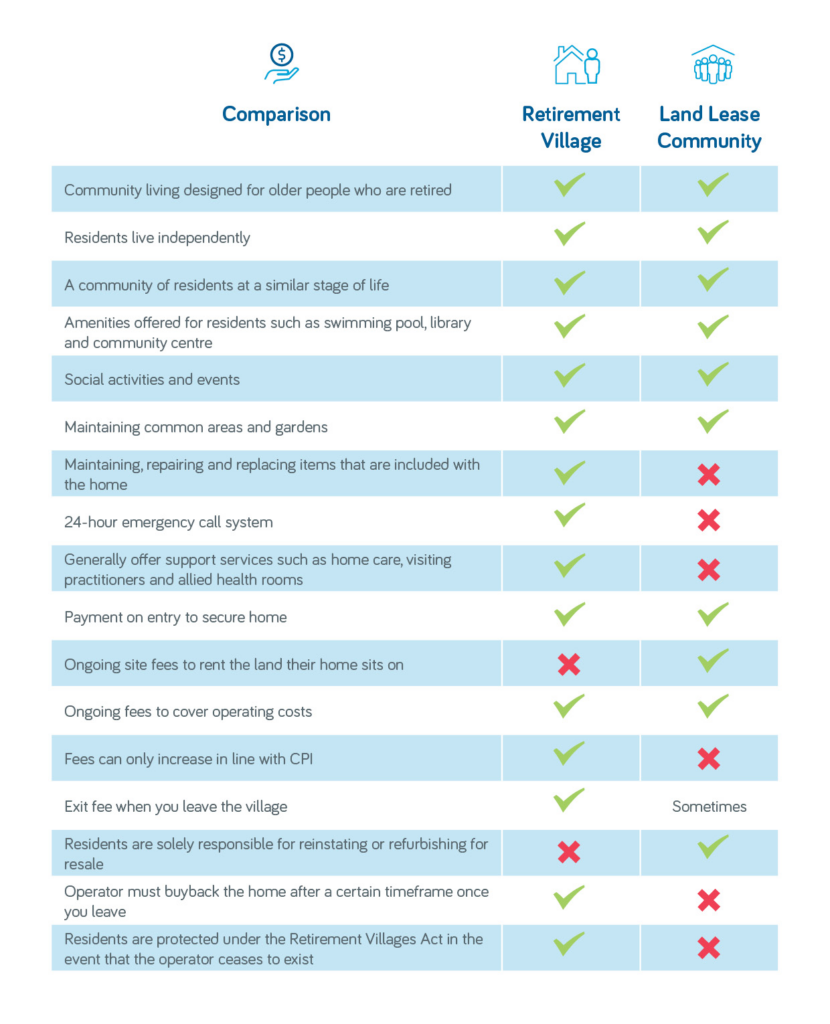
Simply put, they differ in legislation, financial setup, contracts, consumer protections and suitability. The table below compares the most common agreement type in retirement village (leasehold or licence) with typical land lease agreements. Importantly, when assessing the total cost of living in a retirement village or a land lease community, the ingoing, ongoing and outgoing costs should be considered together.
Both retirement villages and land lease communities offer unique benefits. Whether you prioritise integrated care and community living in retirement villages or seek affordability and scenic settings in land lease communities, each option caters to older Australians looking for the right fit for their next chapter.
The Retirement Villages Act gives peace of mind
The major difference between retirement villages and land lease communities is that retirement villages are covered by the Retirement Villages Act, which sets out the rights and responsibilities of retirement village operators and residents.
The Retirement Villages Act secures the residents’ tenure, so that in the future if a village changes operators the original contract must be honoured. The Act also sets out standards for how a village must be run. These ensure that residents have a consistent experience of living in a village, including the process of how they enter and vacate.
On the other hand, land lease communities are generally governed by the same legislation that covers caravan and mobile home parks in each state. While these laws clearly state the obligations of both operators and tenants, they don’t afford the numerous benefits specific to the Retirement Villages Act.
Not receiving our Vitality monthly newsletter yet? Share your details below and we’ll send you monthly updates, helpful tips, and inspiring stories to support you on your retirement journey.