HomeStories & InsightsThank you the Green Clone Test

Older Australians embrace retirement living during the pandemic

During the COVID-19 pandemic, older Australians have been flocking to retirement villages to take advantage of the sense of community and peace of mind knowing that there is always someone who cares and someone to look out for you.

For retirees living alone during the pandemic, times are certainly challenging.

Everyday tasks, like buying groceries, keeping in touch with friends and family or going to appointments, are particularly hard. Many retirement village residents are also grappling with feelings of isolation and stress, especially since the aging population is more vulnerable to complications from COVID-19.

As older Australians continue to flatten the curve by staying home and ensuring physical distancing, it may seem counter-intuitive for seniors to consider other living arrangements.

However, despite the trials of COVID-19, retirement communities like The Verge at Burleigh G.C. have proven to be a sound alternative for retirees.

Village Manager Carolyn Verner said The Verge’s independent living residences already adhered to rigorous standards to ensure the health and safety of residents with the ability to quickly react and adapt as situations arise – like a global pandemic.

If you or someone you love are unsure whether now is a good time to move into a retirement community, these benefits may provide you with some peace of mind.

Your health, safety and wellbeing taken care of

Before COVID-19 took hold, older Australians that remained in their homes often shared common worries, like contracting the seasonal flu or suffering a fall. But with the pandemic, other deeper concerns have arisen, causing a great deal of worry and stress for themselves and their families.

Keeping up with one’s health and wellness during a pandemic can be more difficult while living alone.

But at The Verge, health and safety are streamlined, providing an extra layer of protection for residents.

This includes services like on-site health professionals, village support staff, safety and sanitation protocols, physically distanced social opportunities and fitness programs.

And when extra support is needed, Ms Verner said in-home services including personal and clinical care are available.

The Verge also offers residents access to a Wellness Centre with a gym, consultation rooms for allied health professionals, indoor and outdoor activity areas, and a café.

“All retirement communities also have emergency preparedness plans in place to respond to an outbreak, whether related to influenza or other illnesses. Because of these well-thought-out protocols, many residents feel safer living in a retirement community, even during a pandemic,” Ms Verner said.

Extra support when you need it

Whether it’s attending medical appointments, picking up prescriptions or simply getting one’s hair done, everyday errands during a pandemic can be daunting for older Australians that live alone. Long wait times, social distancing protocols and crowded stores are hard to navigate.

At The Verge, independence and freedom are always priorities, even during the times when you or your partner may require assistance. RetireAustralia offers a wide range of personalised Home Care Services to residents at The Verge, helping make life a little easier and a lot more relaxed.

“Needing care shouldn’t mean sacrificing who you are or the things that bring quality to your life. Our care services and care professionals are here to enable you the flexibility to continue life your way,” Ms Verner said.

You can choose from a range of services including personal care, domestic support and clinical care, which can be tailored to your individual needs, and funded privately or if eligible, through a government funded care package.

Social connections

Studies have shown that social connections can have a positive impact on older residents’ health.

“We know from our own research that people are looking to form friendships and socialise more when they move into a retirement living, which can have a profound effect on their wellbeing and slowing the clock,’’ Ms Verner said.

Being part of a vibrant community can also lessen feelings of isolation. At The Verge, residents have the option to join in on an array of regular social events including weekly happy hour, weekly table tennis tournaments, village bus day trips (not during lockdown), catch ups in the Tee House café, weekly Tai Chi and yoga classes and more.

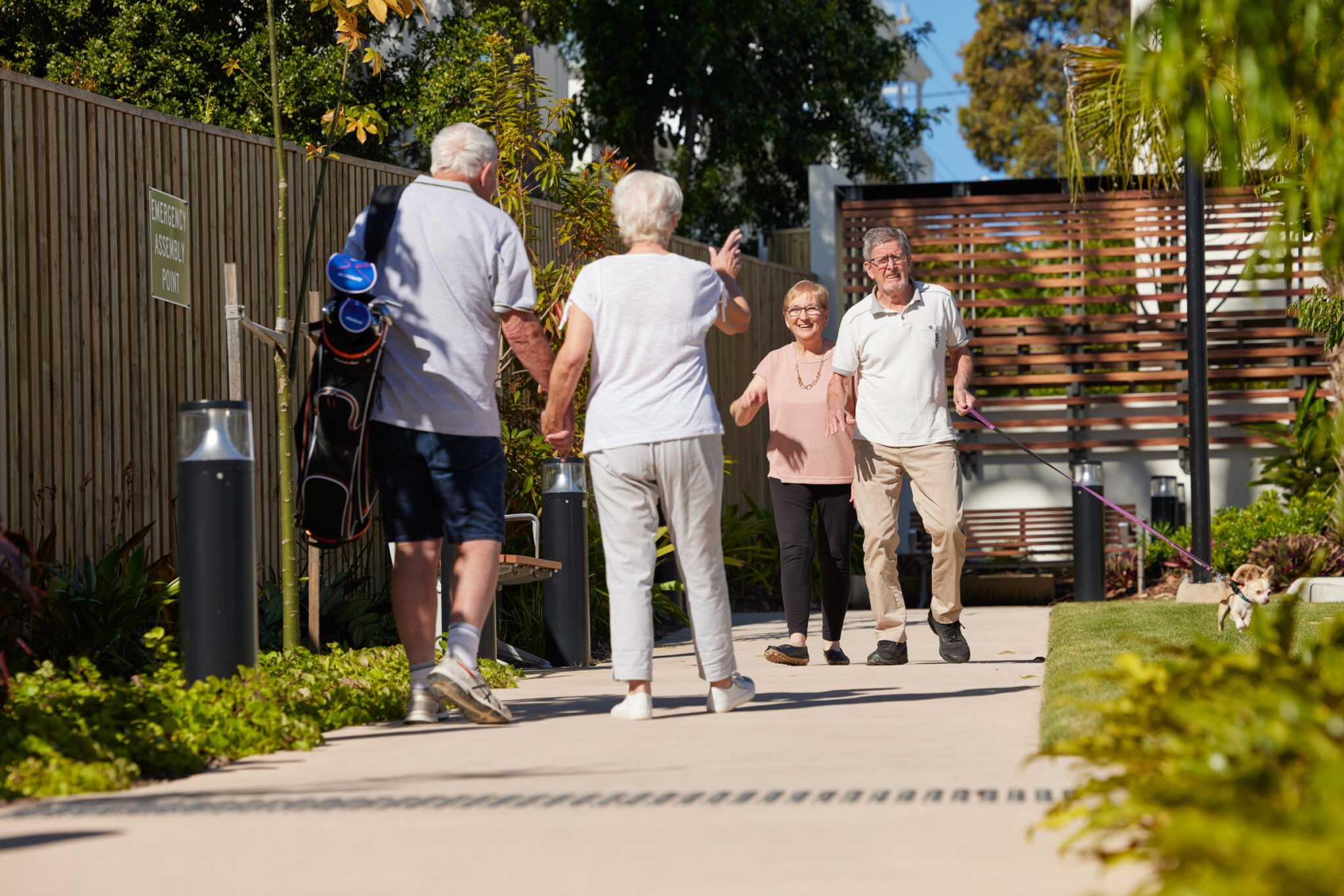
Residents are welcome to be a part of all these social aspects of living within a safe and secure community, or they can choose to spend their time doing what they like – walking to the nearby beaches or spending time with family and four-legged friends in their own apartments overlooking beautiful surroundings.

The Verge is perfect for now, ideal for later. To book a COVID safe appointment with our friendly sales team please click here or call 1800 955 070.

Recognising the signs of a stroke

Recognising the signs of a stroke by thinking and acting F.A.S.T can make a big difference to a person having a stroke. It can be the difference between life and death.

A stroke doesn’t discriminate and can happen to anyone of any age, although the risk increases as you age. In Australia, stroke is the third most common cause of death and the leading cause of disability.^ Last year, 27,428 people experienced a stroke for the first time, which is equivalent to one stroke every 19 minutes?* The good news is that early detection and treatment can be the difference between life and death.

What is a stroke?

A stroke occurs when the blood supply to the brain is interrupted, depriving it of the vital oxygen and nutrients it needs to function. This interruption could be the result of a burst blood vessel or a blocked artery. Without oxygen, the cells and tissues in the brain become damaged and start to die.

Stroke risk factors

When it comes to the likelihood of experiencing a stroke, there are some risk factors that you cannot control, for example, age, family history, race, gender and if you have experienced a stroke in the past. Did you know more than 80 percent of strokes are preventable.#

Preventable stroke risk factors

Risk factors you may be able to control include, high blood pressure, high cholesterol, type 2 diabetes and an irregular heartbeat. You can manage these risks by booking a health check with your Doctor.

You can also reduce your risk of having a stroke by taking control of your health, eating well, staying active, drinking in moderation and being smoke-free.

Effects of a stroke?

Strokes affect everyone differently. The effects of a stroke will depend on the area of the brain that has been affected. Damage to the brain can affect how you think, behave, see, feel, touch, move and speak.

Signs of a stroke

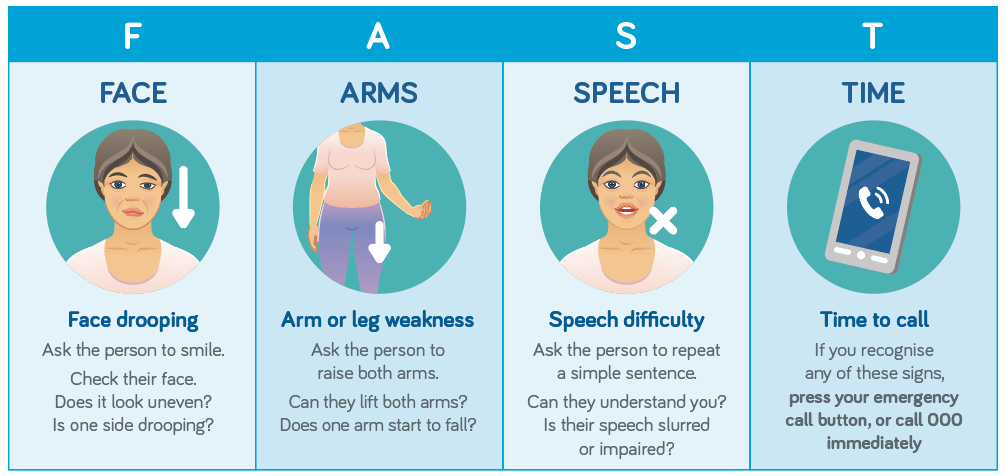
Stroke symptoms usually come on suddenly and without warning. Therefore, it is essential to be familiar with the signs and symptoms of a stroke. According to The Stroke Foundation, the easiest way to identify the most common signs of a stroke is by remembering the word F.A.S.T.

Stroke? Think FAST.

Act F.A.S.T because the quicker you act, the more of the person you save.

If you suspect someone is having a stroke, no matter how minor the signs or symptoms, or even if you are unsure, call 000 immediately.

RetireAustralia’s Care Manager for SA & regional NSW, Jemma Wilson, says acting F.A.S.T can make a big difference to someone having a stroke, it can increase their chance of survival and reduce the severity of any long term effects.

For more information on strokes, visit the Stroke Foundation website www.strokefoundation.org.au.

* Deloitte Access Economics. 2020. No postcode untouched, Stroke in Australia 2020.
^https://brainfoundation.org.au/disorders/stroke/
# O’Donnell M et al. Global and regional effects of potentially modifiable risk factors associated with acute stroke in 32 countries (INTERSTROKE): a casecontrol study. Lancet 2016; 388: 761–775.

COVID-19 update – South Australia | 27 July

South Australia will exit lockdown at midnight tonight after no new cases of COVID-19 were identified in the last 24 hours. However, some restrictions will remain in place to ensure the recent outbreak of the Delta variant is quashed.


Restrictions in place across South Australia

From midnight, Tuesday 27 July:

  • Maintain 1.5 metres physical distancing from others wherever possible.
  • Masks required in:
    • High-risk settings e.g. hospitals, residential aged care and personal care services.
    • Health care services e.g. the GP and in-home care.
    • Shared transport e.g. public transport and taxis.
    • Shared indoor public spaces e.g. shops and supermarkets. Masks are strongly recommended when out in public and in particular when physical distancing is not possible.
  • Masks are strongly recommended when out in public and in particular when physical distancing is not possible.
  • 1 person per 4 square metres for public entertainment e.g. cinemas, museums, galleries etc.
  • Hospitality venues can open with indoor and outdoor service, patrons are to be seated only, practise physical distancing and wear masks other than when eating and drinking.
  • Church services return with physical, distancing and masks.
  • Singing and dancing is not permitted.
  • Indoor fitness and recreation facilities can re-open with 1 person per 8 square metres.
  • No team, club or competitive sport but training can re-start.
  • People should work from home if they can.


What this means for village life

  • Community centres and village amenities will re-open for residents only.
  • Dining rooms re-open for both care apartment and independent living residents.
  • Small group social and sporting activities will re-start based on a village by village approach. Your village team will share further details with you.
  • Visitors to the village are welcome and are requested to wear masks, sign-in and provide details of their health status.
  • Staff will continue to wear masks when providing care to residents and when physical distancing cannot be maintained.
  • On site sales appointments re-start by appointment only and with COVIDsafe protocols in place.
  • Refurbishments and maintenance re-starts with COVIDsafe protocols in place


What you can do to protect yourself and your loved ones:

We strongly recommend that you:

  • Limit your movement and stay at home as much as possible.
  • If you do go out, make sure you have a mask with you and wear it whenever necessary.
  • Check-in wherever you go and keep your visitor logs up-to-date. This helps greatly with contact tracing.
  • Continue to screen your visitors and keep up-to-date with emerging COVID-19 hotspots. Village noticeboards are updated with this information daily.
  • People who have been to an exposure site or a COVID-19 hotspot must not visit the village.
  • Keep up to date with the list of exposure sites which are posted on the village noticeboard daily.
  • If you have visited any of the exposure sites, or have any symptoms of COVID-19 you must get tested, isolate and let your Village Manager know.
  • If you haven’t already received the COVID-19 vaccine, it is now more important than ever to do so. To find out about getting the vaccine please speak to your GP or visit: health.gov.au.


We are here to help

If you have any questions or concerns, or need any help at all, please call your Village Manager.

This is a fast-moving situation and we will keep you updated on any changes when they are announced.

Take care and stay safe.


Useful links

SA COVID-19 Information Line (9am to 5pm daily) 1800 253 787
www.covid-19.sa.gov.au/

Contact tracing alert
https://www.sahealth.sa.gov.au/wps/wcm/connect/public+content/sa+health+internet/conditions/infectious+diseases/covid-19/testing+and+tracing/contact+tracing/contact+tracing

COVID-19 testing clinics in SA
https://www.sahealth.sa.gov.au/wps/wcm/connect/public+content/sa+health+internet/
conditions/infectious+diseases/covid-19/testing+and+tracing/covid-19+clinics+and+testing+centres/covid-19+clinics+and+testing+centres 

Residents and chef collaborate on menu

Executive chef Craig Etches is transforming meal times at Glengara Care apartments, serving up fine-dining dishes to gourmet-loving residents.

Transforming meal times

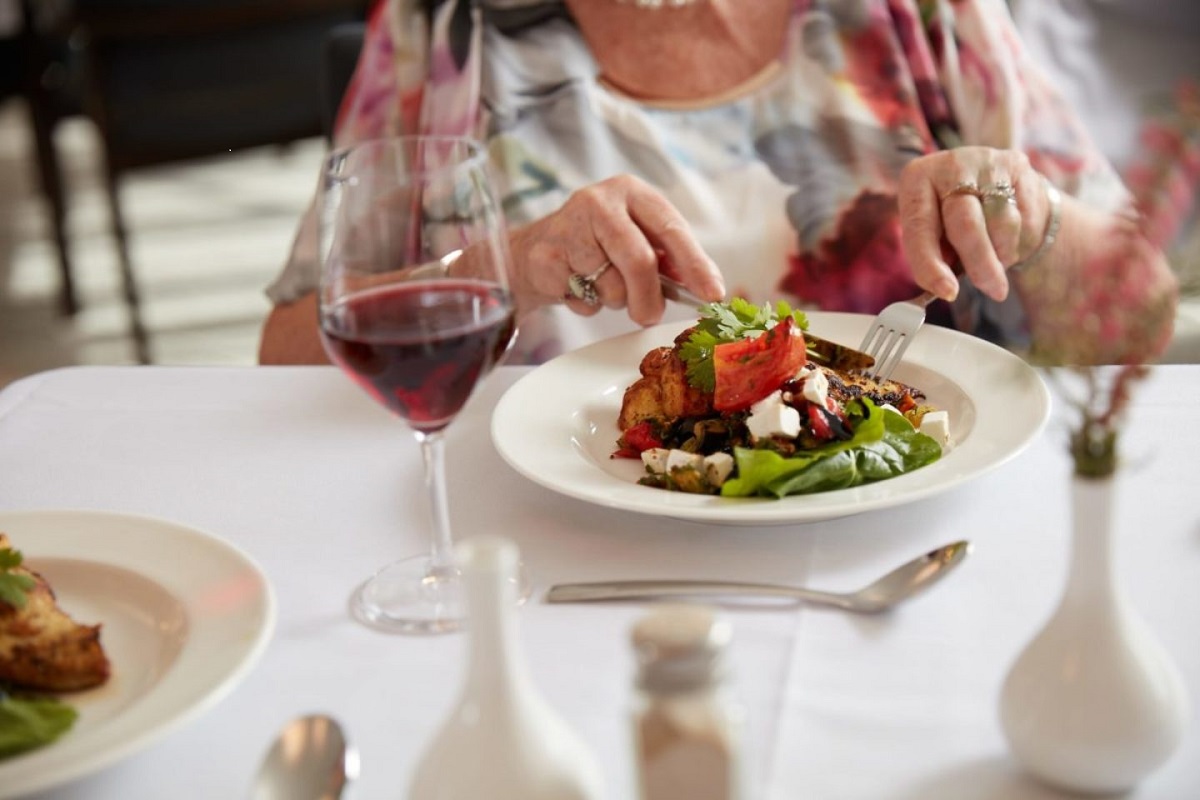
Glengara Care residents are enjoying international flavours daily as part of the new menu which includes meals such as braised pork burgers with slaw, prawn laksa, Moroccan lamb pizza and for dessert, vanilla sago with peaches and cinnamon dumplings with caramel sauce and ice cream.

When older Australians and their families are considering care options for their parents, the quality of the food is one of their foremost concerns.

Care manager Suzanne Bosworth said Glengara Care overturned traditional notions.

“We do a lot of things differently at Glengara Care, including the way we approach the menu,’’ she said. “Meal times are a highlight in almost everyone’s life, and we’re passionate about making our menus stand out from traditional aged care facilities on the Central Coast.’’

Doing things differently

Glengara Care’s cuisine is gaining a great reputation, including twice weekly roasts, Friday fish and chip evenings and scrumptious desserts.

The residents even get to have their say on what meals they would like to see on the menu.

Suzanne said Craig made a point to sit down with residents when planning his summer and winter menus. He takes their feedback on board with suggestions for new additions put to a vote, and even adjusted to cater for those with special dietary considerations.

“For the new winter menu, beef stroganoff was a clear winner when it came to what everyone would most like to see on the new menu,” Suzanne said.

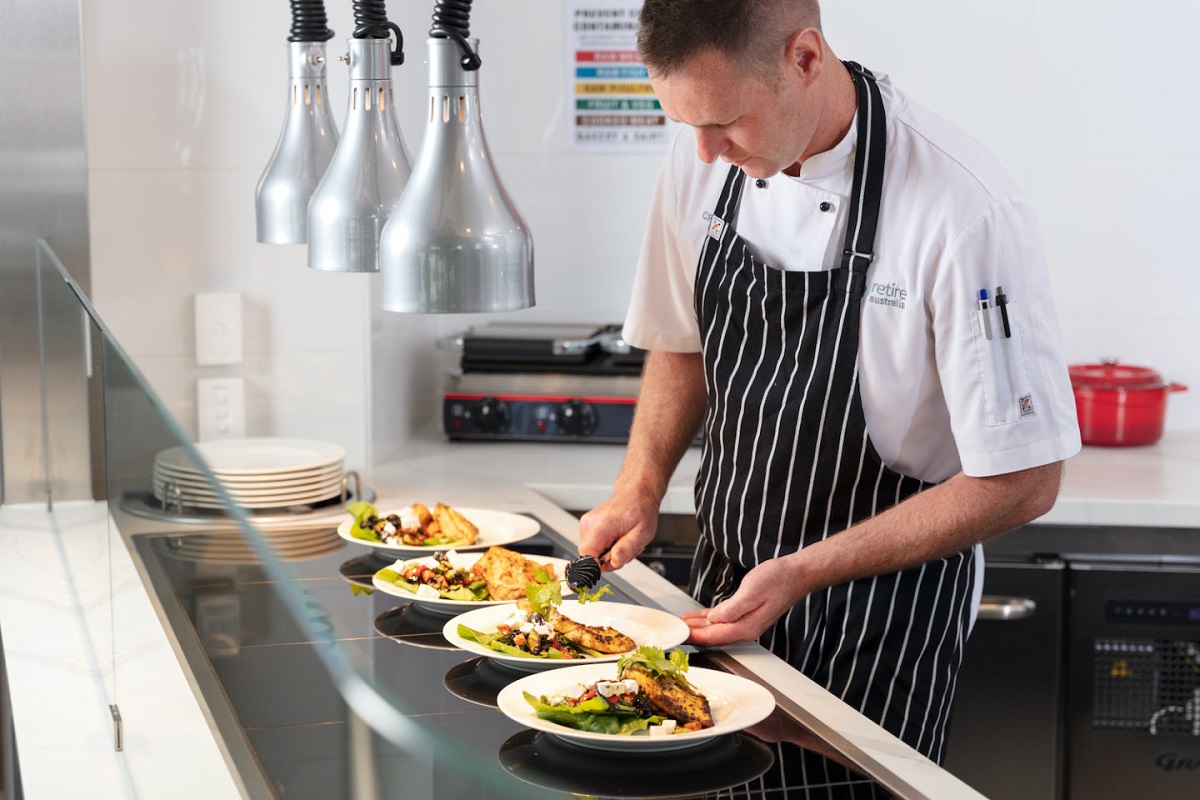
Craig is leading the way with his paddock-to-plate approach to cooking and has made it his personal mission to offer residents dishes that could hold their own at any of the Central Coast’s fine dining establishments.

He uses vegetables grown and harvested on site to create the restaurant quality meals – in flavour as well as presentation.

Healthy and happy

Knowing her mum is getting access to delicious, healthy meals at Glengara Care is a major source of comfort for Trudi Bohan.

Trudi helped her mum Jill move into Glengara Care apartments last year and believes it’s one of the best decisions they’ve made.

“It has made a world of difference to mum’s health,’’ Trudi said. “The meals at Glengara Care are wonderful, and I’m happy because I know she is eating well.’’

Trudi’s comments highlight one of the many ways Glengara Care offers a genuine alternative to traditional aged care.

High-quality nutrition is an important building block for good health, and at Glengara Care, we take an extra sense of pride in our menu.

Lunch and dinner are catered for every day while a breakfast pack, featuring a selection of 10 cereals, milk, juice and fruit is delivered to residents’ doors.

Residents are free to dine in the privacy of their own homes, outside in the community’s beautifully landscaped gardens, or mingle with others in the dining room.

“Glengara Care is not like a nursing home,’’ Trudi said. “I can come in and have lunch with mum in her apartment, which has its own dining room, as well as a kitchen and fridge.

“The way the apartment is set up also means she has her own home in which to entertain friends, as well as access to 24-hour help if she ever needs it.’’

Spoilt for choice

Glengara Care offers nursing home level of care on residents’ own terms, which means they can move in with their partner and even bring a pet.

A resident’s apartment is their own private space, with a separate bedroom, bathroom, lounge, kitchenette, dining area and outdoor space.

With a personalised care plan for each resident, support will always be available no matter if their needs change.

To find out more, call our helpful team on 1800 955 070 or enquire here.

The Verge opens its doors

Pauline says one of the big selling points of The Verge was that the apartments were designed with ageing in mind to allow residents to maintain their independence in a safe and secure environment, but also had access to care in their home when they needed it.

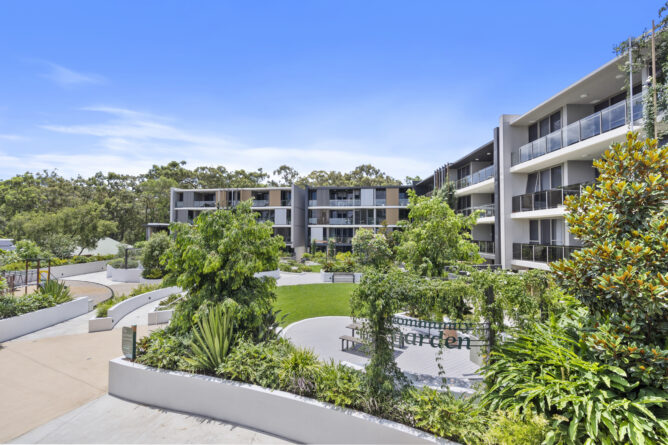
The Verge is RetireAustralia’s first staged vertical retirement village. With the third stage complete, the community consists of three six-storey buildings featuring exceptional apartments and penthouses with expansive layouts that capture views of the adjacent Burleigh Golf Club.

Maurice and Pauline Dean were among the coastal retirement community’s first residents, moving into their two-bedroom, two-bathroom apartment. Pauline says one of the big selling points of The Verge was that the apartments were designed with ageing in mind to allow residents to maintain their independence in a safe and secure environment, but also had access to care in their home when they needed it.

“This is really important to us as my husband has Parkinson’s Disease, but we have all the support and care we need right here,” she said. “The staff are just wonderful, so helpful and always there when you need them.”

The couple, aged in their 70s, moved up from Victoria to be closer to their daughter. They now live just three minutes away from her and could not be happier.

“We have everything we could ever want here. We overlook the golf course, there’s a café, no maintenance and activities every day of the week. The village community is so friendly too. We’ve made a lot of new friends over the past couple of months.”

She also liked the fact the village was pet friendly as she and Maurice regularly looked after their 10-week-old fur grandson – a miniature chihuahua named Pablo. “He’s very cute and very popular with everyone when he’s here with us,” Pauline says.

RetireAustralia is designing for the future, not only in terms of looking after the environment and building a sustainable community, but also in terms of building a retirement community where residents can age with ease, grace and the support they need to continue living the life they choose for longer.

By truly understanding age-related changes and difficulties associated with navigating the built environment, The Verge has been designed to adapt to the evolving needs of residents, making their home comfortable and flexible both today and into the future.


Wellness and care

Stage one includes the innovative Wellness Centre. Much more than a gym, the Wellness Centre includes state-of-the-art exercise equipment, outdoor spaces for yoga or playing with the grandkids, the Tee House Café, multi-purpose rooms, changing facilities and physiotherapy/medical consulting rooms.

Stage 3 incorporates the Care Hub. While the village can provide care directly into people’s home if required through the onsite Home Care team, there is also the safety net of the Care Hub. The Care Hub is a boutique-style aged care option featuring just 10 private care suites with private bathroom and kitchenette.

The Care Hub is staffed 24 hours a day, 7 days a week. A Registered Nurse manages the Care Hub and oversees qualified carers in the delivery of care. This means that a resident who requires high levels of care can be reassured that they will be well looked after in the Care Hub.

“I’m really proud of The Verge and how much the new residents already feel a sense of home, community and ownership,” RetireAustralia CEO Brett Robinson says.

“It’s important for me to see our residents receiving the quality care they deserve. Our staff are dedicated, lovely people that always go out of their way to ensure the residents are comfortable, safe and happy.”

“Everything we are doing at RetireAustralia is about creating a sense of place and a village where people live respectfully, healthily, independently and with purpose. It’s exciting to watch The Verge community grow and we look forward to welcoming more residents over the coming months.”


Considering retirement living? Why now could be the perfect time

With experts predicting the property market could be starting to cool, older Australians looking to downsize into a retirement village would be wise to do so soon.

In the first few months of 2021 property prices have soared and houses have been selling fast, with buyers competing over a shrinking pool of properties.

Driven by a combination of record low mortgage rates, improving economic conditions, government incentives and low advertised supply levels, Australia’s housing market is booming which means older Australians are finding it relatively easy to sell their property, while also achieving a high price.  For many, now could be the perfect time to top-up their retirement funds, while also securing their future by downsizing into a new home.

But …. experts are predicting housing prices may have peaked, with modelling from Westpac’s Housing Boom Price Gain report showing growth is expected to slow from mid-year.

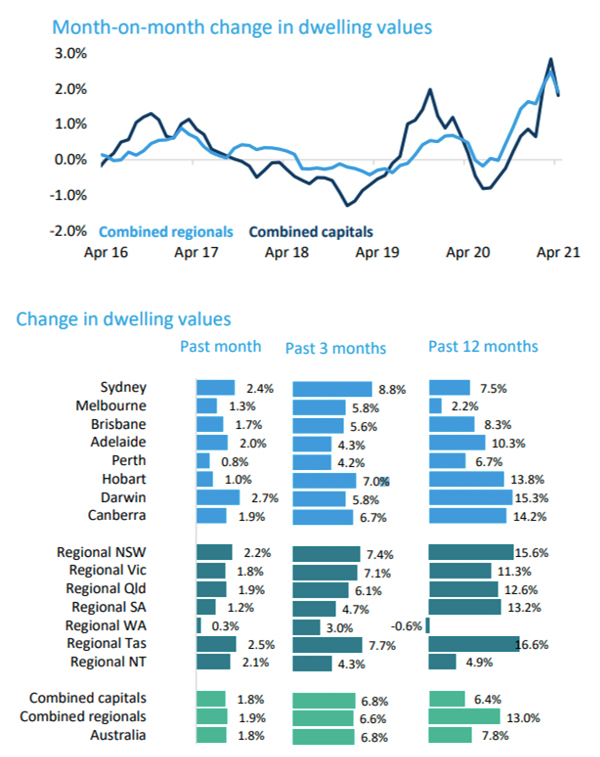
According to CoreLogic’s national home value index, Australian housing values lifted by 1.8% in April, easing from a 32-year high in March (2.8%).  Tim Lawless, CoreLogic’s Research Director says, the pace of capital gains could slow further over the coming months.

Core-Logic

Source: CoreLogic


If you’ve been thinking about retirement living, now could be the perfect time to make the move. Here’s four reasons why:

1. Housing supply anticipated to meet demand

Westpac says the surge in demand last year caught the market by surprise with many sellers deciding to hold off listing new properties until 2021. They are now ‘coming back strongly’ with new listings starting to play catch-up with demand.

A recent report from CoreLogic supports this with 26,470 newly advertised capital city properties being added to the market in the four weeks up 18 April. This is the largest number of new listings for this time of the year since 2016 and 17% above the five year average.

Along with more sellers entering the market, a significant lift in new building activity will gradually add properties to the market. According to CoreLogic, approvals for new dwelling construction are at record highs, and dwelling commencements over the December quarter were almost 20% higher than a year earlier and 5.5% above the decade average.

Westpac has also suggested that a dramatic slowing of Australia’s population growth, as migration stopped last year due to COVID-19, may become a problem in 2022 if national borders remain closed for much longer. With population growth slowing and new building projects ramping up, Westpac forecasts that supply may eventually exceed population-driven demand for houses, highlighting the need to move now for those who wish to take advantage of the current seller’s market.

2. Less incentives could impact housing demand

As Australia moves into a new phase of economic recovery with substantially less fiscal support, this could result in a reduction in housing market activity. Experts argue that housing demand may have been brought forward by incentives like the HomeBuilder grant and state based stamp duty concessions. As these incentives come to an end, alongside less migration and affordability constraints, it is possible that housing demand could be negatively impacted.

3. Soaring house prices predicted to become unaffordable

CoreLogic’s monthly nationwide real estate report confirmed that Australian median house prices increased 13.07%, from $568,833 in August 2020 to $643,203 in March 2021.

While this is great for sellers, Westpac is predicting the soaring house prices will start to discourage buyers, especially first home buyers. They are already reporting the early signs of a pull back with its ‘time to buy a dwelling’ index in its Consumer Sentiment Survey, down nearly 20% from its November high. Westpac says this index is particularly sensitive to affordability and has correctly picked every twist and turn in Australia’s housing market since the early 1970s.

Similarly, the daily update of CoreLogic’s benchmark measure of housing values, the Home Value Index, is showing a clear and broad based slowdown in the rate of housing value growth; a trend that has been evident since late March.

CoreLogic’s Tim Lawler says, “The slowdown in housing value appreciation is unsurprising given the rapid rate of growth seen over the past six months, especially in the context of subdued wages growth.  With housing prices rising faster than incomes, it’s likely price sensitive sectors of the market, such as first home buyers and lower income households, are finding it harder to save for a deposit and transactional costs.”

4. Retirement living costs remain stable

While house prices have increased by 13% and units by 6.57% since the worst of COVID-19, retirement living properties have generally remained stable. In fact, they typically don’t keep pace with residential properties and are usually priced 20% below the local median house price.

Additionally, when you buy into a retirement village you don’t pay stamp duty, making the move more affordable and leaving you with more cash in your pocket (or super) after the sale of your home.

For Australians seeking financial certainty over exposure to capital gains and losses in their retirement years, buying a home in a retirement village offers peace of mind and clarity on exactly how much you will pay and how much you will ultimately get back. There is no need to worry about future downturns or market instability.

At the end of the day, timing is everything when deciding to move into a retirement village. The best case scenario is listing your home when the market is high and you’re not in a rush to sell.  Conversely, you can wait a little too long and miss the market peak, or have health or other factors dictate when and how quickly you need to sell, which is not a situation anyone wants to find themselves in.

If you’re interested in taking another look at retirement living, please give us a call on 1300 687 738 and we can have a comprehensive discussion about your requirements to see if we can help you find a home that suits you.


RetireAustralia Communities   Retirement Financial Model

The first retirement village in QLD to have dual green accreditations officially opened on Gold Coast

The first stage of the only retirement village in Queensland with both a Green Star and Gold Australian Liveable Housing design accreditation, has been officially opened on the Gold Coast.

Stage one of new Gold Coast retirement village, The Verge at Burleigh G.C, was officially opened on June 2 by the Member for Mermaid Beach, Ray Stevens, and RetireAustralia CEO Brett Robinson.

The Verge is RetireAustralia’s first staged vertical retirement village. Following approval of the planned third stage, the community will consist of three six-storey buildings featuring exceptional apartments and penthouses with expansive layouts that capture views of the adjacent Burleigh Golf Club. Designed by specialist senior living architects, O’Neill Architecture, apartments at The Verge feature high-end fixtures and fittings and open-plan layouts that will adapt to the evolving needs of residents, ensuring they can live independently in their own home for longer. The extensive community facilities and beautiful landscaped gardens have also been intentionally designed to promote healthy ageing.

Using passive design principles like external shading and smart insulation, glazing, LED lighting, electric vehicle charging stations and efficient air-conditioning, The Verge has achieved higher energy efficiency ratings than that of a standard compliant building. During development ‘green concrete’, recycled water and timber from sustainable forests were used to reach the Green Star rating.

Stage one of The Verge, completed in March this year at a cost of $30 million, features 40 one, one plus study, two and three-bedroom apartments and penthouses positioned along the length of the 10th hole. Once sold-out, stage one will be home to more than 60 residents.

Maurice and Pauline Dean are among the coastal retirement community’s first residents, moving into their two-bedroom, two-bathroom apartment in April.

Mrs Dean said one of the big selling points of The Verge was that the apartments were designed with ageing in mind to allow residents to maintain their independence in a safe and secure environment, but also had access to care in their home when they needed it.

“This is really important to us as my husband has Parkinson’s Disease, but we have all the support and care we need right here,” she said.

“The staff are just wonderful, so helpful and always there when you need them.”

The couple, aged in their 70s, moved up from Victoria in January to be closer to their daughter. They now live just three minutes away from her and could not be happier.

Mrs Dean said The Verge’s location was perfect and she loved all the amenities and the excellent quality of finishes in their new apartment.

“We have everything we could ever want here. We overlook the golf course, there’s a café, no maintenance and activities every day of the week. The village community is so friendly too. We’ve made a lot of new friends over the past couple of months.”

She also liked the fact the village was pet friendly as she and Maurice regularly looked after their 10-week-old fur grandson – a miniature chihuahua named Pablo.

“He’s very cute and very popular with everyone when he’s here with us,” Mrs Dean said.

The Verge empowers residents like the Deans to live independently in their new homes for as long as possible, without forgoing freedoms, aesthetics or choice.

RetireAustralia is designing for the future, not only in terms of looking after the environment and building a sustainable community, but also in terms of building a retirement community where residents can age with ease, grace and the support they need to continue living the life they choose for longer.

By truly understanding age-related changes and difficulties associated with navigating the built environment, The Verge has been designed to adapt to the evolving needs of residents, making their home comfortable and flexible both today and into the future.

Stage one also includes the innovative Wellness Centre. Much more than a gym, the Wellness Centre includes state-of-the-art exercise equipment, outdoor spaces for yoga or playing with the grandkids, the Tee House Café, multi-purpose rooms, changing facilities and physiotherapy/medical consulting rooms.

“I’m really proud of The Verge and how much the new residents already feel a sense of home, community and ownership,” RetireAustralia CEO Brett Robinson said.

“It’s important for me to see our residents receiving the quality care they deserve. Our staff are dedicated, lovely people that always go out of their way to ensure the residents are comfortable, safe and happy.

“Everything we are doing at RetireAustralia is about creating a sense of place and a village where people live respectfully, healthily, independently and with purpose.

“It’s exciting to watch The Verge community grow and we look forward to welcoming more residents over the coming months.”

Construction of stage two of The Verge is planned to start later this year and will include 66 independent living apartments plus ground floor community spaces. It will be home to more than 100 residents once sold-out.


ENDS

Riverina Gums celebrate major milestone

The residents of Wagga Wagga’s first retirement village, Riverina Gums, have celebrated a significant milestone alongside notable guests including Retire Australia CEO Brett Robinson, Chief Operations Officer Simon Fawssett, and Assistant Regional Operations Manager Leonie Karlsson.

Around 145 residents of Riverina Gums Retirement Village gathered to help celebrate the community’s 30th birthday on April 30, 2021.

Among them included Riverina Gums Chair Bruce McMah who came up with the idea for the birthday celebrations after seeing a plaque commemorating the village’s opening day.

“I was walking through the community area and saw two plaques celebrating the village’s official opening 30 years ago and thought maybe we should do something to celebrate this,” Mr McMah said.

“Particularly after last year, I thought it was time to celebrate our community and our village. I’m a great believer that this place is not just a retirement village, but a family village.

“We are a real family here and love where we live so why not celebrate it? We all come from different backgrounds, yet we all love our community here and look after one another.

“It’s time to celebrate that and also honour this occasion with an additional two plaques for future residents to note and celebrate.”

The celebratory event kicked off at 10am with a flag-raising ceremony and welcome by Riverina Gums Retirement Village manager Meredith Parker and CEO Brett Robinson.

The festivities also included a wreath-laying and placing of the plaques ceremony, a musical performance and a barbecue lunch for the whole community.

To mark the special occasion, Mr Robinson handed over a special gift to the residents to say thank you for working alongside the team last year during COVID restrictions.

“I’m really proud of Riverina Gums and how much the residents feel a sense of home, community and ownership,” Mr Robinson said.  “So much so they were the ones that came up with the idea for the 30th birthday celebrations.

“Thirty years is a long time for a village to be operating and we are immensely proud of the work the team have done to create such a community and home for our residents of Riverina Gums.

“It’s important for me to see our residents receiving the quality care they deserve. Our staff are dedicated, lovely people that always go out of their way to ensure the residents are comfortable and happy.


“Everything we are doing at RetireAustralia is about creating a sense of place and a village where people live respectfully, healthily, independently and with purpose.

“We look forward to continuing this for the next 30 years and more.”

ENDS


5 simple steps to prevent falls

As we get older, natural changes to our bodies mean that we're more likely to fall. The good news is that falls can be prevented.

As we get older, natural changes to our bodies mean that we’re more likely to fall. Research shows that one in three people aged 65 or over fall once a year. In fact, this is the leading cause of hospitalisation in this age group and accounts for around 75% of all injury-related hospital admissions for over-65s.

While falls can be serious and impact confidence and independence, the good news is that many can be prevented.

Exercise is key

RetireAustralia’s Regional Care Manager (NSW), Gary Bruderlin, says the single most important way to prevent falls and stay independent is to be physically active.

“We lose strength, balance and muscle tone as we age, which makes us more vulnerable to falls. The best way to combat these changes is to incorporate regular strength and balance exercises into your daily routine. Tai chi, yoga and simple sit-to-stand exercises are particularly helpful.”

Falls prevention – what you need to know

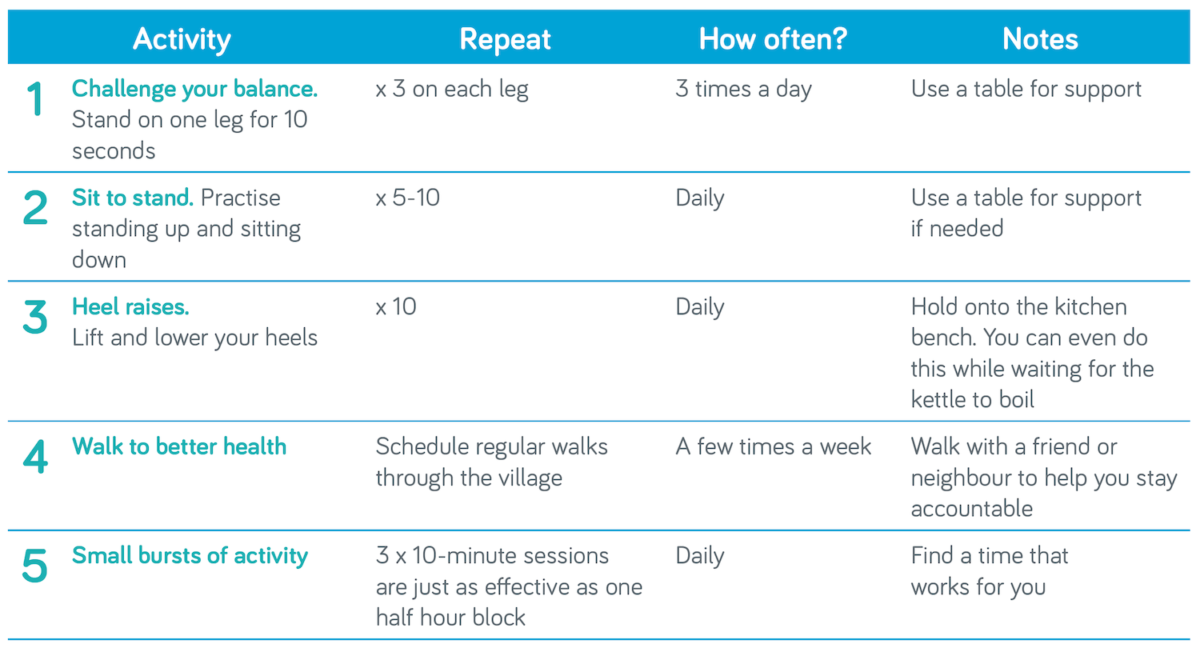
April Falls Day* is an annual campaign to raise awareness of the impact of falls and how to prevent them. Exercise has been shown to reduce the number of falls over time by around 23%. It also improves balance, muscular strength, confidence, and mood. In short, it’s a great way to keep your mind and body healthy.

Here are five ideas to get you started:

Table outlining tips to prevent falls including a balance challenge exercise, sit to stand exercise, heel raises, walking and small bursts of activity

As Gary points out, the aftermath of a fall can be devastating. “Falls can impact mobility, confidence and independence, particularly if surgery is required. If people are afraid of falling again, they can become more isolated. This means joints stiffen and muscles become weaker, which is the opposite of a healthy recovery. The best way to stay safe and healthy is to focus on falls prevention.”

For exercise programs that match your fitness and ability, visit safeexerciseathome.org.au

*Organised by the NSW Fall Prevention and Healthy Ageing Network

Paddock-to-plate cooking the magic ingredient

Our Executive Chef Craig Etches is a passionate foodie and is leading the way with his paddock-to-plate approach to cooking.

Paddock-to-plate approach

Our Executive Chef Craig Etches is a passionate foodie and is leading the way with his paddock-to-plate approach to cooking.

“It’s all about using the best high quality ingredients,’’ said Craig, who has made it his personal mission to offer residents dishes that “could hold their own at any of the Central Coast’s fine dining establishments’’.

The produce from Glengara Care’s thriving vegetable garden, tended by residents from the broader Glengara Retirement Village, is his magic ingredient.

“I use whatever is in season, whether that’s tomatoes, zucchinis, strawberries, rhubarb or any number of different herbs straight from the patch.

“I love it not only because of the richer flavours, but because I get to be creative with whatever crops I have at hand each day.’’

His enthusiasm is shared by Glengara Retirement Village’s Garden Group.

Resident Darrol Harmer, who has been a keen vegetable gardener for many years, said being able to produce fresh crops for Glengara Care residents had been a source of pride.

“It’s great to see a chef using the vegie patch, and for us, it has been a very satisfying arrangement,’’ he said.

Homegrown vegies is not the only thing setting the food apart however.

Craig also loves talking to residents to find out what they’d like to see in the menu.

“Making residents happy is my favourite part of the job,” he said. “I see them every day and follow up on every single meal.

“Making their day and seeing their faces as they enjoy my food is the best.”

Craig knows every resident by name and sits down with them each month to get their feedback, tailoring the menu to account for individual preferences and dietary needs.

Bringing extensive international experience to the table

Having worked in restaurants all over the world in a career spanning 26 years, Craig definitely knows his way around a kitchen!

While he began his apprenticeship at the former Rydges Wentworth in the heart of Sydney’s CBD, he has travelled extensively throughout Asia, the UK and America, all the while honing his skills.

“For about five years I worked six months in Australia then six months overseas,” he said.

“Because I have a particular personal interest in Asian cooking, I have been to Thailand 16 times as well as places such as Vietnam and Laos learning their authentic styles.

“I have been fortunate to have learnt so much on my trips and I like to bring that experience to Glengara Care.’’

Craig says that while creating the best flavours was important, the art to successful cooking is also about creating the right environment and presenting food in an appealing manner.

“It’s hard to over-estimate the importance of presentation because we all eat with our eyes,’’ he said.

“Friday afternoon barbecues after happy hour is one of the favourite times of the week for everyone at Glengara Care. We open up the bi-fold doors of the lounge after happy hour, put up the umbrellas and let the sun stream in to create the most magical atmosphere.’’

Time for a taste of a new approach to aged care

The meals aren’t the only thing that set Glengara Care apart.

We offer nursing home level of care on your own terms – which means you can move into Glengara Care with your partner. You can even bring a pet!

Your apartment is your own private space, with a separate bedroom, bathroom, lounge, kitchenette, dining area and outdoor space.

With a personalised care plan for each resident, support will always be available to you no matter how your needs change.

To find out more, call our helpful staff on 1800 955 070 or enquire here.