At Glengara Retirement Village, the installation of sustainable solar panels on the Country Club in 2011 has seen a significant reduction in the village’s carbon footprint.
As an added bonus, residents have saved more than $50,000 in electricity costs.
Colin Graham was involved in establishing the initiative and said the savings have benefited each household.
“Those energy cost savings help reduce the cost of running the Country Club, which flows through to modest savings in our recurrent charges,” he said.
“We are pleased that we are making a modest contribution towards greening the environment and utilising the natural opportunity the solar presents.”
A recent upgrade promises to maximise both the savings and the environmental benefits even further, generating more power to be used or exported to the grid.
Similar initiatives have taken place at Torrens Grove and other RetireAustralia villages. The popularity of these measures—which were approved by residents before being implemented—shows the residents are keen to make their communities more sustainable.
According to a 2012 survey, Australians over 65 tend to be more conscious of their resource consumption. They also recognise the importance of energy and water saving, recycling and waste reduction.
“We like to think we’re quite savvy as far as recycling is concerned and we have a system in place to collect cans and bottles as part of the buyback scheme,” said Colin.
Additionally, changes are being made to village environments, with many operators prioritising sustainability in new projects. This can include using low-impact materials, installing water and energy efficient systems and fostering environmental initiatives.
RetireAustralia is a member of the Green Building Council of Australia and aims to achieve Green Star certification—awarded to sustainable developments—on its new communities.
As more operators and residents champion sustainability and green living practices, the impact will continue to grow.
“As a community, our effort and voice is much more seen and appreciated,” Colin said.
“There’s a sort of community spirit.
“People want to get together and take the initiative to uphold environmental programs, and we all get the collective benefit of it.”
For men who wish to spend time working with their hands, many retirement villages provide the perfect place: the humble men’s shed.
The longstanding component of Australian culture is a benefit to its users in more ways than one.
They’re a place where men can use their skills creatively, are a powerful force in addressing health and wellbeing, and embody the spirit of mateship, says the Australian Men’s Shed Association.
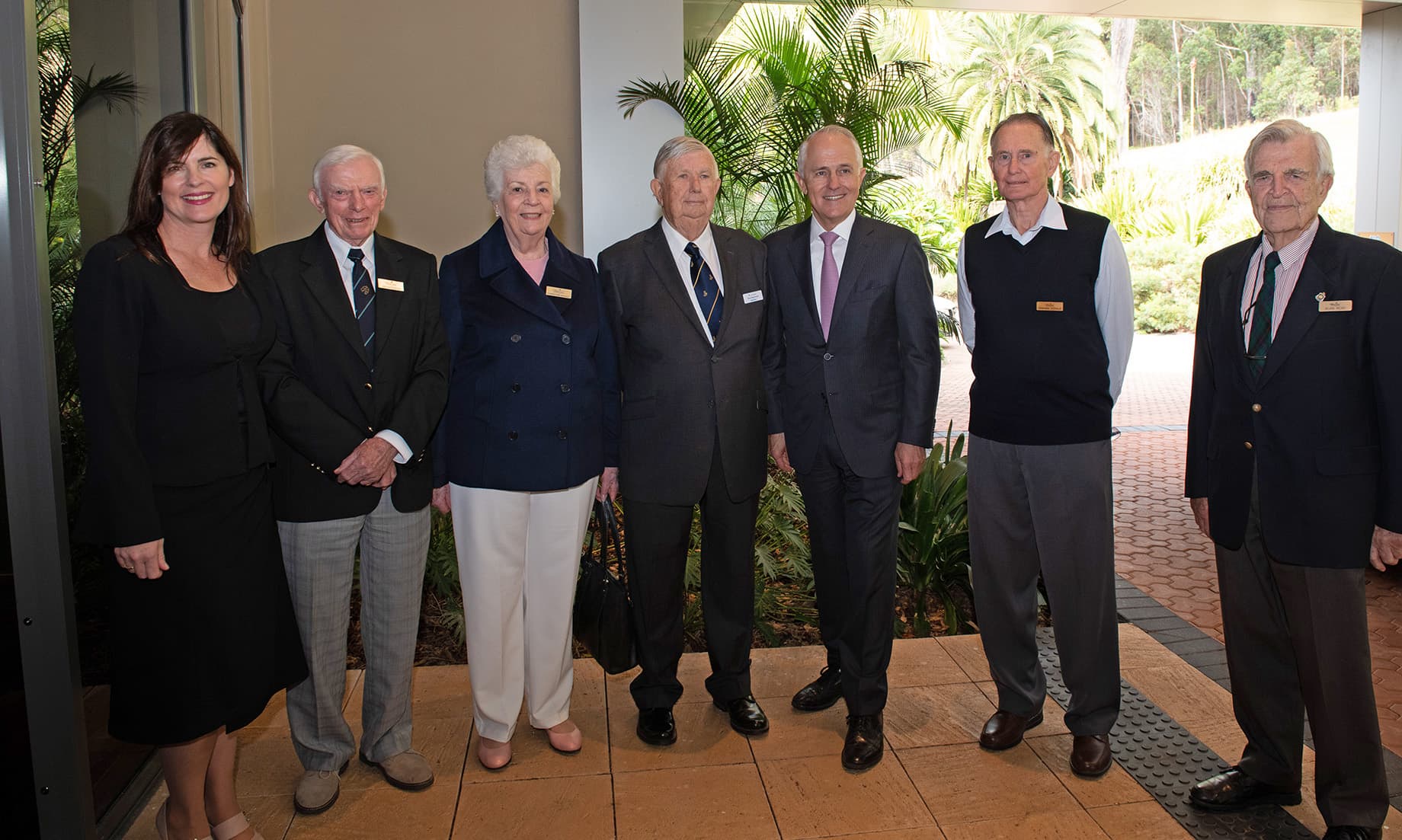
Wood Glen Retirement Village residents recently had the opportunity to discuss the Federal Budget with Prime Minister Malcolm Turnbull
Financial freedom
Retirees will be better enabled to access their super savings with a retirement income framework put in place as part of the Budget to mature the superannuation system.
There will also be extensions to the pension loan scheme, allowing people to borrow a higher proportion of their pension against the equity in their homes.
Safety
The Budget included funding for new measures to protect older Australians from elder abuse, including specialist support services and a national register for enduring powers of attorney.
Health & wellbeing
Subsidised health checks for 45-and 65–year–olds and $30M in funding to boost physical and social activity indicates older Australians’ health and wellbeing is a focus.
Care
The My Aged Care system will be improved to streamline the process of accessing government–funded care and researching available care options.
Additionally, 14,000 high level home care packages will be available by 2021–22 to help address the home care package waiting list. More than 100,000 people were on the list in December 2017.
Aged care funding in several areas will also be boosted over the next four years.
Overall, the Budget indicates the government is beginning to address the challenges of our rapidly ageing population and consider the needs of current and future older Australians.
Prime Minister Malcolm Turnbull recently held a forum for Central Coast seniors at Wood Glen Retirement Village, where several RetireAustralia residents had the opportunity to discuss the Federal Budget and the issues that matter most to older Australians.
Once you’ve made the decision to move, decide what features you need, such as access to public transport, support services, great activities. Then, find out which retirement villages in your chosen area offer them.
Lucy recommends visiting several retirement villages and getting as much information as you can.
“Compare pricing, service fees and deferred payments and chat to existing residents to get inside information on village life,” she said.
Deposit
Once you’ve found your chosen village and unit, you’ll need to put down a deposit to secure your new home.
Under RetireAustralia’s independent living unit residence contract, your deposit is fully refundable if you change your mind within the 21-day cooling off period.
Selling your home
Most Australian retirement villages require an entry payment, meaning that most retirees must sell their primary place of residence first.
The process of choosing a real estate agent, preparing the home for sale, putting it on the market and finding a buyer can be both time-consuming and emotional. Try to keep your end goal in mind throughout.
Many people opt to nominate concurrent settlement dates to ensure a smooth transition from one home to the next.
Contract review
Once you receive your contract, RetireAustralia strongly recommends you seek independent legal and financial advice.
“I got my solicitor to have a look through the contract before signing,” said Lorna. “I think it’s fair for both sides.”
Consider discussing the contract with your family members so everyone understands your rights and obligations.
Settlement
On the day of settlement, you’ll officially take ownership of your new home.
Lorna was able to schedule her settlement date to take advantage of one of RetireAustralia’s limited-time incentives. She received $10,000 worth of free service fees—the equivalent of 25 months at Newling Gardens!
Moving day
Moving day is a significant milestone and it’s important to be prepared. Most villages are more than happy for you to pop in to take measurements beforehand and can even help to arrange utilities or downsizing specialists to help with the move.
On the day, the village manager will be there to greet you. They will also give you a copy of RetireAustralia’s resident handbook.
All RetireAustralia villages also offer two hours of free support to help move furniture, hang pictures and make your new place feel like home.
Settling in
Once you’ve unpacked, you can focus on settling in and getting to know your fellow residents. Your village manager will check in regularly throughout the first few months.
“You don’t quite know what to expect when you make the decision, but I’ve got myself settled here—I’m doing a little bit of gardening and I go to cards and all the functions,” Lorna said.
“The people I’ve met have been lovely and I’m very happy.”
While it can be uncomfortable to think about how you would like your possessions distributed after you die, making a will provides peace of mind and assurance that your wishes will be carried out.
Who should make a will?
Everyone over the age of 18 should make a will, regardless of economic status.
What is a will?
A will is a legally binding, written document that records how a person wants their assets distributed after they die. When you make a will, you must nominate an executor – someone who is responsible for making sure the instructions in your will are carried out. Often, two executors are named, to ensure everything runs smoothly.
A common misconception about wills is that they are expensive to make. Cost-effective options include using will-assistance websites or to have your state’s Public Trustee help write your will, but it is important to have a solicitor check everything. They will charge a fee for this service.
What is the Public Trustee?
The Public Trustee is a government office in each state or territory, which acts as a trustee in the execution of a will, usually where there is no executor named or where the testator names the Public Trustee as part of that will.
The Public Trustee prepares a large number of wills throughout Australia for a nominal fee, but the testator must nominate the Public Trustee as executor. Public Trustees may exempt pensioners or those over 60 from paying fees.
What are the formal requirements for making a will?
The key requirements for a valid will are:
It must be in writing
It must be signed by the testator
The testator must be of sound mind, memory and understanding
The signature must be witnessed by two people – neither of which can be a beneficiary or the spouse of the testator
Both witnesses must sign the will in the presence of the testator and each other
What should be in a will?
Your will should:
State that it is your last will and that you revoke all previous wills
Appoint one or more people to be your executor/s
Provide for payment of funeral expenses and any debts
State how you want your assets distributed, either by naming the item and to whom it is given, or by giving a person a certain percentage of the total value of your property
Wills often include other requests such as the appointment of guardians of young children. As wills are only meant to deal with property, these wishes are not strictly binding, but are usually carried out by the executor.
What can override a will?
If you have made a binding nomination in your superannuation fund or your insurance policies, the beneficiaries named in those policies will override anyone mentioned in your will. If you have a family trust, the trust continues and its assets will be distributed according to the trust deed, no matter what is written in your will.
How is a will updated or changed?
Wills should be reviewed every few years to ensure they reflect your most recent wishes. Once a will has been signed, amendments cannot be made simply by crossing out or adding clauses. The best way to amend or alter a will is by doing so in a separate document called a codicil. For a codicil to be valid, it must also meet the formal requirements of making a will.
When do I need to update my will?
You should update your will at any important stages of life.
Generally, a will is revoked on the day you are married or formally divorced by a court, so you will need to update it to account for your new status. Your will should also be updated upon the birth of any children or grandchildren so the will can provide for the child financially, and if applicable, nominate a guardian for the child in the event of both parents’ deaths.
You should also update your will if your spouse or any of your beneficiaries die, or if your financial circumstances change considerably.
Nine pre-schoolers from the centre visited their senior neighbours to play games, sing songs, enjoy crafts, and share a love of learning.
Village Manager Debra Grant said residents enjoyed the youthful energy brought to the village.
“The kids introduced themselves with a song, we played with balloons, and finished off with a story,” she said.
“It was great fun for everyone!”
Meghan Holst, Assistant Director of Emali Broadview Early Learning Centre, said the children greatly enjoyed the visit.
“The kids were really excited to meet all the residents and were able to talk to them really confidently,” she said.
“They were excited to learn about where they live.”
A 2016 Stanford University study showed that seniors and children spending time together cultivates a sense of purpose and extends benefits both ways.
The success of the day has seen all parties agree to visits on a monthly basis.
“We’ll be bringing different groups of children to visit the residents on an ongoing basis,” Meghan said.
Wisteria Grove resident Wayne Bridgart composed a poem in honour of the visit:
The Meeting of Generations
By Wayne Bridgart
One day in summer,
The children came around.
Balloons were in evidence,
The seniors were amazed.
Many children moving around,
Conversation was at a premium,
As all played around.
A happy time for all,
At this happy event.
Seniors and children mixing,
Enjoying life to the full.
The smiles on both,
Were amazing to see.
The meeting of generations,
For all to see.
Sage advice for one and all,
The communication and enjoyment were there for one and all.
For more information about Wisteria Grove, click here.
The respected doctor has earned the award for services to palliative care, having been the founding Medical Director at Central Coast Palliative Care Service.
After graduating from medicine in 1960 and specialising as an anaesthetist at Gosford Hospital for 15 years, he attended a meeting at which palliative care was mentioned, and a seed was sown.
“I suggested we should set up palliative care on the Central Coast and the board at the hospital were very good – they found the money and we got the thing started,” Brian said.
He was appointed head of the team, and worked with a group of nurses helping countless families find comfort in extremely difficult times.
“We had a holistic system of caring for the pain, nausea and vomiting, and helping patients and their families with relationships,” Brian said.
“It was a very exciting time in my life, and while I moved on after 15 years, palliative care still continues on the coast.”
Unwaveringly humble, Brian said being awarded an OAM was a chance to increase awareness even further.
“It is a great honour, but also another opportunity to educate the community that palliative care is important,” he said.
Elizabeth Richards, a neighbour at Tarragal Glen, organised the celebrations, at which fellow residents and ex-colleagues attended.
“We were all thrilled Brian agreed to celebrate as he is such a lovely and modest man,” Elizabeth said.
Older people have a reduced ability to control and regulate their body temperature, which means they are at greater risk of hypothermia, especially during winter.
Winter also brings the ‘flu season’. The flu virus can be especially dangerous for elderly people, pregnant women, Aboriginal and Torres Strait Islander people, and very young children, as well as for people with underlying medical conditions.
RetireAustralia’s expert health professionals have a wide range of experience, skills and knowledge in relation to caring for the elderly. Care and Services Development Manager, Kerrie Storey, and Tarragal Manor Care Coordinator, Shirley Leech, offer the following tips to help you stay warm this winter:
Make sure your home is warm enough
Hypothermia occurs when your body temperature drops below 35°C and can cause serious problems without prompt medical attention. Be prepared for winter by making sure your home is heated to a sufficient temperature.
• Ensure your main living area is heated to at least 21°C, with the rest of the home heated to at least 18°C
• Check your home’s thermostat and heating system to make sure it is fully working and doesn’t require maintenance
• Close all curtains and windows in your home at night time
• Several layers of thin clothes will retain heat better than one thick layer, so layer-up in winter, especially when going outside
• The coldest time of day is just before dawn, so go to sleep with extra blankets, and warm layers of clothing or nightwear
• Contrary to popular belief, most body heat is not lost through the head, but through whatever part of your body is most exposed to cold air, so keep as much of the body covered as possible
Eat nutritious food and have regular hot drinks
Eating food high in nutritional value means the body receives the vitamins, carbohydrates and fats it needs to be well-nourished and to recover from minor illnesses quicker. While it may seem like a good idea to eat larger amounts of carbohydrate-heavy food in winter in an attempt to keep warm, it is much healthier to maintain a well-balanced diet.
• Include foods in your diet high in protein and fibre, with vitamins B,C, D and E, and low in sugars and fats
• Eat regularly to help keep energy levels up during winter
• Have at least one hot meal a day
• Have regular hot drinks – tea/coffee/hot chocolate
Keep in daily contact with elderly relatives, friends and neighbours
Elderly people can often be socially isolated, so can be alone for long periods of time with no one noticing if they become unwell. The simple act of checking up on an elderly person – ideally face-to-face – could save a life.
• Call upon elderly loved ones or neighbours on a daily basis. If you are unable to do so, arrange for a family member, friend or neighbour to do it
• Bring them a hot flask of tea, hot food, an extra blanket or clothes, an electric heater, a hot water bottle, or some wood for their fire, but most of all, simply check that they are warm and healthy
• Check weather forecasts regularly to find out when cold weather is predicted, and make doubly sure your loved ones are warm and healthy during these times
• Seek help from a medical professional or, in an emergency, call 000 if you believe someone is suffering from the effects of hypothermia
• Regular contact with elderly loved ones or neighbours can benefit them in other ways, including promoting physical and psychological health
Seek assistance from government agencies for help with heating, food and clothing, if necessary
Electricity, gas, water and phone bills are expensive and they can be difficult to budget for as they can vary seasonally, there can be unexpected increases or additional charges, and it is often difficult to tell how much a bill will be before it arrives in the mail or inbox. It is vital that elderly people keep warm through the winter, and many are eligible for state government assistance to help pay their utility bills.
• The elderly are more likely to be reluctant to use heating for economic reasons, so ensure this is not the case for an elderly loved one or neighbour
• Explore ways to apply for a rebate or voucher
• Visit the federal government’s MoneySmart website for ways to save money on power bills without compromising physical or mental wellbeing
Have regular medical check-ups and get your flu vaccination
Loss of nerve endings to the skin increases as we get older, meaning an elderly person’s body has a decreased ability to register changes in temperature. Additionally, the elderly have a lower metabolic rate and less body fat, so generate and retain less heat. A regular visit to your doctor helps to maintain your overall health.
• Blood pressure is generally higher in the winter, as cold temperatures cause blood vessels to narrow. It is useful to have regular blood pressure checks to ensure appropriate levels are being maintained
• Influenza and many rhinoviruses replicate quicker and more effectively in colder weather. Older people are more vulnerable to the effects of these viruses as their immune systems are less adept at fighting them off. The flu vaccine is recommended for everyone from six months of age, but is available free under the National Immunisation Program for people who face a high risk from influenza and its complications (such as people with certain medical conditions and people over 65 years of age). Free pneumonia vaccinations are also available to older people under this program. Work with your doctor to make sure your vaccinations are up to date.
Our staff
Kerrie Storey, Care and Services Development Manager at RetireAustralia, has been a nurse for 30 years and earlier in her career has worked as a home nurse. During this time she remembers regularly visiting an elderly lady who was housebound, and once noticed that the house was very cold and the lady was very unwell: slurring and confused. After transfer to the local hospital it was determined that the lady was suffering form hypothermia. She improved following treatment, but if the nursing visit wasn’t scheduled for that day the outcome could have been quite different.
Shirley Leech, Care Coordinator at RetireAustralia, has been a nurse for 30 years, and was previously a clinical nurse specialist for the NSW Department of Health. Shirley hails from the North of England, where she was a Nurse Practitioner for 11 years, working in a climate in which winter temperatures can drop into minus figures for weeks at a time.
RetireAustralia’s retirement villages foster environments in which residents feel comfortable, secure and supported by community. Our dedicated and caring staff can assist with many of the issues discussed in this article.
Tarragal Glen Retirement Village recently welcomed a new Village Manager, Melissa Hamilton.
Melissa Hamilton
Melissa is an adopted local, having lived in the area for 23 years after growing up in country Victoria, and was previously General Manager of Shelly Beach Golf Club and Ettalong Diggers.
In her first days in the role, Melissa has enjoyed meeting residents and getting involved in many different aspects of village life.
“I absolutely love the role, especially interacting with the residents and being able to use my experience to get things done,” Melissa said.
“Everyone has been unbelievably friendly and welcoming.”
In her new role, Melissa’s main priorities are to ensure village life is secure and stress-free for everyone, and that residents continue to enjoy a vibrant life in retirement.
“I’m looking forward to becoming a familiar face for the residents and staff, and providing continuity and stability for everyone.”
Known for its relaxed atmosphere, thriving community, and picturesque location, Tarragal Glen is perfectly situated against a backdrop of native bushland and close to transport links, Terrigal Beach, and Erina Fair shopping centre.
“The village stands out for its vibe and feel – warm and welcoming,” Melissa said.
“The residents and staff are all very friendly and welcoming and take great pride in their community.”
Making the decision to sell your family home and move to a retirement village can be difficult.
You may be asking yourself many questions. Will you like the community environment? Will you like a smaller home? Will you like the people there?
To make this easier for you, some of RetireAustralia’s supported living and serviced apartments offer an obligation-free ‘try before you buy’ option. If you’ve found some apartments you’re interested in, then you can ask the manager if it’s possible to trial either that apartment or one that’s similar for a small daily fee.
It’s like taking retirement village living for a test run and it makes a lot of sense. You wouldn’t buy a car without test-driving it and moving from your family home to a serviced or supported living apartment in a retirement village is a major decision.
By ‘trying before you buy’, you can meet the residents and experience first-hand whether village life is for you. You’ll be treated like the other residents in the village and you can join in all the activities so you’ll get a real glimpse of what it would be like if you were to join the village.
At the end of your ‘try before you buy’ period, it’s up to you to decide what to do. If you enjoyed the experience and think village life is for you, you can go ahead and organise the sale of your home and purchase the apartment you trialled or one similar to it. This may take a few months or longer, depending on your situation.
First-hand experience
Rachel Lush, Sales Coordinator for RetireAustralia’s South Australian villages, says that the ‘try before you buy’ option gives people “the peace of mind they need”.
“We have a high percentage of people who opt to stay once they’ve tried the supported living apartments because they like it,” she adds.
Rachel says that being able to actually experience living in serviced or supported apartments is a weight off people’s shoulders because they can see it’s going to be a positive change in their life.
“Many people are daunted by the idea of making such a big change – often they’re leaving the home they’ve been in for 60 years. But once they’re here, they realise everyone’s very supportive,” she says.
“They find they don’t have to worry about meals and cleaning and washing – or the gardening! Plus they’re getting social interaction with other people, which makes it so worthwhile. Residents dine together, so it’s very easy to make friends,” she adds.
Respite care available
As well as the ‘try before you buy’ option, RetireAustralia offers respite care at some of its retirement villages for those recovering from time in hospital or an illness.
Residents in respite care are supported by dedicated nursing staff who are on site 24/7. Meals, apartment cleaning and linen laundry are taken care of and some villages, known as supported residential facilities, also offer assistance with showering, dressing and taking medication.
A smooth transition
According to Rachel, RetireAustralia helps people to make a smooth transition, should they decide they’d like to purchase an apartment.
“If they want to stay on, we can give them 30 days to settle in or they can return to their home until their house sells. We work with them to make the transition as smooth as possible,” she says.
Some of RetireAustralia’s villages are able to offer a relocation loan so you can stay living in the apartment of your choice, while you sell your house.
“It’s like a bridging loan but it’s a cheaper option,” says Rachel. “It has minimal set up costs on a base variable rate and it allows them to stay while they have their house on the market.”
So you can stay living in the apartment of your choice while your house is on the market – giving you the freedom to enjoy village life straight away.
Here are our top 10 tips to make the most of your ‘try before you buy’ stay
Chat with existing residents – make sure you talk to some of the existing residents about life in the retirement village, perhaps over lunch or a coffee.
Explore the grounds and facilities – each retirement village is different, so use your time to check out all the facilities and the grounds so you know what’s available to you.
Participate in groups or social activities – retirement villages are active communities with lots happening. Activities can range from coffee mornings to bingo and bowls or even yoga sessions. So join in and see if anything really takes your fancy!
Check out the local area – find out more about the area’s attractions, amenities and nearby leisure pursuits. For example, locate the local shops and, if you like going to pubs and restaurants or playing sports like golf or bowls, find out how accessible these are.
Consider the distance of the retirement village from friends and family – you will have done this beforehand, but while you’re there, really take a look at whether you’re close enough to your family and close friends and whether it’s easy for them to come and visit.
Meet the village manager and talk to staff – again, this is something you’ll need to do before you try out a village, but while you’re there, keep in close contact with the village manager. If think of any more questions, ask them immediately. For example, can some of your meals be brought to your room? And what pets are allowed?
Check out the village’s care credentials – the village may have other facilities for those who need extra support as they grow older. Enquire as to how you might be able to make a transition if you need to later on down the track.
Scope out available properties – while you’re there, see what other villas or apartments are available. You may be very happy with the layout and style of the apartment you are trialling or you may prefer something else.
Security – if you’re planning to live in the retirement village on your own, you’ll have far greater peace of mind if you check on the security systems in place. For example, check whether there’s an intercom system for answering the door and whether your garage is well secured.
Enjoy yourself – in addition to everything else, it’s important to make the most of your visit and enjoy yourself! Retirement villages are welcoming communities and you may as well enjoy your ‘try before you buy’ stay, so do just that!