
HomeStories & InsightsThank you the Green Clone Test

Retirement village or lifestyle community?

While retirement villages and lifestyle communities can appear very similar, they are fundamentally different.

While these two retirement living options can appear very similar and offer many of the same advantages – including increased security, a closer social network and facilities such as swimming pools and gyms – it’s important to understand that there are also fundamental differences between the two.

We talked to Christa McCraw, RetireAustralia’s Contract Administrator Manager, and Giselle Spice, Village Manager of RetireAustralia’s Noyea Riverside Retirement Village, to find out more.

Retirement Villages Act gives peace of mind

The first major difference between retirement villages and lifestyle communities is that retirement villages are covered by the Retirement Villages Act, which gives residents peace of mind and outlines a number of important rights.

“The Retirement Villages Act was first implemented in South Australia in 1987 to outline the rights and responsibilities of both operators and residents and to ensure that both parties are protected,” says Christa.

Giselle Spice from Noyea Riverside Retirement Village adds, “The Act is there for your security as you get older.”

On the other hand, lifestyle communities are generally governed by the same legislation that covers caravan and mobile home parks in each state. While these laws clearly state the obligations of both operators and tenants, they don’t afford the numerous benefits of the Retirement Villages Act.

Types of retirement village contracts

In a freehold retirement village, you buy a unit or villa on a strata title and own the dwelling in the same way you would if you purchased a standard house. You will also have to pay stamp duty, as with a standard house.

Another option is to purchase a 99-year lease on a unit or villa in a leasehold or licence retirement village. In this case, you don’t own the building or the land but you don’t pay stamp duty and are entitled to occupy the unit or villa for the duration of your lease. The only difference between the two is that leasehold villages will register your lease on the title while licence villages will not.

In leasehold, licence and freehold retirement villages alike, you pay monthly fees to cover council and water rates, building insurance, building and garden maintenance and the cost of your 24 hour emergency call system. The village operator cannot make a profit on these fees and they generally cannot be raised unless the residents agree to the increase.

According to Giselle, “Under the Retirement Villages Act, everyone has to vote. If the residents can’t see the need for a fee increase and they vote against it and they’re in the majority, the fees won’t be raised.”

Renting the land

On the other hand, if you buy a unit or villa in a lifestyle community, you’re purchasing the building but you’re renting the land it sits on. The community operator retains ownership of the land and you must pay rent for this land throughout the time you are living there.

Your rental fees will also cover the operator’s services such as maintenance of common areas, operator costs and security, meaning that your ongoing fees tend to be significantly higher than those payable in a retirement village.

Because the land is still owned by the lifestyle community’s operator, they have a right to give you notice to vacate if they decide to do something else with the land. In some states, this can be as little as six months.

What happens when you leave?

When you leave a lifestyle community, you either have to put your dwelling up for sale or somehow take it with you.

When you leave a retirement village, the village operator will sell your unit or villa within a set time frame or will buy it back from you. How and whether you share in capital gain or loss is dependant on your individual contract.

Upon leaving, you will also pay an exit fee to cover the operator’s investment in the village and major improvements to facilities. Deferring this fee until you leave means that you have more money in your pocket month to month while you’re living in the village, unlike in a lifestyle community.

Retirement village dwellings always reinstated

When you leave a retirement village, the operator generally has an obligation to reinstate the unit or villa to the same condition as when it was sold while the outgoing resident is liable for anything above fair wear and tear.

Lifestyle communities have no such requirement of operators, so if you buy a unit or villa in a lifestyle community, there’s no guarantee of what condition it will be in.

Security and longevity in retirement villages

Another benefit of retirement villages is the fact many are now rolling out more care services so that you can stay there longer and delay or even avoid the move to a nursing home. This provides retirement village residents with more longevity and security than those living in a lifestyle community.

As Giselle says, “People have a very secure lifestyle in a retirement village. I think it’s all got to do with having peace of mind as you get older.”

“When you enter a retirement village, you’re entering into a lifestyle that gives you protection and security for the entire time you’re living in the village.”

Travel essentials for seniors

This guide of handy travel essentials will ensure that you have everything you need to travel comfortably as you get older.

Your days of throwing things in a backpack and hitting the road might be in the past, but this guide of travel essentials will ensure that you have everything you need to travel comfortably.

Medication

If you’re travelling overseas, take enough medication to last the length of your trip, plus a few extra days’ worth, and keep it in its original, labelled packaging. You won’t need to be quite as organised if you’re staying within Australia, but don’t forget to bring your prescriptions, Medicare card and Pensioner Concession Card if you plan to refill your medication while on the road.

Comfortable shoes

If you’re planning to do a lot of walking, you’ll need a pair of supportive, lightweight shoes to minimise pain and reduce the risk of falls. Try visiting your local running shoe store to have your feet evaluated or visit your podiatrist for custom-made insoles. Depending on your needs, a walking stick might also be a good way to provide that extra bit of support.

Travel insurance

Travel insurance is a must when travelling overseas and is especially essential for any seniors with existing health problems. You may find that insurance costs you more than it used to as you get older, but the peace of mind and security you’ll feel while on holiday will be well worth it.

Spare glasses

There’s nothing worse than realising you’ve forgotten your reading glasses, especially if you’re going to be away for an extended period of time. Pack an extra pair in a sturdy case to ensure that you can take in all the amazing sights (and fine-print menus!) that your destination has to offer.

A scarf or light shawl

Versatile and fast-drying, scarves are a great way for women of all ages to brighten up their outfits and they can also double as a warm wrap, a picnic blanket or even a makeshift pillow. As a bonus, they weigh next to nothing and won’t take up much space in your luggage.

First-aid kit

Simple items like bandaids, eye drops, antiseptic solution and burn cream can come in handy while you’re on the go, especially if you’re travelling somewhere where these items might be difficult to find. Buy a pre-made kit or create your own, and remember to pack any sharp objects like tweezers or scissors in your checked luggage to avoid any issues at the airport.

Plastic bags

Resealable plastic bags have so many uses while you’re travelling, from keeping your medication together and separating dirty clothes to preventing your toiletries from spilling everywhere. Bring a few different sizes and you’ll be surprised by how often they come in handy.

Luggage that you can handle

Take a small, lightweight suitcase with wheels to reduce stress on your shoulder and back muscles. For many seniors, it’s preferable to pack light and wash clothes regularly rather than bring oversized, unwieldy luggage that may be difficult to manoeuvre.

Layers

This oft-repeated advice is popular for a reason! If you’re carrying your own luggage, you’ll want to reduce the amount of bulky jumpers or jackets while also being prepared for any weather. To really cut down your clothes list, try sticking to flattering, neutral clothes that work well together and use different scarves and jewellery for variation.

Bonus tip: Although your seniors card is limited to use in your home state, you may be able to use it in other states or countries to get cheaper entry to sightseeing attractions or cheaper tickets on public transport.

Many of our residents travel regularly to visit family and friends or to explore new places and cultures and they love having the freedom to close the door behind them and leave at a moment’s notice. Hear from some of our travel-loving residents here.

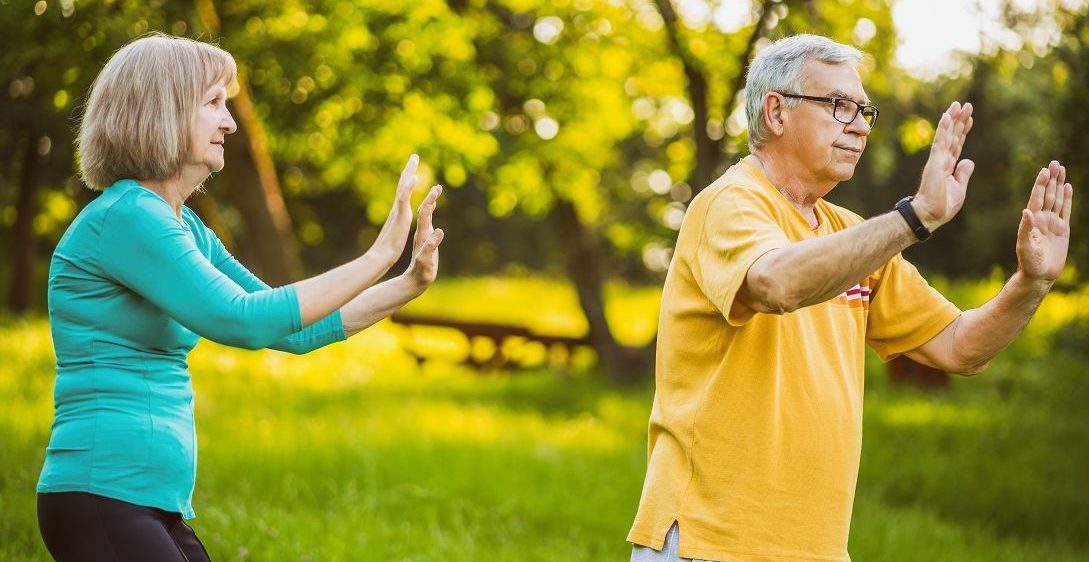
10 relaxing facts about tai chi

Often described as an art form that revitalises the mind, body and spirit, tai chi is an ideal form of exercise for everyone.

Often described as an art form that revitalises the mind, body and spirit, tai chi is an ideal form of exercise for everyone and especially those with lessened mobility. We chat to accredited instructor Judy Wong about why she loves teaching tai chi and how it can improve your health and wellbeing.

1. Where did tai chi originate?

Tai chi is a slow moving, meditative exercise that began in ancient China a few thousand years ago. It is one of the major branches of the traditional Chinese martial arts and involves a series of slow, meditative body movements that were originally designed for self-defence and to promote inner peace and calm.

2. What are the main health benefits of practising tai chi?

Scientific studies have shown that tai chi works to improve muscular strength, flexibility and fitness. Muscle strength is important for supporting and protecting joints and flexibility exercises enable people to move more easily and facilitate circulation of body fluid and blood which enhance healing. Fitness is important for overall functioning of the heart, lungs and muscles. In addition to these components, tai chi movements emphasise the importance of weight transference which helps improve balance and prevents falls.

3. How long does a tai chi session take?

45 minutes to one hour with some rests between if and when needed.

4. What can a beginner expect from their first session?

The level of exercise is equivalent to walking but if you have never done it before you may feel some muscle fatigue as you might be working on muscles that have not been worked on before. If you are relaxed you can feel very energised.

5. Should tai chi be done inside or outside?

Ideally outside in the fresh air but it can be done inside too without any problems.

6. What’s the best time of day to do tai chi?

It’s best in the morning but does not really matter. Preferably not after a big meal!

7. What are tai chi movements like?

There are a variety of styles but Sun style is characterised by gentle, free flowing yet controlled movements. The movements flow smoothly like water in a river and are suitable for everyone, even those with pain like arthritis or those recovering from an operation.

8. What kind of clothing and equipment is required?

Loose, comfortable clothing with flat/soft fitted shoes.

9. What attracted you to tai chi and what do you enjoy most about teaching it?

I have been working in aged care for over 15 years in diversional therapy. I could see the benefits of exercise not only for the body but mind. I feel so blessed that I am able to share the joys of tai chi with the community. It is so gratifying to hear the positive feedback from participants about improvements in their health, balance and wellbeing. It also promotes self esteem and a sense of camaraderie and community.

10. Where can people find more information about finding a local tai chi group?

More information about classes can be found in your village activities calendar, your local newspaper or on your local council’s website.


Make the most of  your retirement, discover what’s best for you.

Tarragal Manor celebrates 20 years!

Last month, Tarragal Manor threw a joyful birthday event to celebrate its 20th year of providing Erina retirees with exemplary care, support and community.

The Manor, which forms part of Tarragal Glen Retirement Village, was first established in 1995 to cater for seniors who needed extra household assistance but could still live independently.
The grand, hotel-style building now houses 79 serviced apartments and a range of excellent community facilities, and residents receive help with meals, laundry and cleaning and 24-hour support from trained staff.
Kay Quirk, a personal care assistant and receptionist, has been working at Tarragal Manor since it first opened and says, “I remember my first day perfectly.
“I started one week before the Manor opened and still remember the rush to get the carpet down in the dining room before our very first couple arrived!”
The refined, generous dining room, which is an epicentre of activity where residents gather for regular events and daily lunches and dinners, was the perfect venue for the birthday celebration.
Residents and staff alike gathered to socialise and reminisce about the developments of the past two decades.
Vern Tucker, a Tarragal Manor resident since 2012, says, “The village has grown enormously!
“My wife and I moved here in 1998, so we were here for about 14 years before moving into a serviced apartment at the Manor.”
Like Vern, many of the Manor’s current residents moved into a serviced apartment from an independent living villa at Tarragal Glen and there’s little wonder why.
“It meets all my needs!” Vern says.
“I’m not as active as I used to be, so I can’t do heavy household chores – well, I could, but it’d take me all day and I’d have no energy at the end.
“Having your laundry and cleaning taken care of is a huge help.”
Residents also enjoy restaurant-quality lunches and dinners prepared each day by Tarragal Manor’s talented on-site chef, Todd Clarke, who also catered for the birthday celebration with a delicious feast.
An enormous chocolate cake capped the meal off perfectly and gave guests the energy to get out on the dance floor.
“Kay was the leader of the dancing,” says Vern. “She got quite a few people up on their feet!”
“It was a wonderful party,” Kay agrees.
“The 20th birthday was the perfect opportunity for residents and staff to get together and celebrate what’s so great about life at Tarragal Manor!”

Historic mansion celebrates 175 years of Mt Barker!

The Laurels Estate, one of S.A’s grandest old homes, will proudly open its doors to visitors on April 6th as part of Mt Barker’s 175th birthday celebrations.

Organised in conjunction with The District Council of Mt Barker, the event will be hosted by Mayor Ann Ferguson and will include an afternoon tea, live music by the Maple String Quartet and the presentation of a time capsule and commemoration plaque.
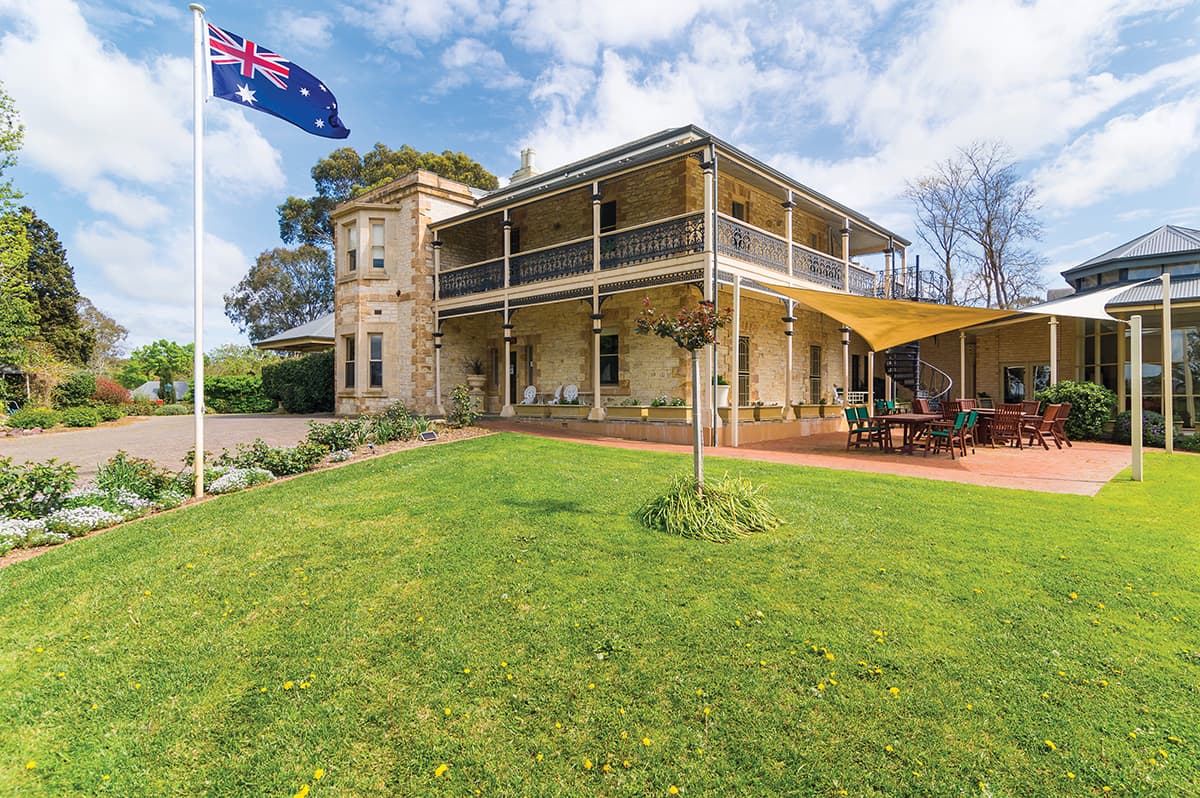
Perched high on the hill amongst lofty trees and beautiful gardens, The Laurels mansion provides a stunning location for festivities. Its majestic, old-world stone frame, charming filigree balconies and high cathedral ceilings evoke a strong sense of history and its grounds truly come alive when adorned in brightly coloured autumn leaves.
The Laurels was built between 1857 and 1864 and was originally the residence of John Dunn. Dunn operated a highly successful steam milling business in the area as well as being a trusted local Member of Parliament. He is now remembered as one of Mt Barker’s treasured ‘founding fathers’ and would surely be thrilled to know his precious home lives on.
The beautiful location of The Laurels continues to be enjoyed daily as the community hub for retirees at The Laurels Retirement Village. Residents spend time inside its beautifully renovated interior playing billiards, chatting while relaxing on the lounge chairs or reading in the library.