
Staying connected in a digital world: tech tips for retirees

Technology has changed the way we manage our health, keep in touch with family, and handle the everyday tasks of modern life. The good news? You don’t need to be a tech wizard to make it work for you. With a few simple habits and some know-how, your smartphone or tablet can become one of your most useful, and reassuring, companions, whether you’re living at home or as part of a connected retirement village community.
Booking with confidence
Whether it’s a GP appointment, a restaurant table, or a flight to see the grandchildren, booking online can save you time and the frustration of being put on hold. Most websites and apps are designed to be straightforward, once you know what to look for.
The key is to stick to websites you know and trust. Look for the small padlock icon in your browser’s address bar before entering any personal details, this means the site is secure. If something feels unclear, don’t hesitate to call the business directly to complete the booking over the phone instead.
Apps like HotDoc and HealthEngine make it easy to find and book GP and specialist appointments online, often with same-day availability you wouldn’t find by phone. For travel, sites like Qantas, Jetstar, and Booking.com walk you through each step clearly and will always send a confirmation email to you.
Quick tip: Take a screenshot or print your booking confirmation as soon as it comes through. You’ll always have a record on hand, even if the email gets lost.
Your doctor, at home
Telehealth, seeing a doctor by video or phone, became a lifeline during COVID, and it’s here to stay. For many retirees, it’s now a preferred option for follow-up consultations, prescription repeats, and managing ongoing conditions without the trip to the clinic.
Most GPs now offer telehealth appointments, and Medicare bulk billing applies to many of these services just as it does to in-person visits. You can attend a telehealth appointment on your smartphone, tablet, or computer, your doctor’s reception team will send you a link via email to click when it’s time.
How it works:
- Book your telehealth appointment through your GP’s website, app, or by calling reception.
- At the scheduled time, click the link sent to your phone or email.
- Make sure you’re somewhere quiet with good lighting, a lounge chair near a window works beautifully.
- Have your Medicare card and any current medication details handy, just as you would in person.
If a video call feels too daunting, a phone consultation is just as valid for many appointment types. Simply ask your Doctor’s receptionist for a phone telehealth appointment instead.
Built-in protection you might not know about
Modern smartphones come packed with safety and accessibility features that can make a real difference to everyday life and peace of mind for your family.
These features can be particularly reassuring for those living independently in a retirement village setting, offering an added layer of confidence and support that is already provided.
Emergency SOS: On an iPhone, holding down the side button and a volume button will call emergency services and alert your emergency contacts with your location. On Android, pressing the power button rapidly 5 times does the same. It’s worth setting up your emergency contacts now, before you ever need them.
Medical ID: Your phone can display your blood type, allergies, and emergency contacts even when the screen is locked. This is vital information for paramedics or first responders. On iPhone, this is found in the Health app under Medical ID. On Android, look in Settings under Safety & Emergency.
Fall Detection: The Apple Watch Series 4 and later models can detect a hard fall and automatically call emergency services if you don’t respond within a minute. For those living independently, it’s one of the most reassuring pieces of technology available today.
Larger text and display settings: Don’t struggle with small print. In your phone’s settings, you can increase text size, enable bold text, and adjust screen brightness to make everything easier to read.
Staying close, no matter the distance
One of the greatest gifts of modern technology is the ability to see the faces of the people you love, even when they’re on the other side of the country, or the world. Video calls have transformed how families stay connected, and they’re simpler to use than many people expect.
FaceTime is built into every iPhone and iPad, no downloads required. Simply tap on a contact and select the video camera icon. If your family members use Android phones, Google Meet or WhatsApp video calls work across all devices and are free over Wi-Fi.
For those who prefer something dedicated, the Facebook Portal and similar smart displays sit on a shelf or table and let you make calls with a single tap, no navigating menus.
Schedule a weekly video call with family – same day, same time – so it becomes something everyone looks forward to, rather than something to organise each week.
Beyond video, WhatsApp groups are a wonderful way to stay in the loop with family, friends, or community groups. Messages, photos, voice notes can all be safely shared in one place, and free to use over Wi-Fi or mobile data.
Protecting yourself online
It’s a sad reality that scammers increasingly target older Australians, and they’ve become remarkably sophisticated. The good news is that a few simple habits will protect you in the vast majority of situations.
The golden rule is if something feels off, stop. Legitimate organisations, such as your bank, Medicare, the ATO, or a delivery company, will never ask you to pay money urgently, transfer funds to a “safe account,” or provide passwords over the phone or by text.
Things to watch out for:
- Unexpected calls or texts claiming to be from your bank, Amazon, Medicare, or “the government” asking you to act quickly or provide personal details.
- Phishing emails that look almost identical to legitimate companies but have odd email addresses or links that go to unusual websites.
- “Tech support” scams where someone calls claiming your computer has a virus and offers to fix it, often asking for remote access to your device.
- Romance or friendship scams via social media or dating sites, where contact builds over weeks before a request for money is made.
- Too-good-to-be-true offers such as lottery winnings, investment returns, or prizes for competitions you don’t remember entering.
If you receive a suspicious call, hang up. If it’s a text or email, don’t click any links, delete it. If you’re unsure whether a message from your bank is real, call the number on the back of your card, not any number provided in the message.
The Australian government’s Scamwatch website is an excellent and regularly updated resource for recognising the latest scams. You can also report a scam there if you’ve been targeted.
The simple rule is never feel rushed. Scammers rely on urgency and panic. A legitimate caller will always be happy to wait while you check, call someone you trust, or phone the organisation back on their official number.
Start small, build gradually
You don’t need to master all technology at once. Choose one thing from this list, perhaps setting up your Medical ID, or trying a video call with a family member, and make yourself comfortable with that before moving on. Most libraries and community centres offer free digital literacy sessions if you’d like some hands-on help. Or request a session from your retirement village manager.
Technology is at its best when it supports the way you already live, making it a little easier to access care, stay connected with the people you love, and move through daily life with confidence. And the more you use it, the more natural it becomes, including within a retirement village, where technology can enhance both independence and community connection.
Apartment living: why more Australians are choosing to go up in retirement
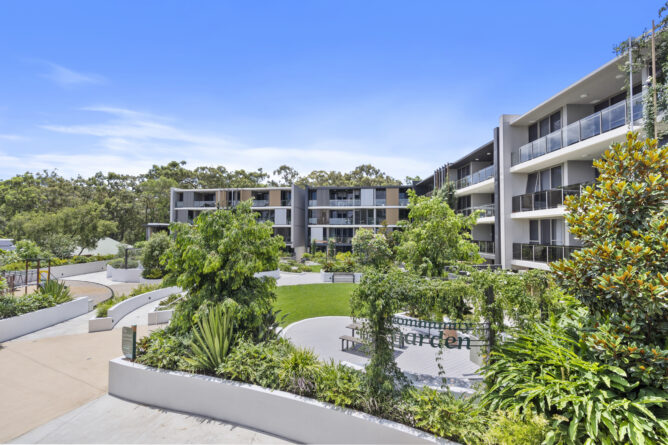
When people think about retirement villages, most still imagine a single‑level villa with a small garden to maintain. But that picture is changing.
Increasingly, older Australians are choosing apartment living — not simply as a different layout, but as a smarter way to live. One that brings everything closer, reduces everyday effort, and offers greater confidence for the future.
Why retirement living apartments are growing in popularity
Apartment living isn’t just a different layout, it solves a different set of challenges. Where traditional homes and villa-style communities can feel spread out, maintenance-heavy or isolating over time, apartments make everything closer, simpler and more connected. Modern retirement apartments are designed for the way people want to live now: light-filled, low-maintenance homes with thoughtful details that make everyday living easier, both today and in the future.
What retirement apartment do better than traditional homes
Walkable living, right where you want to be
Unlike traditional homes or villa-style communities that are often spread across larger sites, apartment living brings daily essentials closer — both within the village and beyond it.
Apartment living allows retirement villages to be located closer to the places people use every day. Rather than being spread across large sites on the outskirts of town, apartment communities are usually built in well‑connected, central locations, close to shops, cafés, medical services, parks and public transport.
This makes everyday life easier and more independent, particularly as driving becomes less appealing over time. Being able to walk to a coffee, an appointment or a local shop isn’t just convenient – it supports confidence, routine and gentle movement as part of daily life.
For many residents, this is a key difference between apartment living and more traditional village layouts: a peaceful home within a retirement community, paired with easy access to the wider neighbourhood beyond it.
Connection without effort, neighbours just a lift ride away
In larger homes or more spread-out communities, staying socially connected can take more effort. You may need to plan, travel or make a deliberate effort to socialise.
Retirement living apartments bring people closer together – literally. With neighbours nearby, shared spaces on your doorstep and activities close at hand, connection becomes a natural part of everyday life. Whether it’s a fitness class, shared meal, or simply seeing familiar faces in the lift, those small moments add up.
Research supports this too. People living in retirement communities are shown to be more socially connected, more active and overall happier than those living in the broader community.
In an apartment setting, those benefits are built into the design.
Designed for how you live now and into the future
One of the most important advantages of modern retirement apartments is how well they support ageing in place.
These homes aren’t just designed for how you live today — they’re thoughtfully planned to adapt with you over time, helping you remain comfortable, independent and confident in your own space.
You’ll often find features such as:
- Step-free entry from your front door to the shower.
- Spacious, circulation-friendly layouts with wide hallways and doorways.
- Lift access instead of stairs.
- Seamless flooring to reduce trip hazards.
- Easy-reach storage, appliances and power points.
- Generous natural light to support visibility and wellbeing.
- Private outdoor spaces like balconies with level access.
- Reinforced bathroom walls for future support rails
These built-in design features are what make ageing in place possible — supporting independence through thoughtful, future-ready living.
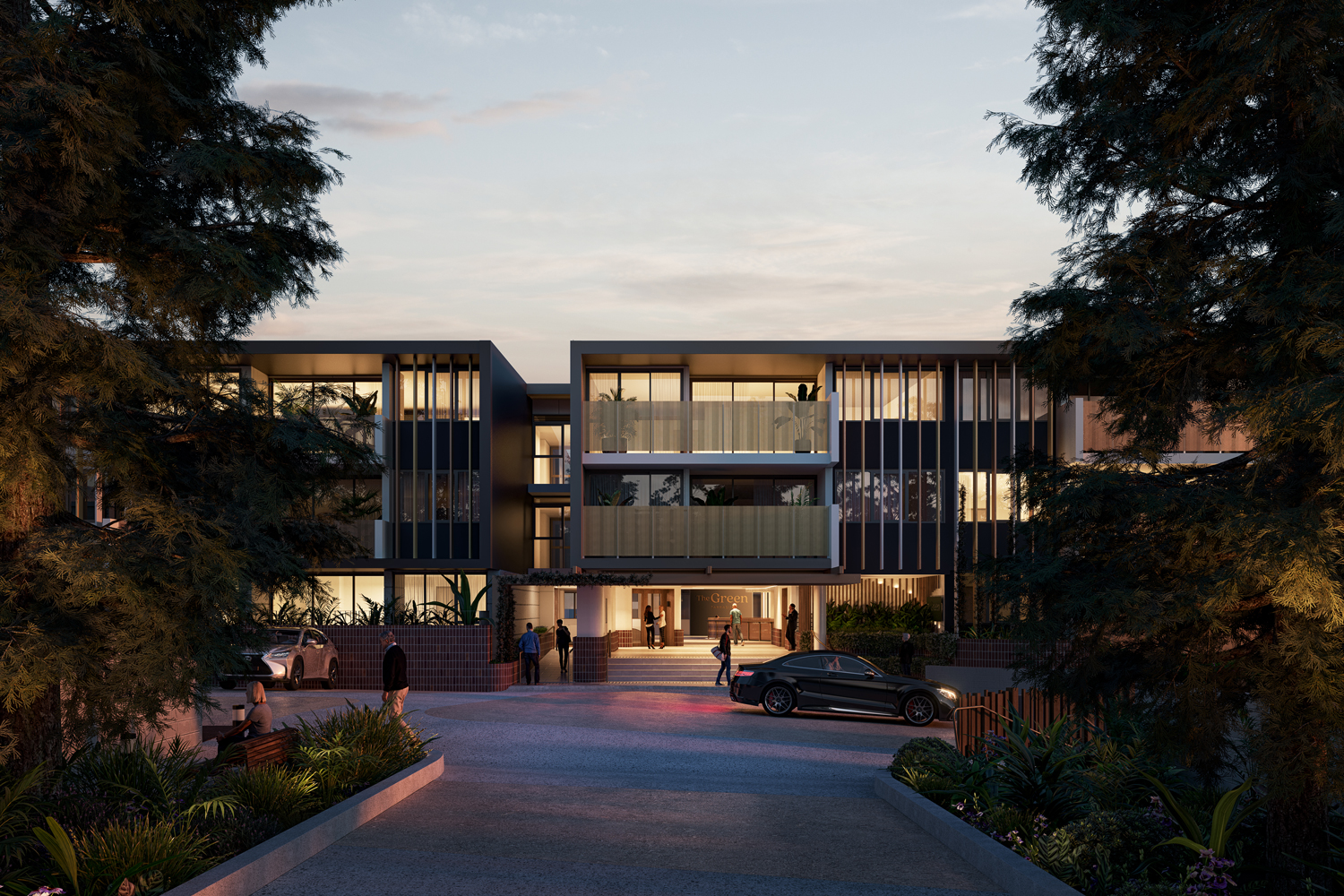
In addition, vertical communities like Arcadia, The Green, The Verge, The Rise and Tarragal Glen complement this design with on-site Support at Home services. This means that if your needs change over time, care can come to you, without needing to leave your community.
At Arcadia and The Verge, there is also the option of a Care Hub for short or longer stays if more support is required. Together, this combination of design and support creates a way of living that can adapt with you over time.
Everyday safety and peace of mind
Living in a standalone home can bring quiet concerns over time, from security to what happens in an emergency. Apartments are designed to reduce those worries.
Features often include:
- Secure building entry and video intercoms.
- Key or swipe-controlled lift access.
- 24/7 emergency call systems.
- On-site teams and nearby neighbours.
Unlike open streets or isolated homes, apartment living offers layered security, from the front door through to the wider building. There’s also reassurance in proximity. Someone is always nearby if you need help, but your independence remains entirely your own.
It also changes how you experience your surroundings. Elevated apartments offer a different perspective, with views across green spaces, streets or skyline, and private balconies that let you enjoy fresh air and sunshine without leaving home.
Lock-up-and-leave living
One of the biggest shifts people notice is how much lighter life feels. Apartments remove many of the ongoing responsibilities that come with a house or villa, including no exterior maintenance, no garden upkeep, no putting the bins out and no worrying about the property when you’re away. You can simply lock up and go, whether it’s for a weekend, a holiday or time spent with family.
It’s just an added layer of security and peace of mind, allowing you to enjoy time away.
Less maintenance, more time for what matters
In traditional homes, time is often spent managing upkeep — gardening, repairs, cleaning large spaces.
Retirement apartments simplify this. With maintenance handled and spaces designed efficiently, more time is freed up for lifestyle, wellbeing and connection.
Frequently asked questions about apartment living in a retirement village
Are retirement living apartments suitable as I get older?
Yes. Modern retirement apartments are designed to support ageing in place, with step‑free access, safety features and adaptable layouts — making it easier to remain independent as your needs change.
Are retirement village apartments smaller than villas?
Not necessarily. Many retirement apartments are designed to maximise space, with open–plan living, plenty of storage and large private balconies or courtyards.
Is apartment living less private than a villa?
No. Apartments are private, self–contained homes. While you’re part of a community, you choose how much you engage. Many residents enjoy the balance of privacy when they want it, and connection when they need it.
What about fire safety in apartments?
Modern retirement living apartments are built to current building and fire safety standards, including fire‑rated construction, smoke detection, sprinkler systems and defined evacuation procedures.
On-site teams and neighbouring residents provide additional reassurance — creating a level of oversight often not found in standalone homes.
Do I still own my apartment?
Retirement villages operate under different financial models depending on the village and state legislation. In most cases, residents purchase a long–term lease or licence to occupy rather than owning the property outright. This is something to discuss carefully with the village team and your financial adviser.
What fees are involved with apartment living in a retirement village?
In addition to the entry price, most villages have a regular service fee. This typically covers things like building maintenance, gardening, security, shared facilities and village management. Fees and inclusions vary, so it’s important to understand what’s covered before you move in.
Can I personalise my apartment?
Many villages allow residents to personalise their apartment with furniture, artwork and soft furnishings. Structural changes are usually limited, but the goal is still to make the space feel like home.
Is apartment living suitable if I live alone?
Yes. In fact, many people choose an apartment for exactly this reason. The security features, on–site support and nearby neighbours can provide peace of mind, both for residents and their families, while still allowing for independent living.
Can I still have visitors or family stay over?
Absolutely. Retirement village apartments are your home. Visitors are welcome, and many apartments are designed with guest stays in mind. Each village has its own guidelines, but family and friends are very much part of village life.
Do I need to give up my car?
Not necessarily. Many retirement village apartment communities offer secure parking, and being close to shops, transport and amenities can reduce the need to drive every day, but the choice remains yours.

When home matters most: Pat's story
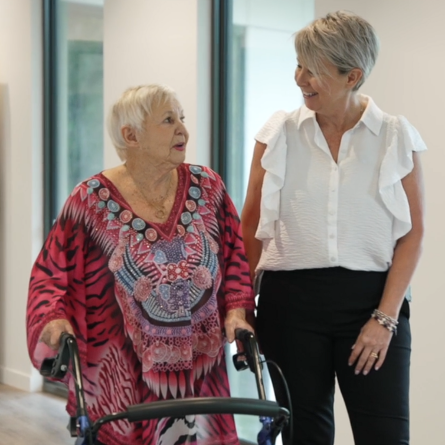
Pat had a special way of loving life and the people around her. To her family, she was everything a mother should be. Warm, generous and deeply caring, she treated everyone she met with kindness and unconditional love.
Pat moved into Glengara Care, set in the heart of Glengara Retirement Village, on her 85th birthday. From day one, she felt at home. She loved her apartment, the gardens and the sense of independence she enjoyed every day. Often, she said she wished she had moved in earlier. Glengara Care was not just where she lived. It was where she belonged.
When Pat was diagnosed with stage 4 cancer, her family faced the reality that her time was limited. While in hospital, conversation turned to moving into a nursing home, without realising that Glengara Care could offer end of life care right where she was. For Pat, staying at Glengara Care mattered. This was her home and she never wanted to leave.
Pat’s son, Craig, reflected on her connection with the team. They were more than carers. To her they were family.
“She loved them and they loved her. And to her, that’s why this place was home,” he says.
Her family’s wish was simple. To honour Pat’s desire to remain at Glengara Care, surrounded by people she loved. Throughout her final days, Pat was comfortable and free from pain. When she passed away, the grief was shared. The Glengara Care team mourned alongside her family, a testament to the genuine bonds formed.
Even after her passing, the care continued. The team checked in, offering support and compassion through the grieving process.
Pat’s story is one of home, dignity and belonging, and of the difference that true care can make when it matters most.
Watch Pat’s story here:

Finding confidence and care at Glengara Care
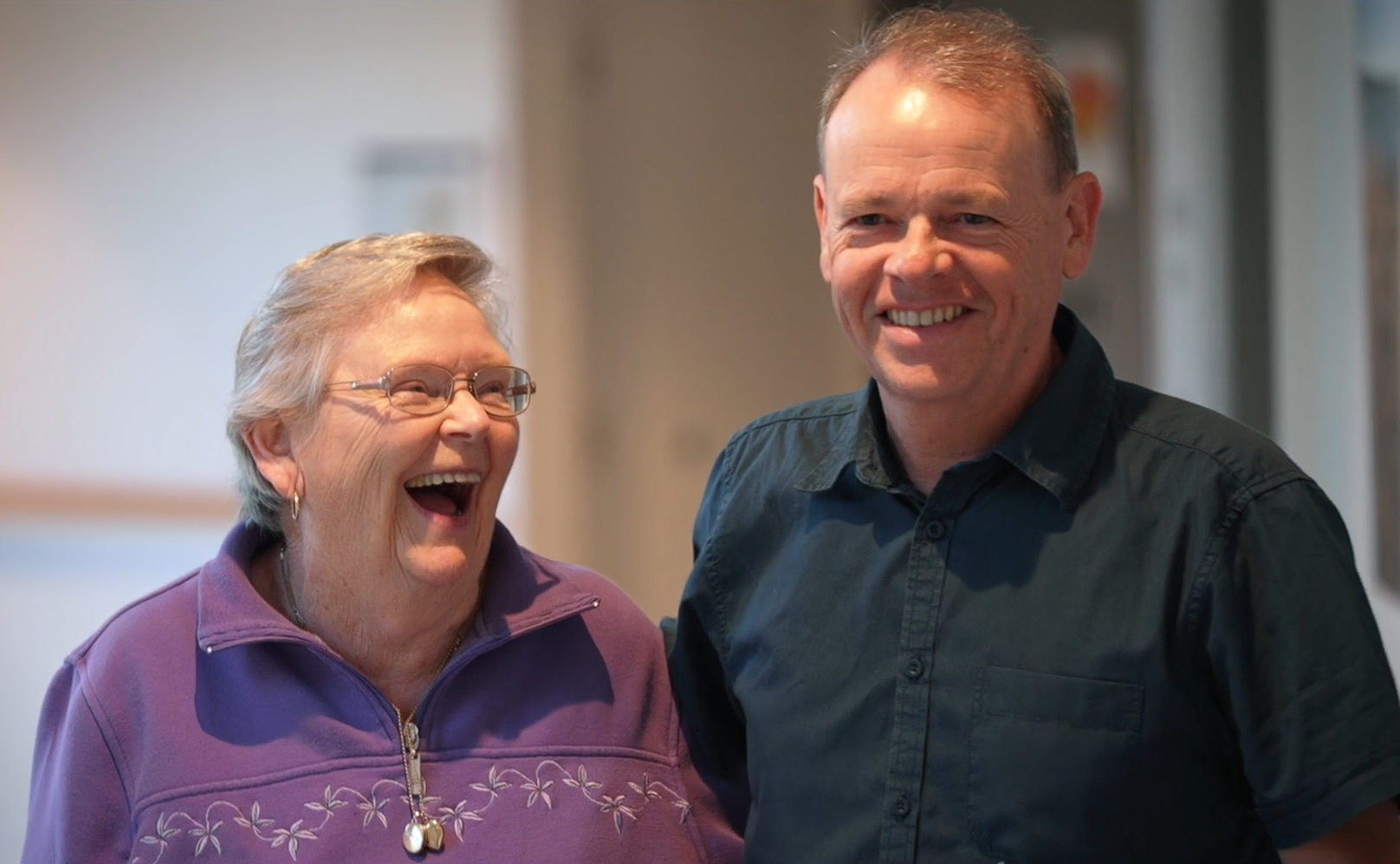
Andre’s journey to Glengara began many years ago, when she and her husband moved to Australia, searching for a better life. They found it at Glengara Retirement Village, where they built a happy life together after her husband retired at 65.
After Andre’s husband passed away, life gradually became more challenging. Five years later, Andre was diagnosed with the early stages of Alzheimer’s. By 2024, it became clear she was starting to struggle, and her son Graham made the decision to move her into Glengara Care.
“I brought her into the care apartments and it’s the best decision that we have made. Mum will agree,” he says.
Andre’s transition into Glengara Care was gentle and well planned. The team helped move Andre from her villa in the village to the apartments in a single day. From the moment she stepped into Glengara Care, a personalised care plan was in place to support her needs. Small services were introduced over time, from help with medication to support with breakfast, allowing her care to evolve naturally as her needs changed.
At first, Andre was shy, timid and unsure. But within weeks, everything began to change. She quickly settled into a routine and found her feet in her new environment.
Care Manager at Glengara Care, Carmen, shared her excitement at seeing Andre taking part in activities, going on outings and embracing each day with renewed confidence.
“It’s such a relief, watching someone like Andre go from somewhere very isolated all the way through to living her best life,” she says.
Today, Andre is happier, fitter and more mobile as she enjoys being part of a vibrant community. Watching her move from isolation to living a full and active life has been a remarkable journey for both her family and the care team.
Watch Andre's story

Finding community and connection at Carlyle Gardens
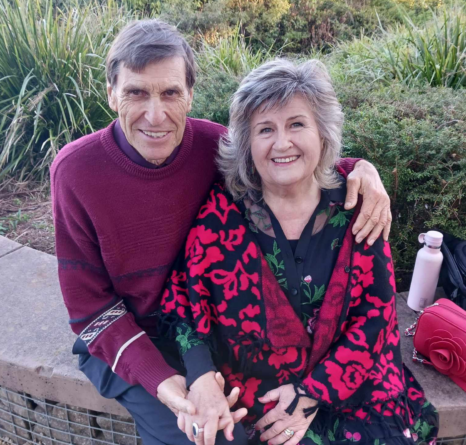
When life changes unexpectedly, sometimes it opens the door to something better than you imagined. For this May and Trevor, that turning point came 2.5 years ago.
After running a successful business in the Bundaberg region, Trevor experienced health issues and was no longer able to work. The couple made the difficult decision to sell their business and soon realised their 1-acre property just outside town had become a bit too much to manage.
“We needed something more manageable,” May explains. “Somewhere that still felt like home, but without the upkeep.”
What followed was an 18-month search across retirement villages, over-50s communities, townhouses and units. But no matter how many places she visited, May kept coming back to one.
The place that kept calling them back
“At Carlyle Gardens Retirement Village, it was the gardens between the homes that appealed to me,” May says. “The outlook and the space. It just felt different.”
The beautifully maintained gardens offer privacy between villas, while still fostering a sense of connection. And being within walking distance of the beach only adds to the appeal.
While still considering their options, Lauren the sales consultant at Carlyle Gardens stayed in touch, sending newsletters and updates.
“Even just reading the newsletter, I could feel there was life here,” says May. “There were activities happening and people connecting. I’d received other newsletters from other places, but this one felt alive.”
One Friday, May made a call. “I just had this feeling to ring and ask if anything was available.”
Surprisingly, there was!
Ticking every box
May set off to visit the village the following Monday. Trevor wasn’t well enough to attend and told her gently, “You go. You look. You decide.”
The moment she stepped inside the villa, she knew.
“It ticked every box. I wanted a room for my crafts, I love crafts, and space for my books. I’ve got quite a little library. And it had that space,” May explains.
She returned home and told her husband that she thought she had found the place. They visited together the next day and he agreed. Their home went on the market and sold within a week.
“It was just before Christmas,” she recalls. “It almost felt meant to be.”
A visible change
Since moving in, the transformation, particularly in Trevor, has been remarkable. Before relocating, he wasn’t getting out much and was spending a lot of time at home on his own.
“Since we’ve moved here, he’s up. He’s connecting with neighbours. He rides his bike around the village, it’s safe here. He goes for walks. He pops in to see the other fellas. He even went to play snooker.”
Friends who have visited have noticed the difference in the Trevor.
“They’ve said it’s like a weight has lifted off his shoulders,” says May.
That kind of change is life changing. It speaks to something deeper than simply convenience, it’s belonging.
Thriving, not just living
Life has also changed for the better for May.
“I’ve started walk aerobics twice a week – that’s 5km each time,” she says. “I’ve taken up line dancing. I play cards on Thursday mornings.”
May loves village life, which includes meeting new people, building friendships and staying active. But what she appreciates most is the balance it offers.
“The homes aren’t on top of each other, which gives you a real sense of privacy. You can garden as much or as little as you want and best of all, there’s no mowing! But when you’re out walking, people stop for a chat. You feel welcomed.”
Community dinners, pizza nights and sausage sizzles provide opportunities for socialising as a couple, but they also have plenty of time for their individual interests and friendships.
“It’s good to have your own things,” May says. “Then you come back and share.”
Support that continues
Another standout for her has been the village team at Carlyle Gardens. The team’s consistency and support, especially during a major life transition for the couple, has meant the world.
“They’ve been so helpful. The whole process of moving in they were terrific and it didn’t stop after we moved in, it’s continued to be terrific,” she says. “I know I’m gushing, but it’s from the heart. We’re just so thankful.”
When asked what she would tell someone considering a move, her answer is simple:
“It’s such a lovely community to live in. The gardens. The privacy. The connection. You don’t have the upkeep, but you still have independence. It’s perfect.”
She’s already recommended it to several friends and one couple is now considering making the move themselves.
Sometimes downsizing isn’t about giving something up. It’s actually about gaining connection, health, ease and a fresh start by the sea.
You might also be interested in:
Retirement villages: what are the costs?

Understanding retirement living costs
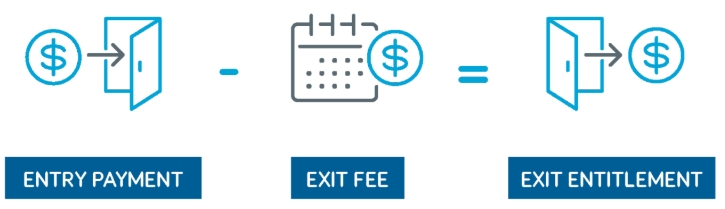
If you’re new to retirement living, it’s important to know that the costs are different to buying or renting a regular home. Instead of a standard property sale, you’ll pay an entry payment for the right to live in your home, plus ongoing village fees and a management fee when you leave. Everything is designed to be clear and predictable, so you know exactly what to expect at every stage.
Want a quick, expert overview?
Financial clarity from day one
Moving into a retirement village is a big decision. At Carlyle Gardens, we keep the financial side simple and transparent, so you know exactly what to expect – before you move in, while you live here and when you leave.
1) Your entry payment (no stamp duty)
Your entry payment gives you the right to live in your new home for as long as you wish under our residence contract. You won’t pay stamp duty, which can save you thousands up front.
Change of mind assurances
- 21-day disclosure period to read your documents carefully before signing.
- 14-day cooling off period after signing – your deposit is refunded in full if you change your mind.
- 90-day settling in period after settlement; if you decide to leave in that time, we refund your entry payment less specified fees and costs.
2) Monthly village fees (what they cover)
Monthly village fees cover the everyday running of the village and the services that make life easier and more enjoyable. This includes:
- Managing and operating the village
- Operating and maintaining shared facilities (e.g. gardens, community centre, etc)
- Home building maintenance*
- Building insurance
- Security and safety systems
- Village employees
- Council and water rates
By law, these fees are charged on a cost recovery basis (the operator doesn’t profit) and are audited annually by an independent party. Fees only increase in line with actual costs.
* Except for items residents have altered, added or damaged, or anything beyond fair wear and tear.
Other regular household costs
You’ll also budget for gas, electricity, phone and internet, contents insurance, personal living expenses, and taking care of your home, for example cleaning, tidying, pest control and repairs beyond normal wear and tear.
4) When you leave: simple, predictable and fair
We work to make things easy for you and your family.
We’ll get your home sale ready
We prepare and present your home for sale, usually at no extra cost – except in cases of major damage, heavy wear and tear, or removing alternations and additions you made.
No sales or marketing fees
We handle the sale professionally and don’t charge sales or marketing costs.
Financial certainty while your home is for sale:
- First 90 days after you move out: you pay all fees.
- Day 91 to nine months: we share fees with you using the same split as the sale proceeds.
- After 9 months: we pay all fees.
- If your home hasn’t sold within 18 months, we’ll buy it back from you.
Your exit entitlement is guaranteed
Your exit entitlement won’t change with the property market or unexpected events such as floods, fires or pandemics. Any gain or loss is covered by RetireAustralia.
5) The management fee (capped at 35%)
The management fee is payable when you leave and helps keep entry costs competitive. It also covers costs like renovating, marketing and selling your home, essential support roles, and capital improvements that keep the village modern and comfortable for everyone.
- Capped at 35% of your entry payment.
- Accrues over your first 3 years.
- No further increases after 3 years – no matter how long you stay.
Comparing options
The best way to compare retirement living options is to visit Carlyle Gardens, speak with our team about your circumstances and to review your current household budget.
Why people choose retirement living
For many residents, the real value is lifestyle: a friendly environment, peace of mind and low maintenance living. Plus, access to services and amenities that make everyday life effortlessly enjoyable. Choosing Carlyle Gardens, it’s an investment in you and the way you want to live.
Ready to find out more?
If you’d like to understand in detail how Carlyle Gardens costs work, or want to see for yourself what’s included, we’re here to help.
Book a visit to tour the village and chat with our team or give us a call. We’re happy to answer your questions and walk you through the details.
6 reasons to choose Carlyle Gardens Retirement Village

Carlyle Gardens is the smart choice for its old-fashioned community spirits and easy, everyday living in Bargara.
1. Fantastic location
Carlyle Gardens Retirement Village is ideally located in sunny Bargara on Queensland’s beautiful Coral Coast, offering relaxed, coastal living close to the beach and just a short drive to Bundaberg’s shopping, medical and lifestyle amenities.
As a well‑established village, Carlyle Gardens makes it easy to enjoy a laid‑back coastal lifestyle, stay connected locally and live at your own pace.
2. Your home, your way
A limited release of brand-new villas is now available at Carlyle Gardens, offering modern, low maintenance living with thoughtful layouts designed to make everyday life easy and comfortable.
Existing one-, two-and three-bedroom villas are also spacious, light filled and well planned, with many featuring step free access, wider doorways and easy-to-use bathrooms that support comfortable living over time.
Gardening and maintenance of shared areas are taken care of, giving residents more time to socialise, relax or explore the local area.
3. A community with real spirit
Community is at the heart of life at Carlyle Gardens. Residents enjoy the privacy of their own home while being part of a friendly, connected village where neighbours look out for one another.
With shared spaces and regular social activities, there’s always the opportunity to join in — or simply enjoy your own space if that’s what you prefer.
An experienced onsite team is available to help if needed, while always respecting residents’ independence.
“It’s such a lovely community to live in. The gardens. The privacy. The connection. You don’t have the upkeep, but you still have independence.” says May, a Carlyle Gardens resident.
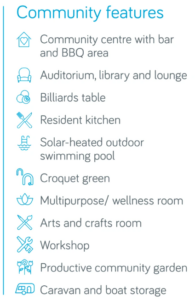
4. Community amenities to enjoy
Carlyle Gardens offers a range of modern, shared spaces that support connection, hobbies and everyday enjoyment, giving residents the option to be as social or as independent as they like.
5. Peace of mind, without fuss
Carlyle Gardens homes are designed to make everyday living feel easier and more comfortable. Simple, practical features such as step free entry, wider doorways and easy-to-use bathrooms help residents move around their home with confidence, now and over time.
Each home also includes a personal emergency response system (PERS), allowing help to be contacted quickly in an emergency. It’s quiet reassurance in the background — without intruding on daily life or independence.
6. Contract certainty
Carlyle Gardens offers clear and straightforward contracts, so residents understand what to expect from the start. Monthly service fees are capped and only increase beyond Consumer Price Index (CPI) with resident approval, helping provide long-term clarity and confidence.
The best way to see if Carlyle Gardens could be right for you is to book a visit and tour the village.
You might also be interested in:
Why retirement villages are good for you

At any age, health and wellbeing matter. As we grow older, being part of a supportive community becomes even more important. Here’s how retirement village living can boost your health, happiness, and peace of mind.
Stay connected, feel better
Living at Carlyle Gardens Retirement Village means being part of a community where connection comes naturally. Friendly neighbours, regular catch‑ups and a lively calendar of social events and activities make it easy to stay engaged. Research from the Retirement Living Council shows that retirement village residents are 5 times more socially active and significantly happier than those living alone.
Live longer, live well
Staying socially connected doesn’t just feel good – it can add years to your life. A Swedish study found that people who remain socially active enjoy greater longevity. At Carlyle Gardens, a built‑in social network, shared spaces and easy access to amenities make it simple to stay active, independent and involved.
Support when you need it
Peace of mind is one of the greatest benefits of retirement living. Whether it’s a weather event or a health concern, knowing help is close by brings real comfort. Living in a RetireAustralia community like Carlyle Gardens, means a dedicated on‑site team and trusted Support at Home provider is always nearby offering support when needed and allowing you to relax and enjoy life the rest of the time.
Fewer hospital visits
Thoughtfully designed homes and a supportive environment can make a meaningful difference to your health. Research from Grant Thornton shows retirement village residents are 20% less likely to require hospitalisation than those living outside a village. This is thanks to safer design, reduced fall risks and readily available support.
Keep your mind sharp
Meaningful activities such as music, art, reading and creative pursuits help reduce stress and may lower the risk of dementia. In RetireAustralia communities, like Carlyle Gardens, there’s always something to look to do. From group activities and happy hour with friends to peaceful walks on the beach, you’ll feel a genuine sense of belonging in a place designed to help you thrive.
Delay aged care
Retirement village residents move into aged care later than those living in the family home, on average, 5 years later. That means more time living independently and enjoying the lifestyle you’ve worked hard for.
Blue Zone benefit
Many of the lifestyle habits linked to longer, healthier lives around the world are also supported by retirement living. In places known as Blue Zones, people tend to live well for longer because they stay socially connected, move regularly through their day, feel a sense of purpose and experience less stress. Retirement communities naturally encourage these same habits, with walkable spaces, shared areas and opportunities to stay active and involved. Communities such as Carlyle Gardens reflect this approach, where connection, movement and purpose are part of everyday life.
Everyday living done well
Carlyle Gardens offers comfortable, independent living in a well-established Bargara community, with space, connection and a relaxed approach to everyday life.
If retirement village living is something you’re considering, our team is happy to help you explore whether Carlyle Gardens could be the right fit.
You might also be interested in:
The 5 most common retirement living options

Here’s a side-by-side guide to the five most popular retirement living options in Australia – so you can find the place that feels right for you, both now and in the years ahead.
1. Staying in the family home
Enjoy the comfort of familiar surroundings and routines, with neighbours you know and love. If you value independence and your established community, staying put can be a great choice.
Just keep in mind the practicalities:
- The cost and logistics of managing home maintenance.
- Accessibility, safety and the risk of isolation if your mobility changes.
A home safety assessment can offer peace of mind, and My Aged Care is a helpful resource for support options.
2. Downsizing to an apartment or townhouse
Less space means less upkeep – more time for morning walks or coffee with friends. Apartments and townhouses offer privacy and security, with balconies or courtyards for quiet moments.
Here’s what to consider:
- Simple modifications for future comfort, like handrails or wider hallways.
- Most townhouses have stairs, so consider if you’ll be comfortable with them long-term.
- Get legal advice so that you know what property you own and what you share.
- Check body corporate fees as you will be liable for the maintenance of shared areas as well as your home.
3. Retirement villages
Retirement villages support independent living within a managed community, with shared facilities and services, and increasingly, access to additional support over time.
Homes are typically designed to look and feel just like any home – comfortable, contemporary and welcoming. Age-friendly features such as step-free entry, wider walkways, deeper showers, accessible fixtures are subtly integrated, so they’re ready to adapt if your needs change.
Here’s what to consider:
- Explore different villages to find the right fit.
- Contracts set out what applies when moving in, living in and leaving the village, including resale arrangements and exit timeframes.
- In Queensland, retirement villages are regulated under legislation that has been strengthened in recent years to improve consumer protections, financial transparency and clarity around contract terms.
- Find out what support is available – even if you don’t need it now, being prepared brings peace of mind for the future.
As costs and contracts vary between villages, it’s important to carefully review the documentation and seek independent legal and financial advice to understand how a village will work for you over time.
If you want independence with community and future flexibility, retirement villages are often a strong option to consider.
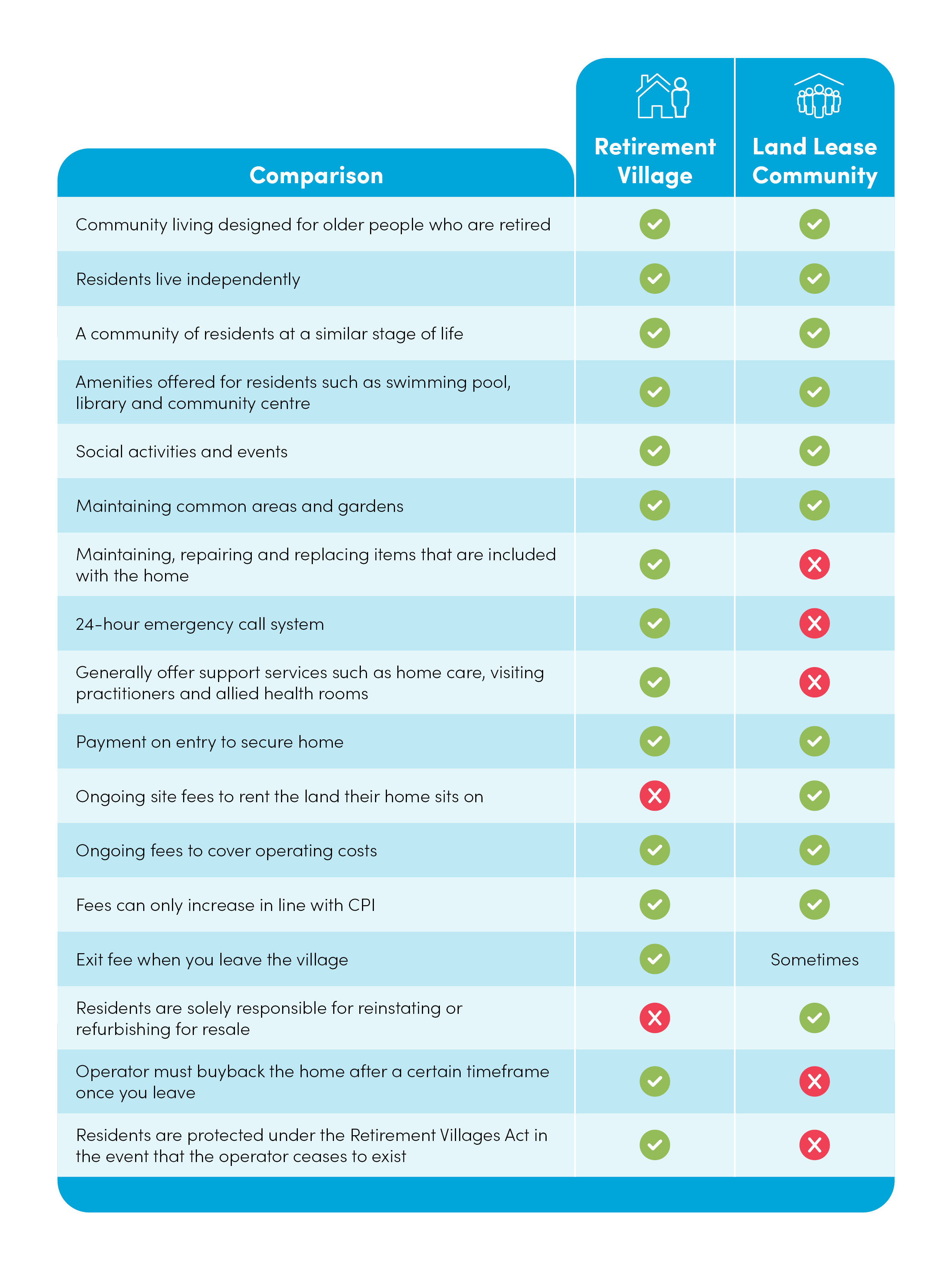
4. Land lease communities (over-55 lifestyle communities)
Land lease communities, also known as manufactured home estates or lifestyle communities, have grown in popularity, particularly among younger retirees.
Here’s the key difference: you own the home, but you rent the land it sits on.
Homes are typically factory-built and placed within a gated community. They are often marketed as affordable lifestyle living.
Key factors:
- You do not own the land.
- You pay ongoing site fees to lease the land
- You pay ongoing fees to cover village operating costs
- There is no built-in care requirement.
- Communities are not required to meet age-friendly or accessibility design standards, unless the operator chooses to include them.
While initial purchase prices can be lower, it’s essential to understand:
- Ongoing site rental obligations.
- Contract terms.
- What happens if the operator sells the land.
- How resales work.
As with any major life decision, independent legal advice is critical.
Land lease communities can suit people prioritising upfront affordability and lifestyle amenities, while being comfortable with different ownership and fee structure to retirement villages.
Retirement villages vs land lease communities: a comparison
5. Residential aged care
For those needing full-time support, aged care homes offer peace of mind and clinical care.
Here’s what to consider:
- Look for quality reports from the Aged Care Quality and Safety Commission
- Consider proximity to family.
- Social activities and a sense of community matter at every stage.
Aged care is the right choice for people who need daily care and clinical support, whereas retirement villages cater to a different stage of life, centred on independent living and community.
So, what’s right for you?
There’s no single “perfect” choice, only what aligns with your priorities.
Ask yourself:
- Do I want independence only or independence plus community?
- How important is long-term financial certainty?
- Do I want to plan for future support now?
The right decision is the one made with clear information and realistic planning.
Discover retirement living at Carlyle Gardens
If comfort, security and connection matter to you, Carlyle Gardens Retirement Village offers a welcoming, established community where you can enjoy your freedom without sacrificing support.
With thoughtfully designed homes, low-maintenance living and a strong sense of belonging, Carlyle Gardens provides the confidence to live life your way today and into the future.
Speak with our team to explore whether retirement village living could be the right next step for you.
You might also be interested in:
Arcadia sets a new benchmark for integrated retirement living in Brisbane
The practical completion of Stage 1 at Arcadia Retirement Living in Yeronga marks more than the delivery of another retirement community. For RetireAustralia, it signals the emergence of its largest greenfield development to date and a clear statement about where the next generation of retirement living is heading.
When complete, Arcadia will comprise up to 217 independent living apartments and a 10suite Care Hub, delivered across multiple buildings within Brisbane’s Parkside Yeronga Priority Development Area (PDA). But it is not just the scale that sets Arcadia apart — it is the way the project has been conceived, shaped by research, precinct planning and lessons learned from earlier developments.
“Arcadia is the most ambitious project we’ve undertaken to date,” said Brett Robinson, CEO of RetireAustralia. “It’s allowed us to take everything we’ve learned over many years — about design, care, services and community — and apply it in a way that responds directly to how retirement living is changing.”
Retirement living as part of a living neighbourhood
Arcadia sits within the Parkside Yeronga PDA, a 3.1hectare former TAFE site being redeveloped by Economic Development Queensland as an intergenerational, mixed tenure precinct. The broader masterplan brings together retirement living, private residential housing, social and affordable housing, green spaces and community infrastructure, deliberately designed to connect people of different ages and life stages.
Within that context, Arcadia represents a leading Brisbane example of retirement living integrated into a broader urban neighbourhood, rather than operating as a standalone village.
“The future of retirement living isn’t about separation — it’s about connection,” Robinson said. “People don’t want to step away from everyday life when they retire. They want to remain part of a neighbourhood that feels active, relevant and connected to the wider community.”
The site was acquired through a joint venture between RetireAustralia, Brisbane Housing Corporation and JGL Properties, reflecting a collaborative approach to delivering mixed tenure outcomes at scale.
“Projects like Parkside Yeronga only work when public and private partners are aligned around a shared vision,” Robinson said. “This joint venture structure has enabled us to deliver housing outcomes that are broader than any one organisation could achieve on its own.”
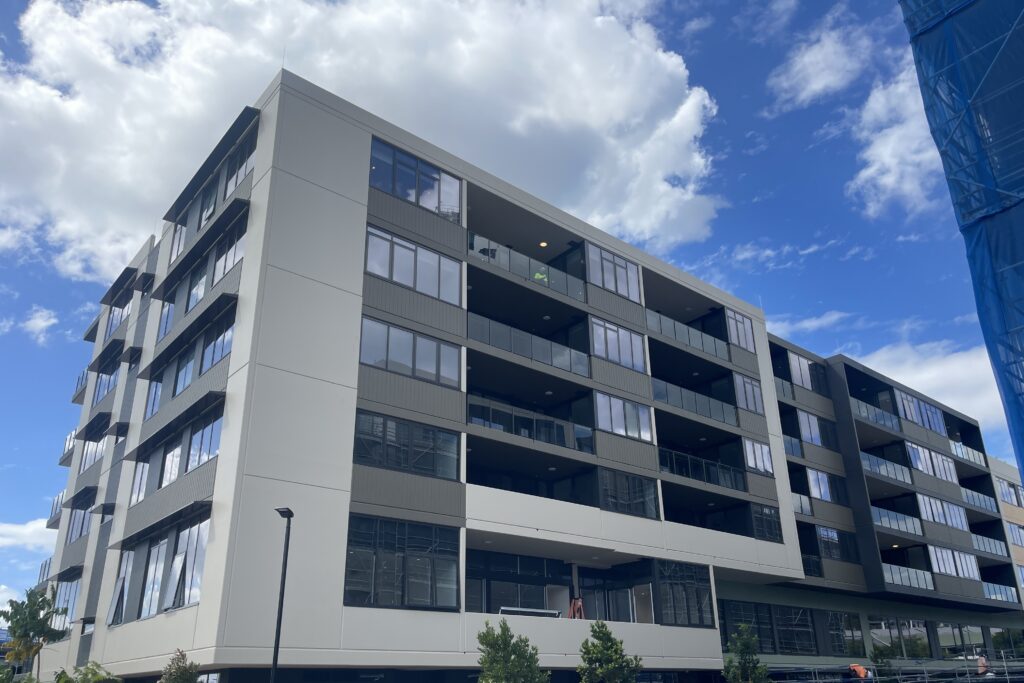
Banksia Residences at Arcadia Retirement Living has reached practical completion, marking a key milestone in RetireAustralia’s largest greenfield development to date.
Designing homes that rival the mainstream market
Stage 1 includes 45 independent living apartments within the Banksia Residences, alongside the Care Hub. The apartments have been designed to compete directly with the broader residential apartment market, featuring generous layouts, premium fixtures and fittings, stone benchtops and Smeg appliances.
What differentiates them is what is quietly built in: subtle ageing in place features, generous circulation space, level thresholds and futureproofed bathrooms — supporting long term independence without visually signalling “retirement living”.
“For today’s retiree, a high-quality apartment is table stakes,” Robinson said. “If the home doesn’t match — or exceed — what they could buy elsewhere in the market, the conversation stops there.”
Arcadia is being designed and built to align with 4 Star Green Star standards and the Australian Liveable Housing Gold Standard, reinforcing RetireAustralia’s objective of enabling residents to remain in their own homes for as long as possible, ideally through to end of life.
Arcadia’s approach to sustainability extends beyond performance metrics to the everyday experience of residents. The project maximises the use of responsibly sourced and reused timber across shared spaces, including suspended acoustic timber ceilings crafted from oak. Beyond their architectural impact, these features address the acoustic challenges of large communal areas, helping create warm, comfortable spaces that support everyday conversation and connection.
“Liveable design and sustainability aren’t optional extras anymore,” Robinson said. “They are fundamental to helping people live well, safely and independently over time.”
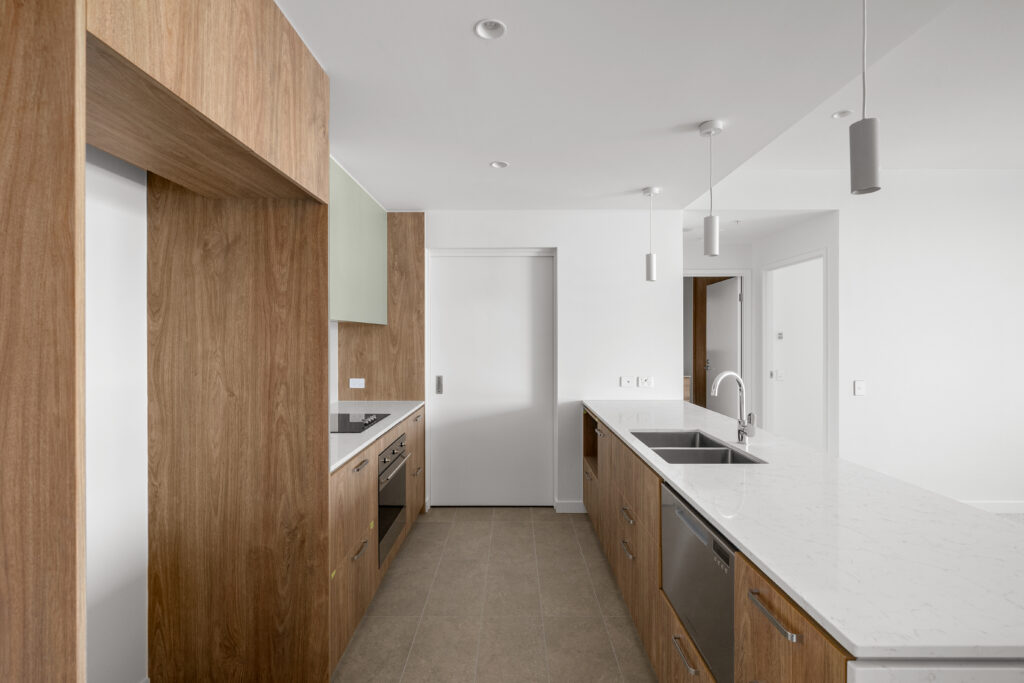
Apartments at Arcadia have been designed to rival the broader residential market, pairing generous layouts and premium finishes with subtle ageing in place features that support long-term independence.
Bringing care closer to everyday life
One of the most significant design decisions at Arcadia is the placement of the Care Hub on Level 1 of the first building, close to shared amenities and what RetireAustralia describes as the “beating heart of the community”.
Rather than isolating care in a separate building, the Care Hub has been deliberately integrated into daily village life.
“We’ve been very deliberate about making care visible, accessible and normalised,” Robinson said. “People want reassurance that support is there if they need it — without feeling like they’re being moved to the margins of the community.”
The Care Hub sits alongside RetireAustralia’s Support at Home services, reinforcing a model where independent living at home is the priority, and higher levels of care are available only when needs can no longer be safely met there.
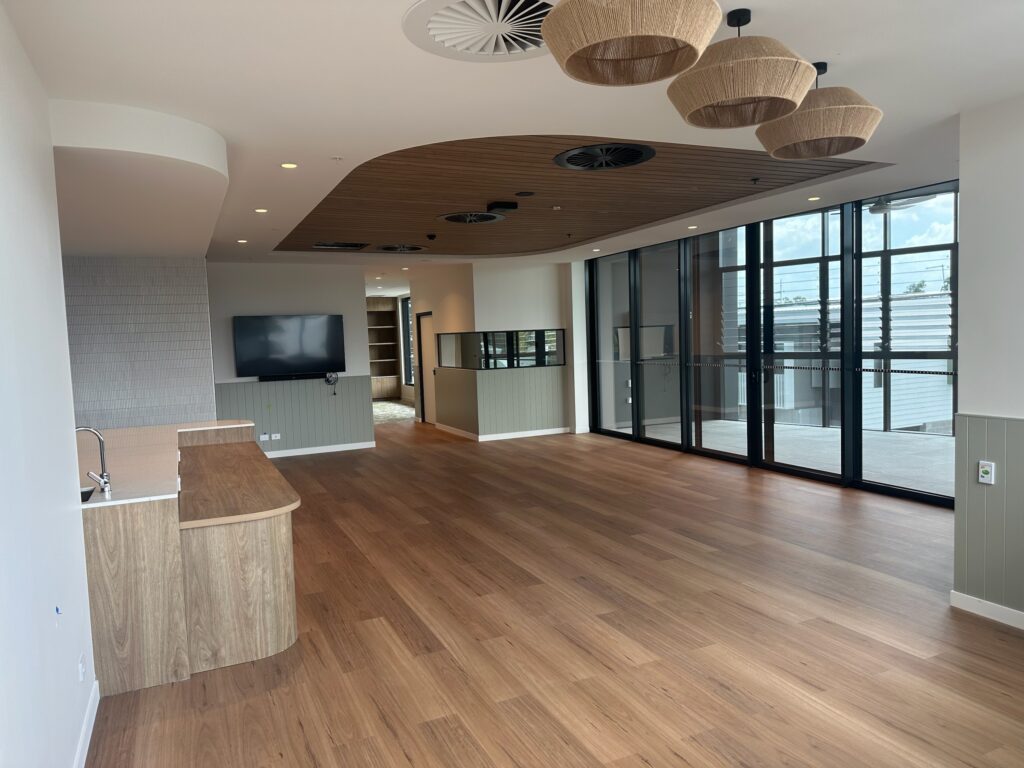
The communal dining and living area within Arcadia’s Care Hub has been designed to feel deliberately homelike, using the same materials, finishes and design language as the apartments to create familiarity and continuity.
A different approach to amenities
In many contemporary retirement developments, amenities are increasingly spread across multiple buildings to manage scale and walkability. At Arcadia, RetireAustralia has taken a different approach by centralising most shared amenities on the ground floor of Building One.
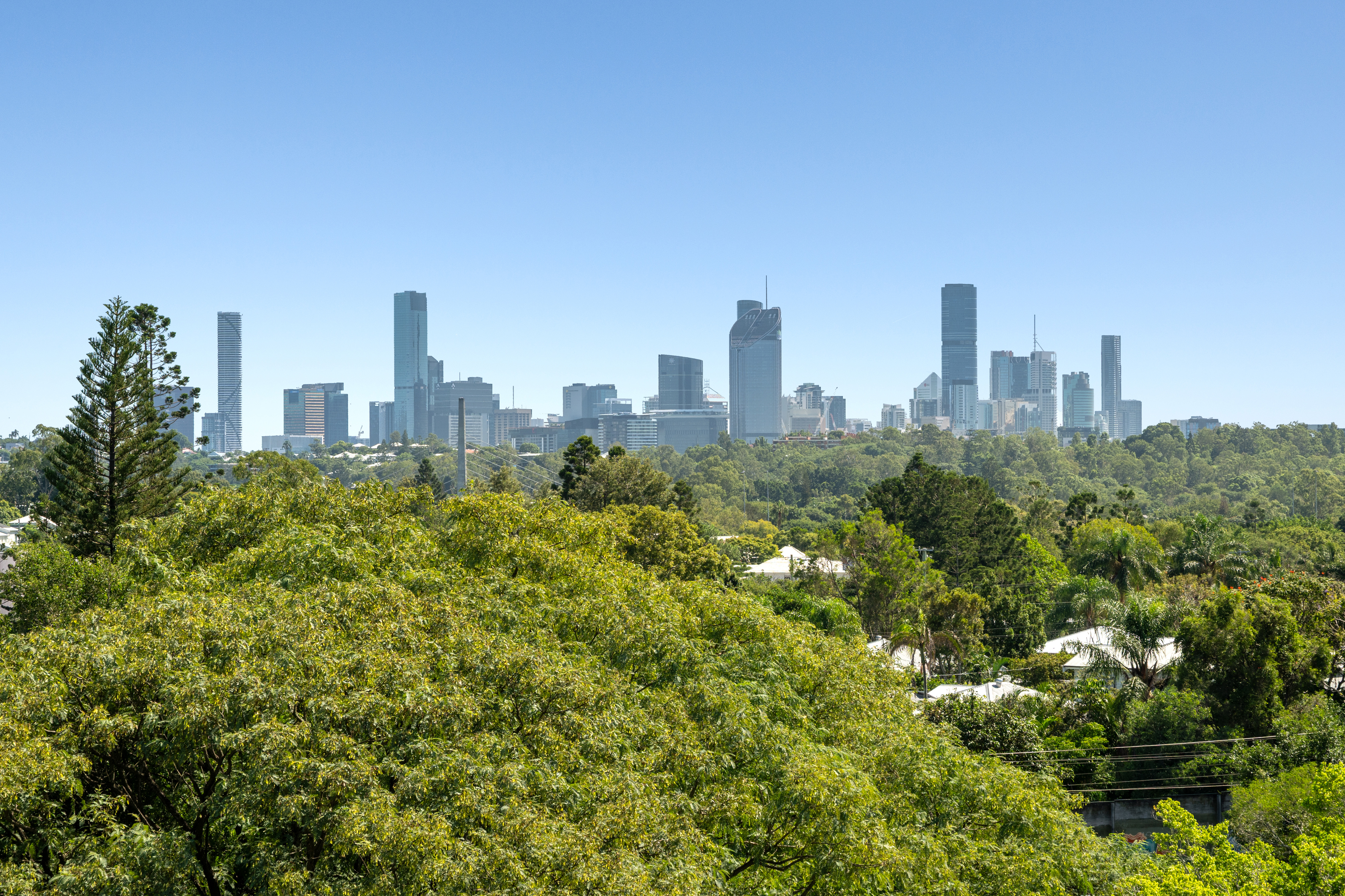
This includes a resident lounge, bar, library, kitchen and communal spaces designed to create activity, vibrancy and everyday social interaction. At the top of the building, residents will also share access to a rooftop BBQ and entertainment area with panoramic views across the Brisbane CBD and Mount Coot-tha.
“We’ve learned that amenity placement matters just as much as amenity provision,” Robinson said. “When you bring people through shared spaces every day, connection happens naturally. That’s how communities form.”
Importantly, the rooftop space ensures that the best views are shared by all residents, not reserved for a small number of premium apartments.
“Access to outlook and experience shouldn’t be gated by price alone,” Robinson said. “That sense of generosity is important to how a community feels.”
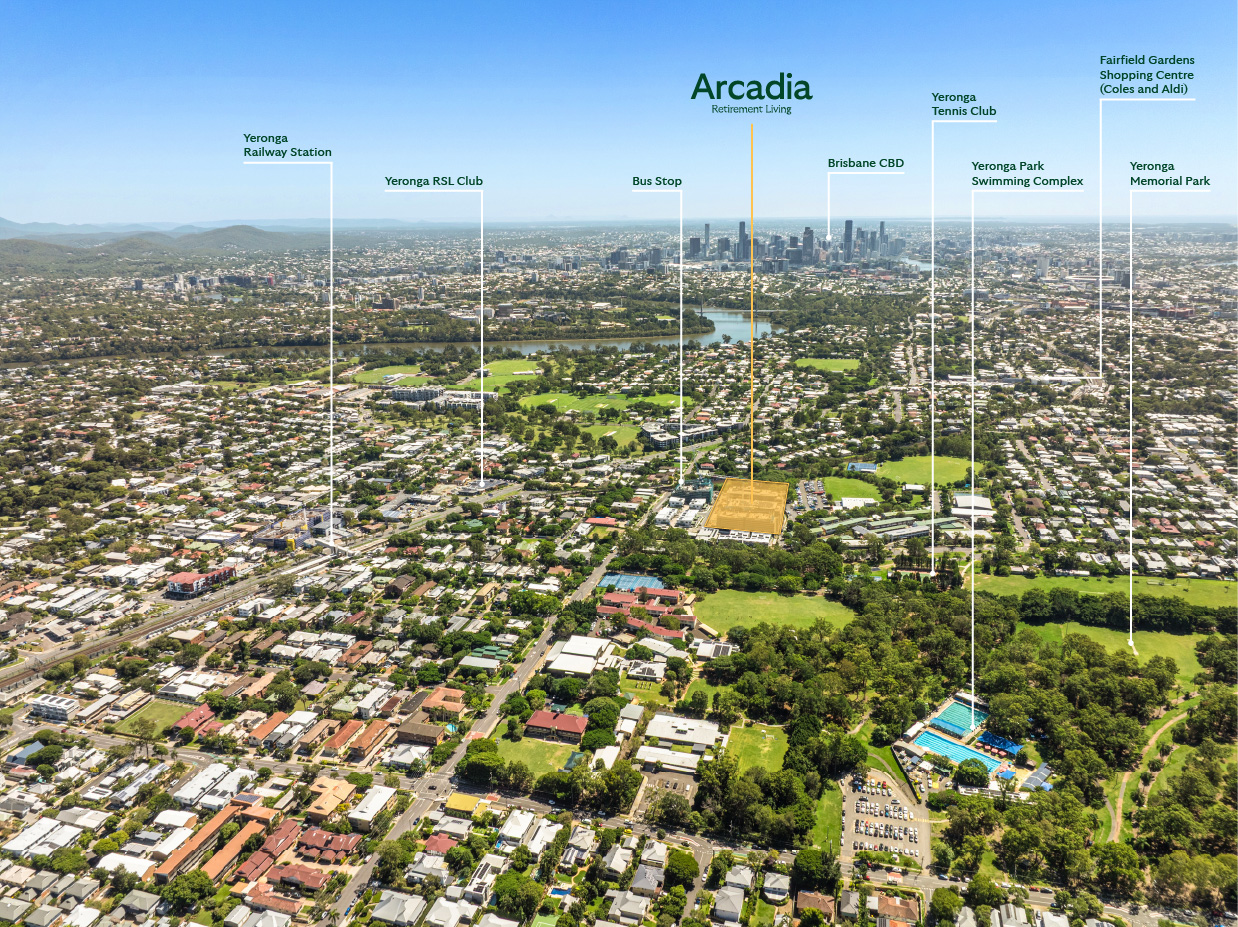
Arcadia Retirement Living within the Parkside Yeronga Priority Development Area, integrating retirement living into a broader, mixed tenure urban precinct in Brisbane’s inner south.
A people led service model
These shared spaces are only as effective as the people who bring them to life. Arcadia introduces a village team structure designed around how future residents expect to live. From day one, the community will include a Village Manager, Concierge, and Care and Wellness Coordinator, supported by an onsite care team.
This reflects extensive research showing that while the apartment is the foundation of a premium retirement living experience, amenities, services, and care are the strongest drivers of perceived value.
“The next generation of retirees see care as a hygiene factor,” Robinson said. “What they really value is service — people who make life easier, smoother and more enjoyable.”
“That’s why we’ve invested so heavily in the village team model at Arcadia. The people are what bring the buildings to life.”
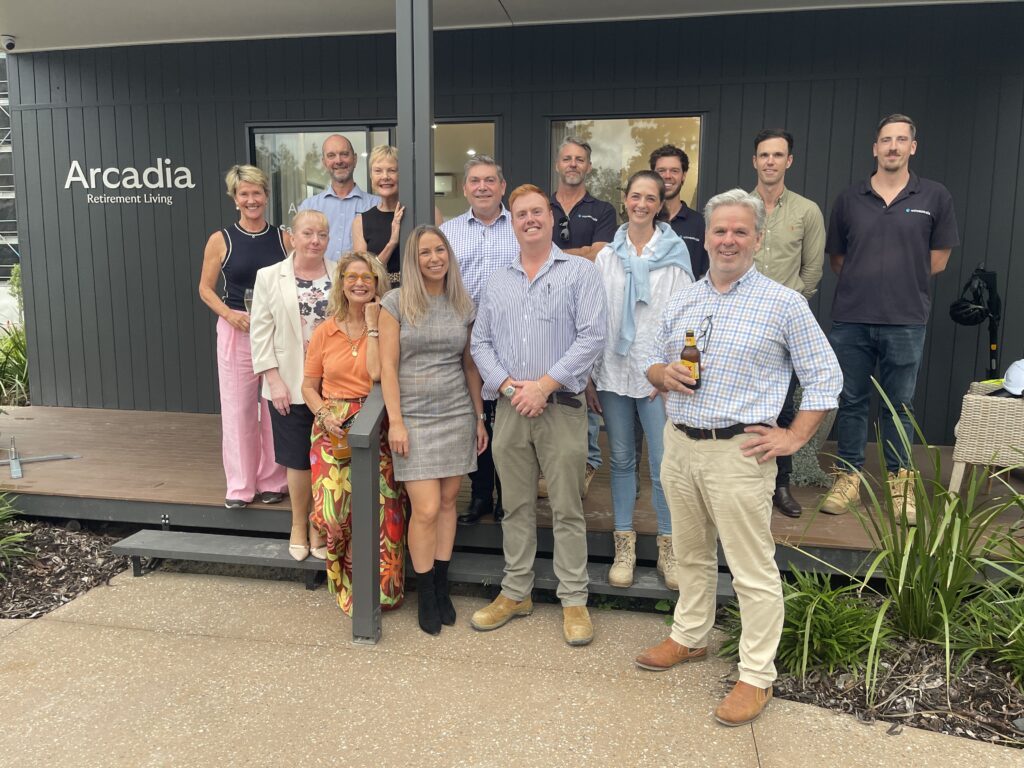
The Arcadia project team on site following the practical completion of Stage 1.
Ahead of schedule, with momentum building
Stage 1 has reached practical completion ahead of the original program, following a deliberate resequencing of the project that allowed product to be brought to market earlier than planned. Robinson said the outcome was driven by close collaboration between RetireAustralia’s development team and delivery partner Hutchinson Builders, significantly reducing both delivery and sales risk.
Sales activity reflects the realities of launching within an active construction environment. More than 25 per cent of Stage 1 apartments have now been secured, with a strong pipeline of prospective residents waiting to inspect completed homes prior to committing, and enquiry levels remaining solid.
“Selling into a live construction site is never straightforward,” Robinson said. “What we consistently see is that once people can walk through completed spaces and experience the community taking shape, momentum accelerates quickly.”
Prices currently range from the mid $800,000s through to $2.6 million, depending on size, configuration and outlook.
A signal of what’s next for the sector
As construction continues across subsequent stages, Arcadia will evolve into a large, service and amenity rich retirement community embedded within one of Brisbane’s most ambitious urban renewal precincts.
For Robinson, the project represents more than a milestone — it reflects a broader shift underway in the sector.
“Retirement living is moving from being a product to being an experience,” he said. “Arcadia is our response to that shift — integrated, people led and designed around how older Australians actually want to live.”
“If Arcadia shows anything, it’s that the future of retirement living is about connection, confidence and choice — not compromise.”