5 reasons why people love living in a retirement village
At RetireAustralia, we believe that life in a retirement village offers everything you could ever want, but don’t take our word for it. We’ve asked residents from across our villages why they love living in a retirement village.
“I like the fact that you don’t have to do the lawn mowing. We had a big garden, but here the two gardeners who do our place are absolutely wonderful. They’ve been extremely helpful! They often go out of their way and get it done!” says Norm Whyburn at Tarragal Glen Retirement Village. “The odd times we’ve needed maintenance, the team has been up here quickly. If they couldn’t sort it out, they had the contractors here.”
Life in a retirement village can offer peace of mind when it comes to garden and home maintenance. Offering a low-maintenance lifestyle, you can leave the lawn mower and stress about home repairs behind and spend more of your time doing the things you love. *
“I found that I didn’t miss cleaning the pool. I didn’t miss doing the garden or doing the repair chores,” says Chris at The Verge at Burleigh G.C.
2. Having a full and active life
One of the things residents are surprised about when the move into a village is how rich and active their lives can become. There is so much on offer in a retirement village, and you can do as much or as little as you like. Retirement living certainly doesn’t mean that life has to slow down.
That’s true for Tarragal Glen resident Gordon Crawford, who says: “Some people look at retirement village living and downsizing as though you’re giving up something, but for us we really feel like it’s given us a better life than we had before. After two years in the village we have a new circle of friends and a very full life both inside and outside of the village.”
The same is true for Lorraine Hogam from The Verge. “I wanted to live somewhere where we had a community around us and plenty of options for things to do. And since we’ve come here, we’ve been so busy – like this morning we went to the gym and then line dancing. We also love table tennis and now play a few times a week, and I like to go swimming too. We have a much busier life than before,” says Lorraine.
3. A sense of community
We don’t call it a ‘village’ for nothing. Being part of a community is central to village life. Residents often tell us that having neighbours who are also friends makes for a wonderful existence, but they still maintain and respect each other’s privacy
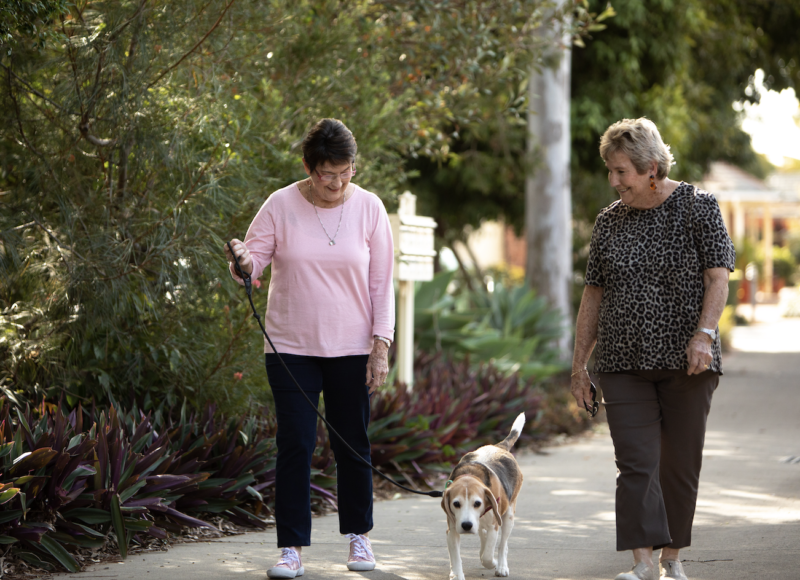
‘Our village is a real community supported by our Village Manager and her staff,” says Gordon from Tarragal Glen. “We discovered a sense of community we had not expected. Villagers talk to each other, not only in regular activities but when they meet in the street or walking, very often with dogs, in the park. I now consider many of the residents’ friends. Friends who care about each other and keep an eye out for anyone having difficulties.”
Carlyle Gardens Retirement Village resident Noel Bowman agrees. When asked about his favourite memory from living in this Bundaberg village, Noel doesn’t hesitate. “Friendships,” he says. “This is one of the best moves we’ve ever made.” His wife Judy says: “I like the village feeling and the community aspect to Carlyle.”
Having a community around you is wonderful in good times, but becomes essential when things are tough as Lorraine from The Verge discovered.
“(My husband) Reg has had a few health issues recently, and the support and concern shown by the village team and residents has absolutely confirmed that we made the right decision by moving here,” says Lorraine.
Del (with her sister Evon) love the sense of security a retirement village offers.
4. Safety and security
No matter what stage of life you’re in, feeling safe and secure is always a priority, but especially so when you get older.
“Security is top of my list and I really do feel safe here. It’s not just about gates and alarms, it’s about having people around you who look out for you,” says Del Marsh from Wellington Manor Retirement Village. “Your children don’t have to worry about you so much. They know that you are in a safe environment.”
For Chris from The Verge: “Having Rosie (the emergency call system), just in case, hopefully we won’t need it, but it gives us peace of mind.”
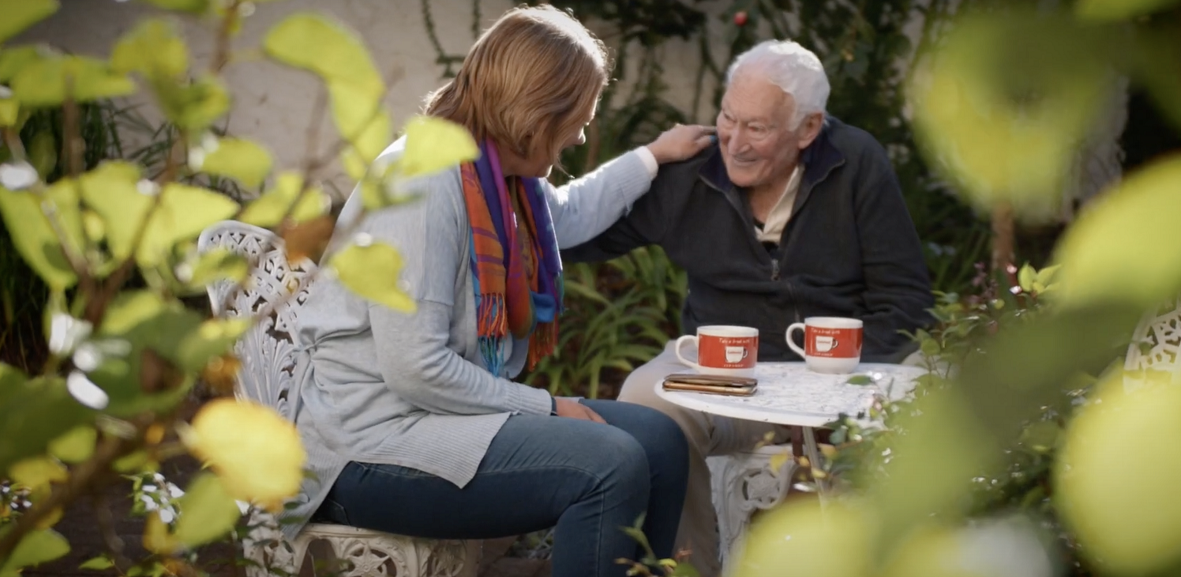
Kym and her father Colin appreciate having care available when Colin needs it.
5. Care when you need it
You may be fit and healthy, but there may come a time when you require assistance. Knowing that care is available when you need it can give you great peace of mind. Having access to care can also allow you to maintain your independence and stay in your own home for longer.
“At one stage we needed some care and we got in touch with the care team, they came up here and got approval for a package for my wife Nola,” says Norm from Tarragal Glen. “I had an accident some time ago, people down there were absolutely marvellous. They came up here and showered me and made the bed, which took a big load off Nola.”
“Dad’s been here over four years and really the time has gone very fast,” says Kym Stracey of her father Colin at Belrose Country Club. “He is just such a different person, I think he is the healthiest he’s been for probably, 12 to 14 years.
“Knowing that there’s someone on duty 24 hours a day, gives us peace of mind,” said Kym.
* Before moving into a RetireAustralia village we provide clarity on what maintenance the village service charges cover, giving you peace of mind and financial certainty for the future.
Retire Ready Guide
Want to feel informed and confident about whether living in a retirement village is right for you? Get your free guide to retirement village living.
It’s not often that you find a father and son living at the same retirement village. The typical age gap between parents and their children generally means they are not retirees at the same time, and if they are they have different needs and requirements.
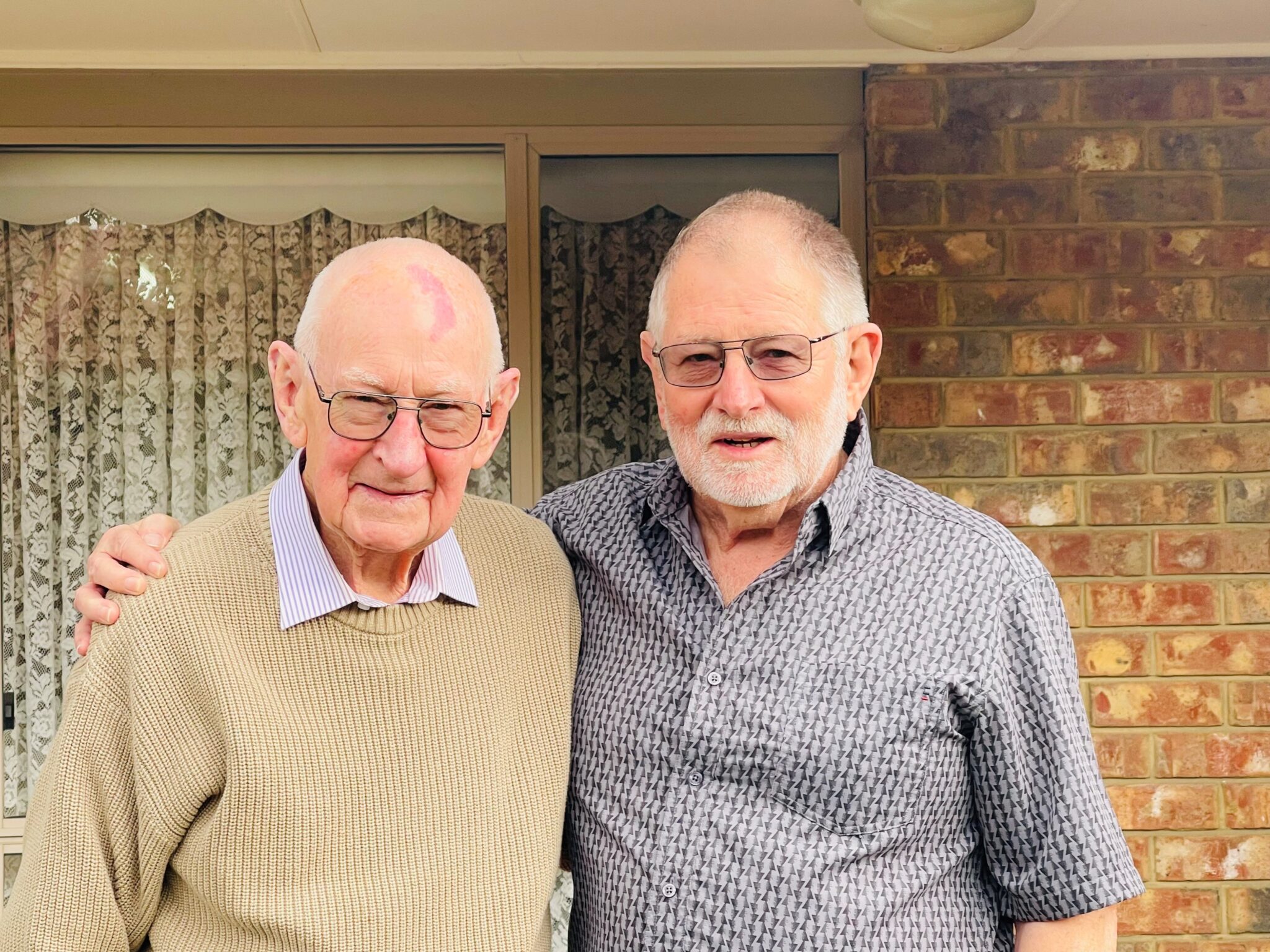
But Sid and Brian are both happily living in separate independent living units at the Tea Tree Gardens Retirement Village and, although they see a lot of each other, they still view Father’s Day as a special time to get together.
Sid moved into the village with his wife Elsie 32 years ago, and Brian and wife Marion joined them in 2019.
Elsie, 94, relocated to a nursing home near the village about a year ago, to receive extra support, following a decline in her mobility.
“Our unit is halfway between dad’s unit and the nursing home. We didn’t choose to live here to be close to my Mum and Dad, but it’s great being so near,” Brian said.
“I also enjoy the activities here. I play croquet on Thursday mornings, and I ended up taking over the running of the bingo and I’m treasurer on the residents’ committee.
Like Father, like Son: Sid and Brian are neighbours at Tea Tree Gardens Retirement Village.
“In their earlier years, Mum and Dad were very much involved in the activities too. Dad still goes along to some events, he really enjoys the Anzac Day event, and everyone in the village knows him.”
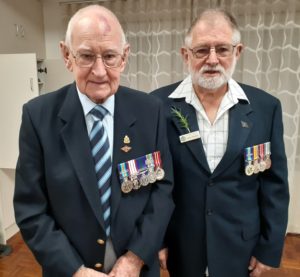
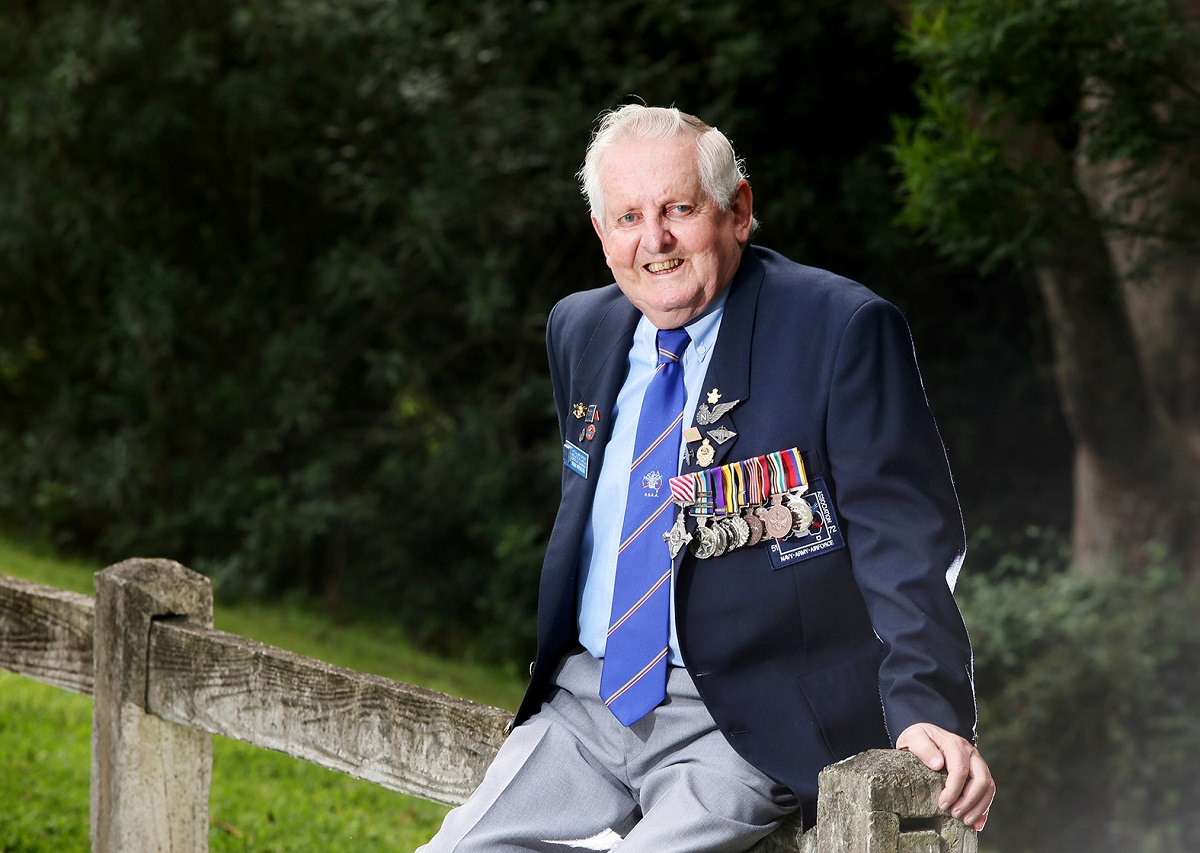
The father and son were both in the armed services. Sid was in the Navy for 12 years, while Brian is a Vietnam veteran.
Growing up, Brian said he and his brothers looked up to their dad and mum who he described as “great role models”.
This is something Brian reflects on each Father’s Day.
“To me, Father’s Day is a time where I make sure I spend some time with Dad to show him how much he means to us,” he said.
“I think both Dad and Mum have both been a great example to my brothers and I with their work ethic and their moral standards.
“Growing up, there was no doubt that we were loved and cherished. I have great memories of the times we spent together, especially with Dad. We spent a huge amount of time in our yard playing cricket and bat and ball tennis and working in the veggie garden.”
For Sid, Father’s Day is a time when he really enjoys spending time with his two living sons, Brian and Stephen.
“It means quite a lot because they are both very good and kind to me. They help me out with anything – Brian helps me with my finances and Stephen helps me around the garden,” Sid said.
Find a community you and your family can call home.
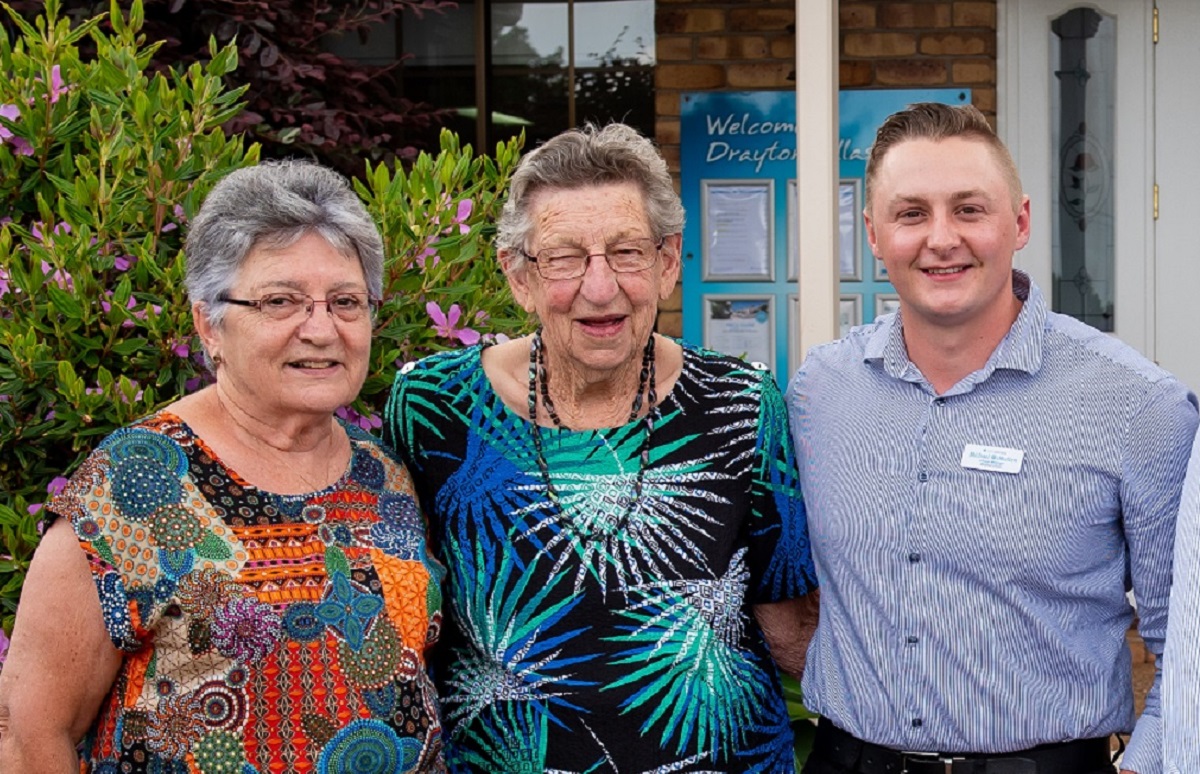
After living through a very tough childhood, Drayton Villas Village Manager Michael McMullen understands the healing power of having someone who listens to you.
After living through a very tough childhood, Michael McMullen understands the healing power of having someone who listens to you.
“We all just want to be listened to,” says the Village Manager of Drayton Villas Retirement Village in the rural city of Toowoomba, Queensland. Wise beyond his 26 years, Michael has made a huge impact on the residents’ lives since he took over more than 12 months ago. His mission is to help the residents forge connections and build a supportive community.
“The biggest thing is just listening to people,” explains Michael. “What may seem a small problem, to them it’s the biggest problem. So it’s listening to them and helping them work through the steps, it may be a quick solution or they may just want someone to talk to.”
Breaking the mould
As a young man, Michael doesn’t fit the stereotype of a Village Manager, but working in a retirement village is something that he’s passionate about.
“It all started with my upbringing, I didn’t have the best upbringing. I was in and out of foster care, but my grandparents were the one saving grace. I went out to their property, where they taught me love, respect and how to work. They gave me little, but important, things and life skills, which was great,” says Michael.
“When it came time to start a career, I really just wanted to be able to help people. I worked in resources, for 8-and-a-half years, but I always wanted to work in a retirement village and be able to make a difference, because I knew that my grandparents had really touched on me with that love and care. If they didn’t help, it would have been different, so I definitely have a soft spot for the elderly.”
It’s that compassion and empathy that makes Michael a good Village Manager.
Not-so-secret men’s business
When Michael started working at Drayton Villas, he quickly noticed that the men seemed to have more difficulty connecting with others in the village. While the women were able to bond over a cup of tea, there was still a stigma that men don’t need to socialise. He and his team decided it was something they needed to tackle.
“So we started a men’s day out,” says Michael. “Every couple of months we go somewhere. The first one was at a pub on the weekend and we had a feed, a beer and a good chat. We’ve done a sausage sizzle in the park and we’ve done one in the homestead as well.
“It’s helping them build relationships with the other guys. Now they will go and have a coffee and talk. Before they were tucked away until some family came and visited.”
Now the men are making these connections, Michael is noticing an improvement in their health and spirits – they seem brighter and more energetic. Having these friendships also helps to build a sense of community in the village.
“It gives them more purpose, it comes back again to wanting to be listened to. They want people to tell a story to. The Villas is their life, so creating those friendships and relationships in the village is what makes it a good community,” explains Michael.
More than just a job
For Michael, working at Drayton Villas is more than just a nine-to-five pay cheque. Whether it’s taking time on the weekend to get the men out or starting early so he is available for the residents during the day, helping people is Michael’s passion.
“I come in early in the morning, to get all the paperwork out of the way because by 8 o’clock we’ve got people coming in for a chat. I want to make sure I have time for them. It’s being able to make that time and not be busy, so if they need to come and have a chat they can,” Michael says. “Giving them that time is so rewarding for them and for me. I’ve dedicated my life to being in a position that I could help people. I can finally make a difference in people’s lives, not only short term, but long term.”
Looking to the future
In his first year at Drayton Villas, Michael has achieved so much, which was acknowledged at the annual RetireAustralia awards where he received a Highly Commended RetireAustralia Family Award. That doesn’t mean he’s resting on his laurels, Michael has a lot planned to help improve the lives of the residents.
Michael receives a Highly Commended RetireAustralia Family Award.
“I’m excited to create activities that engage more people, so we can have a better outcome. We have happy hour on a Thursday, which is great. But I want to bring more and different things that engage different people and try to excite them,” Michael says. “There are the few people who don’t come to things, so I make an effort to visit them and get to know them. Often they’re the people with the most amazing stories, but they don’t want to be a burden on people so they tuck themselves away.”
With Michael’s passion and energy, we can’t wait to see what he continues to do at Drayton Villas.
“I love coming in every day and knowing that you’re going to make someone smile. Some of their stories are amazing, so I can’t wait to hear the next story,” says Michael.
Researching living options in retirement can be a minefield of new terms and acronyms, so we’ve put together a retirement glossary to make sense of the jargon. We’ve split the glossary into four relevant sections, covering:
• living options
• care and support options
• finances
• legal rights
If you don’t know your RACs from your ILUs, this useful glossary will bring you up to speed by explaining common retirement village terms – and pointing out which terms are used interchangeably. Bookmark for later, so you’re armed with useful knowledge before you visit any villages.
Your living options
A
Aged care
(interchangeable with residential aged care, RAC and nursing home)
An aged care facility is for those who need full-time care and are unable to live independently. The move into aged care often follows a significant health event or decline in mobility.
At RetireAustralia, we offer private care apartments at Glengara Care on the Central Coast, which is a premium, positive alternative to traditional aged care.
Assisted living
See serviced apartment.
C
Care apartment
At RetireAustralia, we offer custom-built, private aged care apartments at Glengara Care on the Central Coast.
This is a genuine alternative to traditional aged care, allowing residents to age positively with dignity, respect and control.
You can even progress from low to high care without moving out of your care apartment. Small pets and partners are welcome too!
I
Independent living unit (ILU)
Independent living units in broad-acres communities (sometimes called villas) and apartments in mid-rise vertical villages are designed with over 70s in mind. Homes range from one to three bedrooms with one to two bathrooms, and private outdoors areas.
At RetireAustralia, we have independent living options available in Queensland, New South Wales and South Australia. They are ideal if you want to enjoy the freedom and independence of life on your terms with the safety net of a like-minded community and support you can count on.
L
Land lease community
Also known as ‘over 55s lifestyle communities’, ‘manufactured home estates’ and ‘resort communities’, land lease communities grew out of the caravan park industry and offer a gated estate were you buy the physical structure of your home and rent the land it sits on. In most estates, because of the caravan park heritage, your home is required to be manufactured off site, usually in a factory, and trucked in to its final location.
Retirement villages are the most common and well-known retirement living option in Australia. A major feature of this style of retirement living is the sense of community, with residents creating an informal support network and social groups.
Retirement villages are especially popular with both singles and couples aged over 70 years who want more security and support while continuing to live independently.
All RetireAustralia communities are designed to offer you independence, social connection, and peace of mind, knowing you can access care and support should you ever need it.
S
Serviced apartment
Serviced apartments are available in retirement villages and come with support that makes life easier. They’re perfect if your care needs are increasing, and you want to keep doing what you love.
At RetireAustralia, our trusted team takes care of housekeeping, maintenance, and nutritious meals every day, so you have the freedom to maintain your independence and make the call on what matters most to you.
Serviced apartments are located in the heart of a retirement village so you have easy access to community amenities and social activities too.
Across New South Wales and South Australia you’ll find RetireAustralia communities offering both serviced apartment and independent living options.
There are care and support options in a Retire Australia village.
Your care and support options
A
Aged Care Assessment Team (ACAT)
If you’ve applied for a Home Care Package subsidised by the federal government or if you are moving into a government funded aged care facility, you will need to be assessed by an Aged Care Assessment Team (ACAT) assessor. They will review how much support you need with daily tasks and activities. The level of care you need determines whether you’re eligible to receive subsidised care services at home or in a government funded aged care facility.
The good news is you don’t need an ACAT assessment to move into a RetireAustralia serviced apartment or respite care.
H
Home Care
Home care is professional care delivered in the comfort of your own home.
RetireAustralia offers home care in the majority of our villages, and where we don’t, we can connect you with a reputable local provider. Our reliable and experienced team can help with a broad spectrum of care and support – from cleaning and meal preparation all the way through to medication management and wound care.
Home care can be funded privately or through an approved government-funded Home Care Package (HCP).
Home Care Package (HCP)
If you need care and support on an ongoing basis, you may be eligible for government support via a Home Care Package. There are four package levels, covering basic, low, intermediate, and high care needs (1–4 respectively).
M
My Aged Care (MAC)
My Aged Care is your starting point for accessing government-funded aged care services, including home care. You will need to be assessed to see if you’re eligible for financial support from the federal government. This depends on the type of help you need and your financial situation.
The system can be confusing to navigate and there is often a wait time to be assessed. Our RetireAustralia team can help you navigate Home Care Package approval through the My Aged Care website .
P
Primary care
Primary care is the first contact you have with the health system, outside a hospital setting or emergency situation. It refers to the range of health services you access in the community to manage your health, including having regular health checks and treating acute and chronic conditions.
In many RetireAustralia villages, we have a consultation room on site which is available to residents to use for their medical appointments if they prefer.
Additionally, RetireAustralia also facilitates on-site visits from primary care providers (GPs, physios, podiatrists and pharmacists). These are tailored to the needs and preferences of each resident community, and can include, for example, a monthly podiatry clinic and/ or coordination of medication ordering and delivery and medication reviews with the local pharmacist.
R
Respite care
Put simply, respite care is short-term care. It’s a great way to access extra support over a set time period – particularly useful if you’re recovering from illness, injury, surgery, or a hospital stay.
At RetireAustralia, you can stay in a private, fully-furnished apartment for as little as 14 nights or up to six weeks. And you don’t require an ACAT assessment to do so.
Respite care is available in select RetireAustralia villages on the NSW Central Coast and in Adelaide.
It’s important to have peace of mind when it comes to your finances in retirement.
Your finances
B
Buyback
Buyback means the retirement village operator buys back a home in a retirement village from a resident if it hasn’t sold after a set period.
It is mandated by state legislation, which gives you extra protection. In the unlikely event your home hasn’t sold within 6 months (New South Wales) or 18 months (Queensland and South Australia) in a leasehold or licence village, RetireAustralia will buy it back from you.
This doesn’t apply to resident contracts in strata title villages. For more information specific to strata villages click here.
C
Contract
There are different types of contracts you might come across when researching retirement villages.
At RetireAustralia, our sales contract offers a simplified financial process and a high level of financial clarity. In short, there are no hidden costs and you’ll know exactly what you’ll need to pay at every stage.
The most common types of agreement in RetireAustralia villages are leasehold and licence, where you purchase a long-term lease (usually 99 years) to live in your home.
D
Departure fee
(also known as the deferred management fee or DMF)
See exit fee.
E
Entry payment
Before you move into a retirement village, you will need to pay an entry payment, which gives you the right to reside in your new home. At RetireAustralia, this is typically 80% of the median house price in the local area. This payment is relative to the local property market and demand for homes in the retirement village. Unlike most property transactions, you will not have to pay stamp duty on your new home. This equates to a significant cost saving on entry.
Exit entitlement
Your exit entitlement is paid to you when you leave a retirement village. At RetireAustralia, your exit entitlement is fixed, regardless of what happens outside the village such as real estate market fluctuations or unexpected events like natural disasters or COVID-19. This means we will incur any capital loss or gain.
Exit fee
(also known as the deferred management fee or DMF)
Your exit fee is paid to you when you leave a retirement village.
At RetireAustralia, this fee allows us to keep our entry prices as competitive as possible. The fee is effectively an ‘enjoy now, pay later’ scheme, which helps reduce the cost of moving into a retirement village. It funds capital replacement works, maintenance of communal facilities, and village upgrades.
S
Service charges
If you move into a retirement village, you will need to pay service charges. While these vary by village, they are set at a cost-recovery rate only. By law operators can’t profit from these fees, but use them to cover the costs of operating the village such as council rates, water rates, building insurance and staff salaries. Any fee increases beyond the Consumer Price Index (NSW and Qld) and beyond a reasonable level (SA) must be approved by residents. For further peace of mind, village finances are audited by an independent party each year.
Your legal rights
R
Retirement Living Council (RLC)
The Retirement Living Council is the peak industry body representing the retirement living sector.
As a dedicated national division of the Property Council of Australia, it’s focused on retirement village and seniors housing. It champions policies that deliver more age-friendly homes and services in retirement communities.
RetireAustralia is a proud member of the Retirement Living Council.
Retirement Living Code of Conduct
Developed by peak bodies Retirement Living Council (RLC) and Leading Aged Services (LASA), the Retirement Code of Conduct aims to set and maintain high standards in the marketing, selling and operation of retirement communities, including complaints and dispute management procedures.
All retirement villages are governed by a Retirement Villages Act. This is state-based legislation, which protects the rights of residents and promotes fair trading. It sets out rules around contracts, charges, disputes, and so on.
It’s important to note that land lease communities are legislated under the same laws as manufactured home parks and caravan parks, which means your right to remain in your home isn’t protected if the land lease operator ceases to exist.
When rugby great Dr Brett Robinson was looking for a retirement village for his mother, he was determined to find a homely environment that would provide a much better experience than his father had during the latter stages of his life.
The former Wallaby’s father, John, died in a nursing home that offered great clinical care but lacked homeliness, following a battle with Parkinson’s Disease.
That experience nearly five years ago was at the front of his mind when he started to think about accommodation options for his mother Heather, an active and extroverted 75-year-old keen to keep her independence.
Although Robinson’s siblings were initially hesitant about Heather moving into a retirement village, Drayton Villas in Toowoomba quickly emerged as an obvious choice.
Born and raised in Toowoomba, Robinson has a very personal connection to Drayton Villas – his grandparents Wilfred and Mary Salter were among the first residents to move into the village, which he remembers visiting as a child when the site was a drive-in movie theatre.
It’s a connection that became even stronger in 2019 when he became the CEO of RetireAustralia, the company that operates Drayton Villas Retirement Village.
Robinson – a former Downlands College student who was the inaugural captain of the ACT Brumbies and has experience as a medical doctor and sports administrator – sees his appointment as an opportunity to deliver the type of care that wasn’t enjoyed by his father.
Making the move from the family home into a retirement village is a big decision, but Heather was relatively easy to convince and hasn’t looked back since moving into Drayton Villas Retirement Village late last month.
“Mum is loving it – she is well looked after, and she’s totally immersed herself in it. We are really pleased we made the decision now rather than later,” Robinson explained.
“Initially, my brothers and my sister didn’t understand as they saw the move as more of a property transaction. They didn’t understand the value of community and social connections that a village like Drayton Villas offers.
“Mum is a country girl and there are a lot of country people living in the village. It’s a special place where people care deeply about the residents.”
Heather grew up in Toowoomba as the daughter of two graziers and, together with her husband John, raised their five children in the township although the family spent many weekends at the Robinson Family Vineyard at Ballandean.
After decades working on the vines, ferrying kids to various sporting commitments, and caring for her husband in his final years, Heather said she was enjoying her new low-maintenance lifestyle.
“My mother was one of the first residents at Drayton Villas, so I knew a lot about the place before I moved in myself,” Mrs Robinson said.
“As soon as you drive into the retirement village you get a warm feeling. The atmosphere is lovely and relaxed, and the staff are very friendly and helpful.
“I am a very social person and there are just so many things to do at Drayton Villas. I keep myself busy by playing indoor bowls, pool, table tennis and laps in the heated swimming pool.”
Dr Robinson says his mum, like all retirees, deserves to enjoy a great and supported life in her twilight years.
“There is this fear that by making the move that a person is losing control. However, that is far from the case – moving into a retirement village is about maintaining your independence, having privacy and social connection, as well as having support and care when you need it. Most people who make the move realise that they should have done it sooner.”
17 August 2022
Mount Barker retirees making rugs for refugees
A group of Mount Barker retirees have been busy making large rugs for Ukrainian and Afghani refugees who have recently arrived in Adelaide.
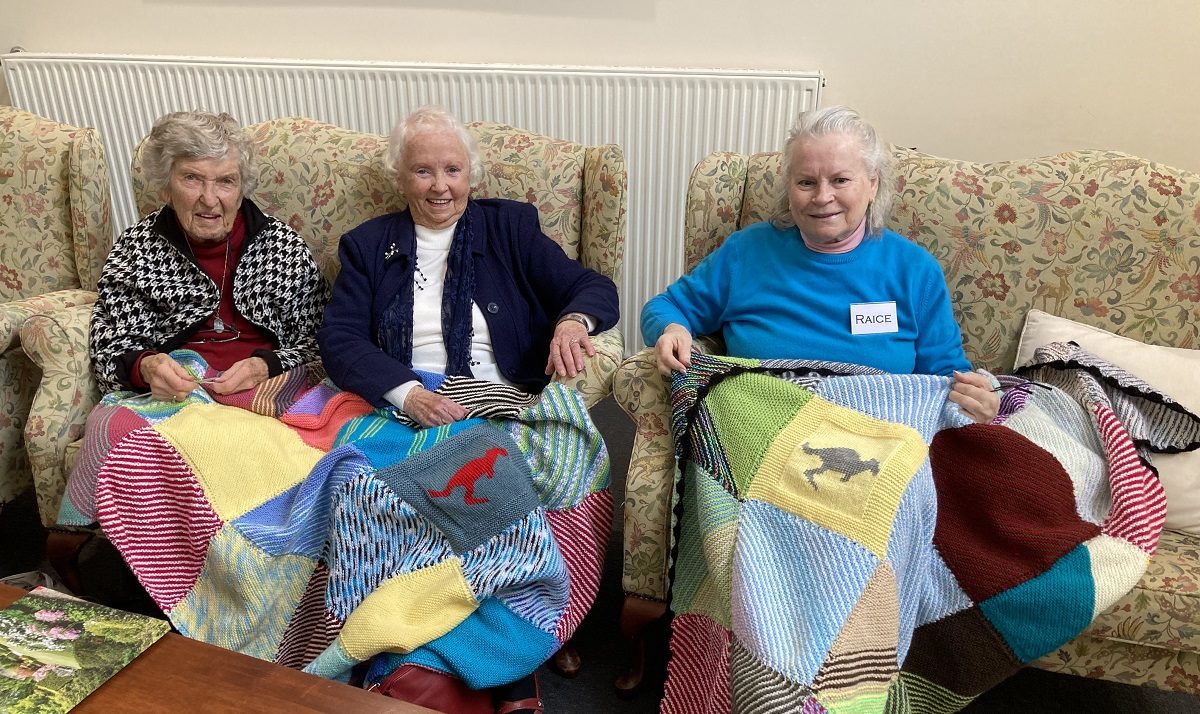
Pictured: Dorothy, Patricia and Raice from The Laurels Chat and Craft Group.
A group of Mount Barker retirees have been busy making large rugs for Ukrainian and Afghani refugees who have recently arrived in Adelaide.
About a dozen women at The Laurels Retirement Village have knitted 35 rugs, which were recently donated to the refugees to help keep them warm in the winter months.
The rugs are designed to fit a single-size bed and are made up of 28 squares, each measuring 10 inches, usually including one kangaroo square and a small label stating: “A gift from Wrap With Love Australia”.
Knitting for a good cause
The colourful creations were made by members of The Laurels Chat and Craft group, which has been meeting weekly for the past 12 years.
Organiser Dorothy Heath said the group enjoyed putting their knitting, sewing and crocheting skills to help those in need.
“Our rugs are currently going to the refugees who have recently arrived in Adelaide, which I think is lovely,” Dorothy said.
While the Chat and Craft group only started donating the rugs to refugees this year, they have been knitting for a good cause for a long time.
One of the many rugs donated to Wrap with Love.
Over the past 12 years the Chat and Craft group has made and donated more than 500 rugs to Wrap With Love, a Sydney-based charity which distributes warm wraps to more than 30,000 people in need across Australia and in other countries each year.
Dorothy said the group started knitting rugs in 2009 after she read a short article in the Mount Barker Courier.
“The article was about Wrap With Love and what they did, so I made some phone calls locally to get some more information,” Dorothy explained.
“I contacted a lady who came and spoke to our group about Wrap With Love. I thought there must be a lot of people like myself who had knitted in their earlier years and would like the opportunity to knit for a great cause, so I suggested this to a group here at The Laurels and the group agreed.”
Helping those in the local community
For many years, Susan Crouch of Uraidla has been collecting the rugs from The Laurels Chat and Craft group and others around the Adelaide Hills and organised for them to be transported to Sydney by truck. However that mode of transport became unavailable last year, so the decision was made to distribute the rugs in Adelaide.
Dorothy got in touch with a migrant agent, whom she had met through the Pilgrim Uniting Church in Adelaide, to help.
“The migrant agent has been assisting recently arrived refugees in Adelaide, many of whom have been coming from Afghanistan and the Ukraine,” Dorothy explained.
“She has been happy to accept our rugs, and those which Susan has collected from other Adelaide Hills groups and distribute them to recently arrived refugees in the Adelaide area.”
So far, The Laurels Chat and Craft group has proudly donated 35 rugs to the refugees and are busy knitting more.
Finding a perfect place to retire both now and later
Norm and Nola Whyburn discovered that life at Tarragal Glen Retirement Village was the perfect choice when they moved in 10 years ago, and it’s continued to be ideal as their care needs have changed.
Norm and Nola Whyburn discovered that life at Tarragal Glen Retirement Village was the perfect choice when they moved in 10 years ago, and it’s continued to be ideal as their care needs have changed.
On Anzac Day 2019, Norm Whyburn, a former senior officer in the Australia Air Force collapsed during a long Anzac service and suffered injuries, including some broken ribs. Thankfully for Norm and his wife Nola, they were living in the perfect place to receive support and care in their own home.
“I’m very involved as a patron of an ex-service organisation and it was a very hot Anzac Day, with no wind. It just got to me and right near the end of the service I keeled over. I hurt my ribs,” says Norm.
“When we finally got home, Nola called the girls on the care team and they came up to help, it was no trouble at all.”
Enjoying retirement now
A few years earlier, Norm and Nola had chosen to make their home at Tarragal Glen Retirement Village. They were living nearby in a four bedroom house with a large garden that was becoming increasingly difficult to look after. They decided it was time to downsize somewhere where they could enjoy their retirement, but also stay connected to their community.
“We went around the Central Coast and looked at quite a few villages and decided at the end of 2011 that we’d come to Tarragal Glen and have a look around. It had everything we wanted, we had our shopping centre next door to us, which is a bit unfortunate sometimes for personal reasons,” Norm says laughing. “We have our doctor just outside the gates and the church we go to just down the road, which meant we could come in here and not really change our lifestyle from where we were.”
When the couple first moved into the village, they loved having the gardening and maintenance team take care of everything. Instead of worrying about the mowing, they could focus on enjoying their retirement.
“We moved in and had no problems at all. It was quite easy really. There are so many activities, every day of the week! They run a recent movie every month in country club, social events and dinners. The country club has just about every activity you could want, including things such as bowls, card games, gym and much more. In fact, if you can name it, you can have it,” Norm explains.
Nola and Norm love life at Tarragal Glen.
A bit of extra help for later
As the years have passed, there have been times when the Whyburns needed some support and care, and the RetireAustralia Home Care team have stepped in and helped make things easier.
“At one stage we needed some care and we got in touch with the care team and they came up here,” Norm explains.
“We now get what we need,” says Nola.
The assistance from the care team was vital after Norm’s Anzac Day accident. Norm and Nola were quickly able to access care in their own villa, which was a big relief for the couple.
“When I had the accident a few years ago in 2019, the people in the care team were absolutely marvellous. They came up here and showered me and made the bed, which took a big load of Nola,” says Norm.
Even after Norm had recovered, they still use the care team to make their life easier and more enjoyable. The care team have become more than helpers to them, they’ve become trusted friends.
“Now we get fortnightly cleaning in our villa, through the care team at RetireAustralia. We’ve never been let down by the care people in the five years since we started with them.
“We had Susan doing the cleaning until she retired, we told her she wasn’t allowed to retire. She actually became a good friend and we still keep in contact with her. She was absolutely out of this world as far as cleaning goes,” says Norm.
Peace of mind
Knowing that care is at hand if they need it, gives Norm and Nola a sense of security and comfort. Unfortunately, Norm suffered another accident in July 2022, hurting his arm, wrist and ribs. While feeling a little sore and tender, he hasn’t needed help so far, but knowing it’s there if they require it is a relief for both Nola and Norm.
“It’s peace of mind. If we need it, we can get meals from the kitchen and the care team deliver them. You couldn’t want for anything better than that!’ says Norm.
“It’s been terrible for him, but never mind! It’s his left hand and arm that’s injured, so he can still make the coffee and do some chores!” says Nola chuckling. “The earlier he gets moving, the better for his rehabilitation.”
Norm and Nola have never regretted the choice they made a decade ago to move to Tarragal Glen, as they’ve had support every step of the way. They say they’ve found their home for the rest of their lives.
“We’re not going anywhere!” says Norm. “One of the best things about the RetireAustralia care team is you know you’ve got security with them, you know that everything is going to be OK.”
Living options for older Australians are often misunderstood. It’s commonly assumed that purpose-built accommodation for seniors is all much the same, but this isn’t accurate. Nursing homes and retirement villages are very different types of accommodation, suitable for different residents with different needs.
Each has its own benefits, but it’s a bit like comparing apples with oranges. So what is the difference between nursing homes and retirement villages? Read on to discover what you can expect from each type of community, lifestyle, care and living options. This way, you can research suitable accommodation with confidence, knowing it’s the right choice for you or a loved one.
Retirement villages
Many of our residents receive surprised reactions when they tell friends and family they’re moving into a retirement village.
“But you’re far too young, and far too healthy!” is a common response.
This arises because of the common misconception that aged care and retirement living are one and the same.
In a nutshell, retirement village residents are active and autonomous. They are able to live independently in their own home, but choose to live within a community environment to access all the benefits of village living. If you’re in the research phase and want to know more about retirement villages, it’s best to check out our Retire Ready guide.
On the other hand, nursing homes (also known as residential aged care facilities) are right for individuals who can no longer live independently, and need care and support around the clock.
Retirement village residents are active and autonomous, while nursing home residents are no longer able to live independently at home.
Social interactions and community
Retirement villages provide ample opportunities to interact with like-minded individuals and form meaningful social connections. While the activities vary from village to village, RetireAustralia communities have much to choose from – from lawn bowls to pilates, book club to craft groups, and movie nights to mahjong.
But this is only part of the story, because retirement villages are specifically designed to foster a sense of belonging and connection. That’s because community living brings a host of benefits, such as reducing isolation and improving mental wellbeing. It doesn’t matter if you love happy hour or would prefer to curl up with a book, you’ll find there’s something for everyone in a retirement village.
Meanwhile, nursing homes will often have an activities coordinator who organises monthly activities. However, the primary focus in a nursing home is on providing care and keeping residents safe. It can also be logistically challenging to organise activities for residents with limited mobility. For this reason, nursing homes offer some social activities, but it’s not their core focus.
Lifestyle
Curious about day-to-day life like in a nursing home compared to a retirement village?
Retirement living gives you the structure of a social and activities calendar that you can dip in and out of, but the independence to live life as you wish. In a retirement village, the day is yours. You can sleep in till noon, treat yourself to the hairdresser, and meet neighbours for happy hour. Or you might prefer to start the day with a swim, beat your partner at Scrabble, and then invite your family around for a freshly-prepared meal at home. Whatever you enjoy, and however you want to live your day, it’s your choice.
Life is more structured in a nursing home. Typically, there’s a set schedule for showers, medication, care visits, and mealtimes. This can be highly beneficial for some residents who struggle with change – the predictability of having a set routine can reduce stress, because residents know what to expect and when to expect it.
There are ample opportunities for social connection in a retirement village. Nursing homes have some activities available, but their core focus is on providing care.
Level of care
The level of care on offer is the biggest differentiator between retirement villages and nursing homes.
Retirement village residents are able to live independently in their own home and can access additional support as needed. For instance, residents might get in-home care or see medical specialists as their care needs evolve.
Most RetireAustralia villages offer Home Care, which can be accessed on an ad hoc or ongoing basis. This can include regular support with household chores, meal preparation, showering, dressing, medication management and social support to name a few.
On the flipside, nursing homes are suitable for people who can no longer live at home and need help with everyday tasks. Each resident has a personalised care plan to make sure their needs are met. This can include:
personal care, offering help with showering, toileting, eating and medications
clinical care, such as nursing, speech therapy and physiotherapy
specialist care, such as palliative care and dementia support
For those who can no longer live independently, these care services are vital to help them with daily life.
Living options
In a retirement village, you have a huge amount of choice in the location of the community and type of home that best suits you. RetireAustralia offers independent living in apartments, units and villas, ranging from one to three bedrooms with 1-2 bathrooms. These are located across New South Wales, Queensland and South Australia, in leafy suburbs, coastal retreats, and regional areas.
Many of these villages also offer care or serviced apartments. These private apartments generally come with support to help residents remain independent, including daily meals, cleaning, laundry and a 24/7 personal emergency response system and staff on site. They’re generally studio-sized or have a separate bedroom and private bathroom, kitchenette and living area. Sometimes residents combine this living option with home care when they need more support but want to continue living independently.
Nursing homes have fewer options, but you can generally choose between a single or shared rooms, most with ensuite. The price is negotiated with the aged care provider and depends on the type of room you choose, the size of the room, and the location of the facility.
Want to see for yourself?
If you’ve decided that retirement living is right for you, the best way to get a feel for the community is to organise a tour.
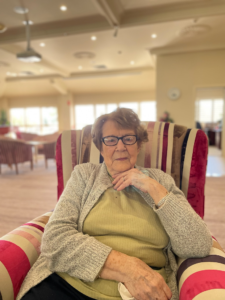
Belrose Country Club Retirement Village’s longest serving resident Norma Lyon – who celebrated her birthday earlier this month – makes sure she starts each day by dressing immaculately and putting on her “lippie”.
Norma at Belrose Country Club.
Norma, who also cooks her own meals and has her hair and nails done each week, says one secret to a long life is to “keep moving” and another is something a little more unconventional.
“I have one, and only one, gin and tonic at 5pm sharp every day,” she said.
Another ritual of Norma’s is her weekly game of scrabble with her daughter Deborah Mitchell.
“She is still sharp as a tack. Her competitive nature is still alive as she hates to lose,” Deborah said.
Norma marked her 100th birthday at a special morning tea with family and friends at Belrose. Her grandson played the piano at the celebration, and she was presented with a number of congratulatory letters including one from The Queen.
A life worth celebrating
Born on 16 July 1922, Norma Margaret Lyon (née Dench) spent her early childhood in Concord West where she and the other children in her neighbourhood would play marbles on the then quiet Concord Road.
She also remembers her Dad calling out ‘the baby’s here’ upon the birth of her sister Dorothy, who was cradled in the top drawer of a chest of drawers.
Norma attended Concord West Primary School and, after her family moved to North Strathfield, she went to Ashfield Intermediate Girls High School.
She never liked school much and her mother and father, who struggled throughout the depression, couldn’t really afford for her to keep studying.
So, at age 14, Norma left school and went to work at department store Mark Foy’s in the layby office where she met her future husband, John.
Norma would stay at her Aunty Wyn’s place at Bondi on the weekends, a seemingly cunning plan as John lived at Bondi. The pair went to the movies and saw Bing Crosby sing ‘I’ve Got a Pocketful of Dreams’ in the movie ‘Sing You Sinners’ – and the rest is history.
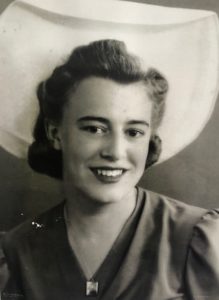
A young Norma.
When World War II broke out, Norma, then aged 17, joined the voluntary aid division run by the Red Cross. It was the beginning of a lifetime of service that would include more than 40 years with charity Sydney Legacy, which she joined with John in 1953.
Norma was honourably discharged from the Army when she got married and became pregnant at age 21. Norma and John, who was deployed overseas with the Army at times, had three children together – Warwick, Beverley and Deborah.
Norma remembers picking up her discharge certificate and handing in her Army uniform while fully pregnant with Warwick.
“It turned out that I knew the fellow behind the counter who served me. He handed me the discharge certificate with the wording ‘medically unfit, not occasioned by her own default!’ she said.
Norma and John loved travelling and had many trips to Europe, Canada, Fiji and Africa. They also loved hosting glamorous parties and Norma always whipped up a beautiful dress for every occasion.
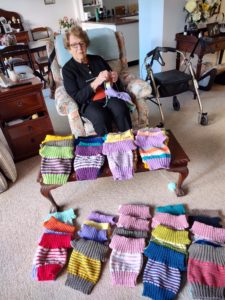
Norma – whose first memory was as a four-year-old going to hospital with a piece material, needle and a thread – has never stopped sewing. She’s made many magnificent wedding and bridesmaid dresses, and still knits for various charities.
Be part of a caring and supportive community
Norma’s wonderful knitting.
Norma has been living happily at the Belrose Country Club since 1988. She began living there with John in a two-bedroom unit. When Norma lost John, some years later, she moved into a care unit in the main building where she can get a little extra support, if she needs it.
“The staff are always so kind and caring,” Norma said.
“The level of care is superb. I feel happy, safe and secure at Belrose,” Norma said.
Deborah said her mum was delighted to be notching up a century.
“She was quite chuffed when she realised she was about to become an antique – just like an antique she is precious and valuable,” Deborah said.
“Happy 100th birthday to Norma – a mum, aunt, nan, grandnan and good friend to so many people.”
Find a community were you can enjoy an independent lifestyle knowing care and support is available if you need it.
Listening is Sue Nelson’s superpower and she uses it to mend hearts and minds at Newling Gardens Retirement Village.
“I love dealing with people and looking after everybody. I love playing Mrs Fix-it,” the composed Village Manager says. “Most of our residents have moved away from their farming properties and their families so sometimes they do get a little down and need a pick me up.”
Mending hearts and minds
A confidante to many at Newling Gardens, Sue organised a Men’s Health Day to spread joy to residents.
“Last November, we had some residents embark on a mystery tour. We drove them out to St Helena (30 minutes from Armidale CBD), a cattle property my husband manages, and we all sat around the campfire with our Billy Tea, eating cake and sandwiches,” Sue says. “The residents got to live their lives again, as they did several decades ago, by doing some cattle work. It was priceless!”
A visit to St Helena.
Her empathetic nature is ubiquitous at Newling Gardens. When a resident in her mid-90s, a former playwright, wanted to rediscover her creative spirit, Sue made it happen.
“It wasn’t easy to get six elderly residents to act. So, I sent out an email which said: ‘This is Merle’s dream, who wants to make it real?’ and just like that, we got our small acting troupe together,” she says.
Asking the right questions
Ironically, it was Sue’s own struggles with anxiety, together with her strong interest in the brain that aptly prepared her for her role at Newling Gardens Retirement Village in 2018.
“I’ve always been intrigued by how the brain works and when I was given the opportunity to participate as a practitioner in neurolinguistic programming, (the understanding of people’s habitual thoughts and feelings and replacing it with new ways of thinking, to improve mental health) I jumped at the opening,” she says.
“The course gave me practical techniques on how to ask the right questions and build rapport quickly to make people comfortable.”
Kindness comes freely
Her gentle, soothing voice is an indicator that kindness comes freely to Sue but, her lived experience at the retirement village has been anything but smooth.
Within a short period of starting there, outside events came cascading in. In just four years at the retirement village, she has managed severe drought, bushfires and a pandemic. She said her background in neurolinguistic programming proved advantageous during the challenging times.
“It was important to me to listen to stories residents were sharing about their children who were battling the emergencies at their farming properties. By giving them the chance to vent and be heard, as well as hearing about my own struggles with the drought and fires, they knew we were all in this together,” she says.
Breaking down barriers
A visit from Happy.
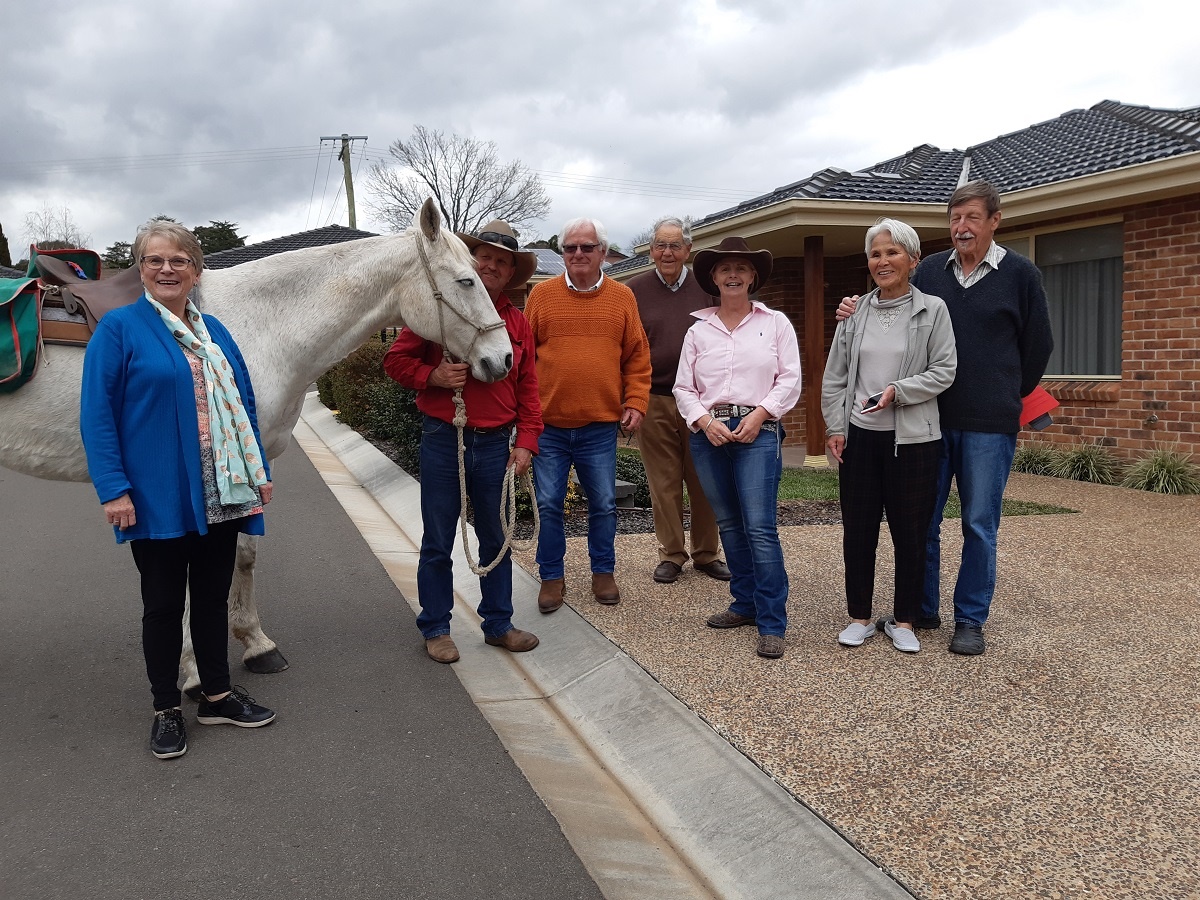
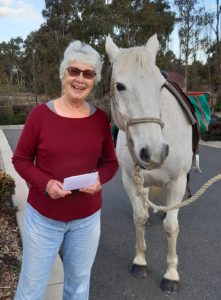
Sue said when the pandemic hit, it raised a new level of concern for residents at the village. In a testament of her character, with support from RetireAustralia, Sue brought her horse Happy to the village, to put a smile on residents’ faces, during the COVID lockdown.
“It’s about understanding how people communicate whether that’s by auditory or visual means – looking out for those cues and being able to respond accordingly,” she says. “You see, most of our residents are from a country lifestyle. Some rode horses to school, others got bread and milk on horses, or it was delivered by horses.
“So having Happy at the village gave residents a snippet of their past. It was one of the biggest communication tools I learnt that helped to break down barriers and it was all thanks to a horse.”
Following the success of the recent Men’s Health Day, the New South Wales Village Manager of the Year in 2020 said she would continue holding the popular activity to build “association and emotion” among residents.
“For our residents these are their vulnerable years, but they can also be very memorable at the same time,” Sue says. “It’s an honour to be able add meaning and colour to their lives just by listening.”
Get your exclusive guide to retirement village living